
Pediatric Psoriasis Treatment Guide: From Topicals to Newer Therapies
Why this matters
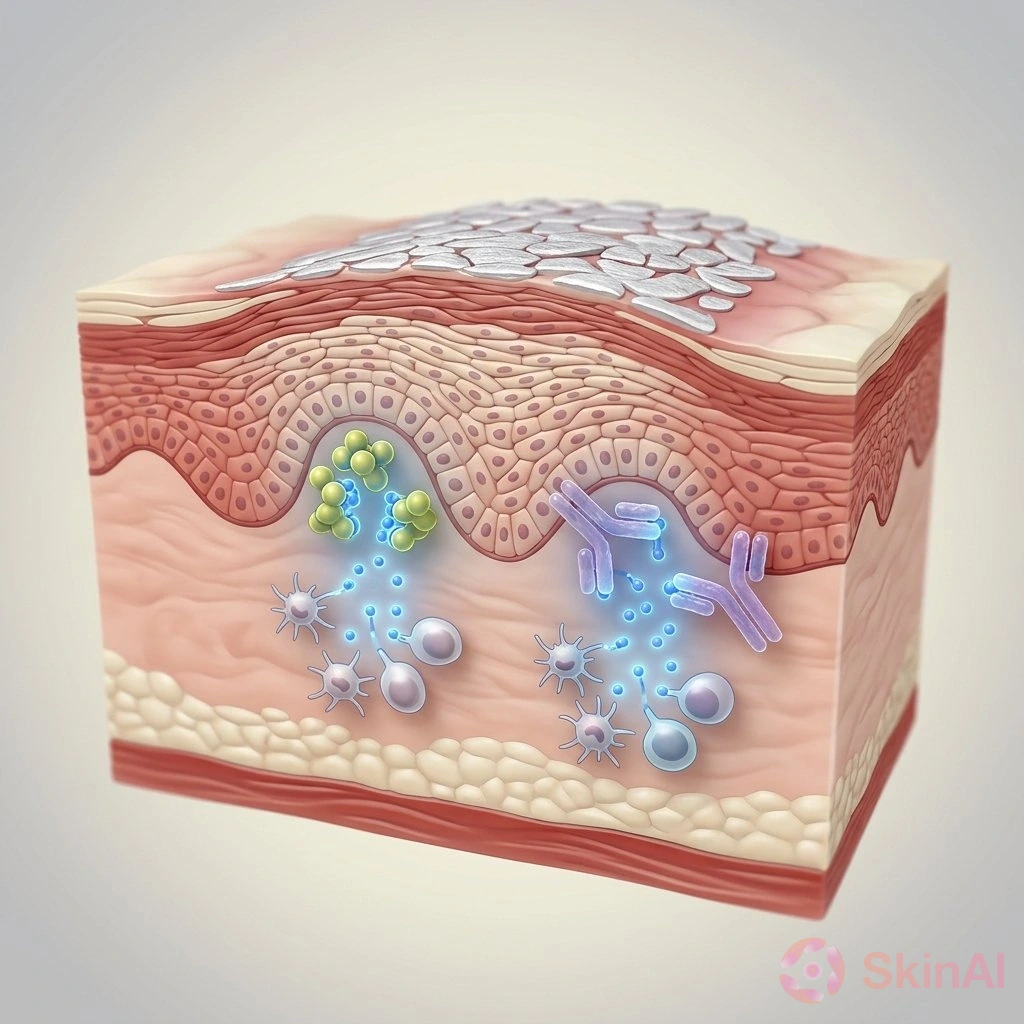
Psoriasis in children can be worrying for families. It shows up as red, scaly patches on the skin and can affect places like the face, scalp, and folds of the body. In a recent episode of the podcast Don’t Be Rash, pediatric dermatologist Lisa Swanson, MD, talked with host Andrew C. Krakowski, MD, about how she approaches treating pediatric psoriasis — from creams you put on the skin to newer pills and injectable medicines. This article summarizes that conversation in plain language so parents and caregivers can understand common options and what to expect.
Quick summary
Most doctors start with creams or ointments applied to the skin. If those don’t work well enough, they may move to newer nonsteroidal topical options. When creams aren’t enough, there are biologic injections and an oral medicine now approved for some older children. Insurance and sticking with treatment can be challenges, especially for teenagers, so doctors often help families navigate those issues.
Starting with creams and ointments
When a child is newly diagnosed with psoriasis, many doctors begin with familiar, low-cost treatments you apply to the skin.
- Clobetasol (a strong topical steroid) for body plaques. Dr. Swanson often prescribes it twice a day until the patches clear and then checks back in about a month.
- Topical calcineurin inhibitors such as tacrolimus or pimecrolimus for the face and skin folds. These medicines help avoid the skin thinning and stretch marks that can happen with steroids on delicate facial skin.
- Fluocinolone oil for the scalp. Scalp psoriasis can be hard to treat, and this is one option she uses.
Vitamin D creams and coal tar used to be more common. Dr. Swanson says she rarely uses them now, except sometimes tar for the scalp.
New nonsteroidal topicals
There are newer topical medicines that do not contain steroids and can be easier to use on sensitive areas.
- Roflumilast cream 0.3% (Zoryve) is approved for plaque psoriasis in children as young as 2. It’s once daily.
- Roflumilast foam 0.3% (Zoryve) is approved for psoriasis in kids 12 and older and for seborrheic dermatitis in children 9 and older. The foam works well on the scalp.
These nonsteroidal options are safe to use on most body parts. A practical tip Dr. Swanson gives families is to shake the foam canister well and tip it fully upside down before dispensing. If you only partly tip the can, you may get mostly propellant and less medication.
Another topical, tapinarof (Vtama), has a pediatric approval for atopic dermatitis (eczema) in young children but is only approved for adults with psoriasis.
In practice, after starting a steroid plus a calcineurin inhibitor, Dr. Swanson will often switch to roflumilast fairly quickly because families prefer to avoid long-term steroid use on the skin. She generally sets an 8-week trial period so everyone knows when to check whether a medicine is helping.
When creams aren’t enough: injections and a new pill
If topical treatments don’t control the psoriasis, doctors may recommend systemic therapies. These work throughout the body and include biologic injections and, more recently, an oral medication.
- Biologic injections approved for children include:
- Etanercept (Enbrel) — approved down to age 4.
- Ustekinumab (Stelara), ixekizumab (Taltz), and secukinumab (Cosentyx) — each approved down to age 6.
- Guselkumab (Tremfya) and risankizumab (Skyrizi) — more recently gained pediatric approvals and are given infrequently, which many families find convenient.
- Some of these medicines also help with psoriatic arthritis in kids. For example, ustekinumab has an approval that covers pediatric psoriatic arthritis down to age 6, and ixekizumab is often used when joints are involved.
- Icotrokinra (Icotyde) is a new oral option that blocks the IL-23 receptor. It’s approved for people ages 12 and up who weigh at least 40 kg (about 88 lb). The tablet is fairly large (18 mm) but can be dispersed in about 4 mL of water. It must be taken on an empty stomach at least 30 minutes before breakfast.
For the new oral medicine, Dr. Swanson noted that insurance denials were common after its initial launch. Some families may be able to use a company bridge program while waiting for coverage decisions.
Practical tips for injections and teens
Injection visits can be stressful for kids. Dr. Swanson keeps a small prize box so children can pick something afterward as a reward. She also tells families that the injection pain is usually milder than children expect — she rates it about a 5 out of 10 on average.
Adherence can be an issue, especially with teenagers. Open conversations about routines, reminders, and what matters most to the child can help. Insurance coverage and prior authorizations are common hurdles; many practices and manufacturers offer help programs to support families through that process.
When to see a doctor
Talk with a pediatric dermatologist or your child’s doctor if a rash is spreading, causing pain, bleeding, signs of infection (increasing warmth, swelling, pus), or if it interferes with sleep, school, or daily activities. Also see a doctor if over-the-counter or prescription skin treatments aren’t helping after a reasonable trial period.
Final notes
This article summarizes a clinical conversation from the podcast Don’t Be Rash about treatment approaches for pediatric psoriasis. Treatment choices depend on the child’s age, where the psoriasis appears, how severe it is, and family preferences. Always discuss options and risks with a doctor or dermatologist before starting or changing treatment.
Sources
- Don’t Be Rash podcast — part 2 interview with Lisa Swanson, MD, and Andrew C. Krakowski, MD (interview)