
Slugging Skin Care: Does Overnight Petrolatum Boost Hydration?
Why this matters
You’ve probably seen videos showing people slathering their faces in a shiny ointment before bed. That trend — called slugging — has become everywhere on social media. People say it gives “glass skin” (a very hydrated, dewy look) or fixes a broken skin barrier. That means many patients now ask their skin doctors whether slugging really works and whether it causes acne.
Key takeaways
- Slugging uses a petrolatum-based product (think Vaseline) as the last step at night to lock in moisture.
- The main science behind it is solid: petrolatum is a powerful occlusive that reduces water loss from the skin and can help heal a damaged barrier (Source: Kamrani et al.).
- It can help people with dry, sensitive, or post-procedure skin, but it needs to be used correctly. Acne-prone people should be careful — breakouts can happen if you trap oil, bacteria, or irritating products under the ointment (Source: Czarnowicki et al.).
- Fancy “slugging balms” often contain the same active ingredient as a cheap jar of white petrolatum.
In simple terms: how slugging works
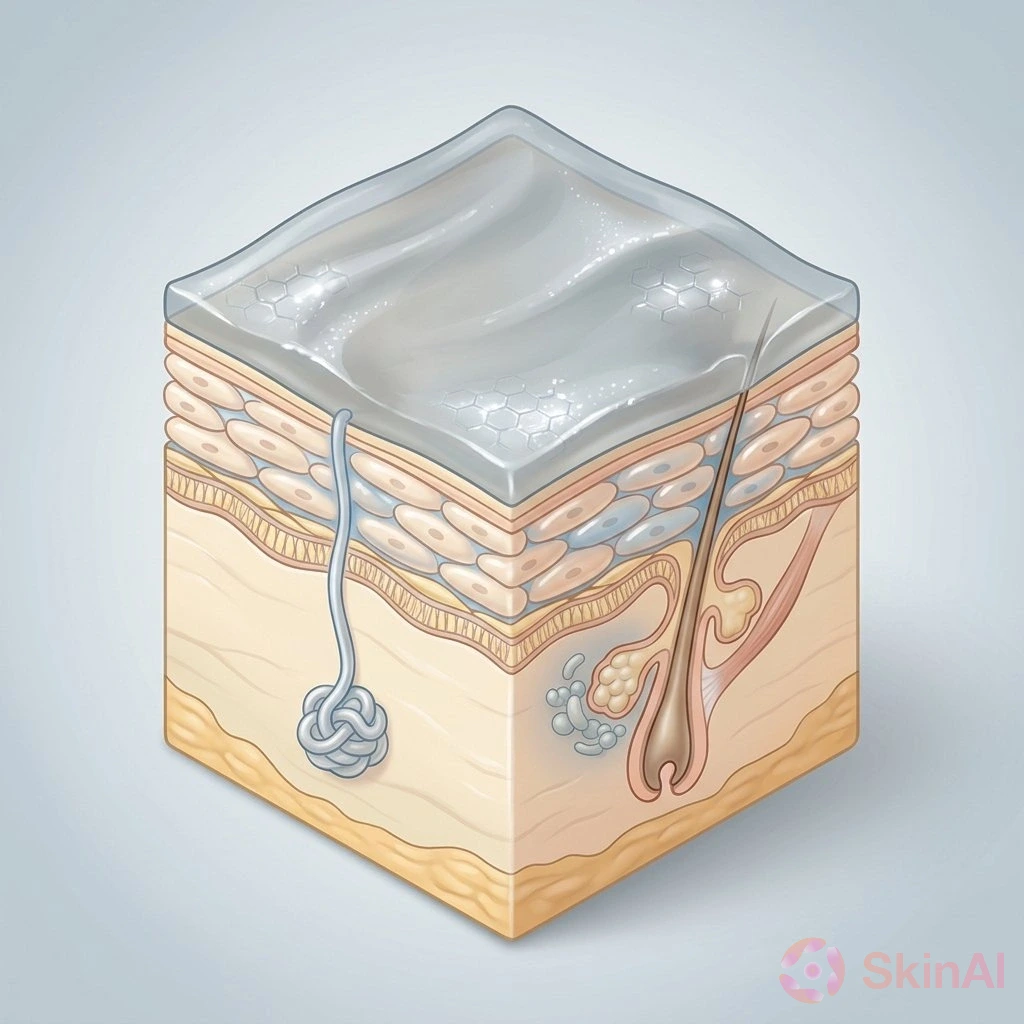
Petrolatum (the main ingredient in petroleum jelly) sits on the skin surface and forms a thin, semi-permeable film. That film stops water from evaporating away from the top layer of skin.
This water loss is called transepidermal water loss (TEWL). By blocking TEWL, petrolatum helps the skin keep whatever moisture it already has. It doesn’t add water or replace the skin’s natural oils — it just locks in what’s there.
What the research shows
Studies and reviews back the basic idea that petrolatum is an excellent occlusive.
One review found that petrolatum can be far more effective at reducing TEWL than other common occlusives, with very large reductions in water loss (Source: Kamrani et al.). Other research showed petrolatum applied to healthy skin reduced TEWL substantially in the first hour compared with ordinary creams (Source: Rubio-Santoyo et al.).
A notable 2016 study from Mount Sinai looked at what happens to skin cells after petrolatum is applied under occlusion for 48 hours. The researchers found that petrolatum increased certain antimicrobial molecules in the skin and turned on genes linked to barrier repair — changes that could help healing in damaged skin (Source: Czarnowicki et al.).
Will slugging cause acne?
Short answer: not always. Petrolatum itself scores very low on the comedogenic scale (a 0–1), meaning it’s unlikely to clog pores by penetrating deep into them (Source: Kamrani et al.).
Where problems come from is the environment slugging creates. If you put petrolatum on over unwashed skin, active acne, or pore-clogging products, the ointment can trap oil, bacteria, and leftover ingredients against your pores. That trapped mix can lead to breakouts or irritation — not because the petrolatum penetrated the pore, but because it sealed in what was already there.
Another issue is milia (tiny white bumps), which sometimes appear around the eye area if heavy ointments are used there.
Who might benefit — and who should be careful
Good candidates:
- People with dry, flaky, or sensitive skin who need help repairing a damaged skin barrier.
- People recovering from certain skin procedures who need to keep the area moist to heal properly (follow your provider’s instructions).
Use caution if:
- You are acne-prone or have active breakouts — consider spot-treating very dry areas rather than slathering your whole face.
- You get new bumps or irritation when you use heavy ointments, especially near the eyes.
Practical tips if you want to try slugging
Here are safe ways to try it, based on how doctors discuss the practice:
- Clean skin first. Always start with a gentle cleanser so you’re not sealing dirt, oil, or active treatments into your skin.
- Use it selectively. If you’re acne-prone, apply a small amount only to very dry patches rather than the whole face.
- Don’t skip treatments. Slugging isn’t a replacement for products that rebuild the skin’s lipids (like ceramide-containing creams) or for prescription medicines when those are needed.
- Save your money. Many “slugging balms” cost a lot but contain the same active ingredient — white petrolatum — found in inexpensive petroleum jelly.
- Post-procedure care. Petrolatum can keep wounds moist and support healing after some procedures. Follow your provider’s instructions and keep using it until the skin is fully healed (Source: Czarnowicki et al.).
When to see a doctor
Make an appointment with a dermatologist or your provider if slugging causes persistent redness, new or worsening breakouts, signs of infection (increasing pain, spreading redness, pus), or if you’re unsure whether slugging is a good choice after a medical procedure.
Disclaimer
This article explains what research and skin experts say about slugging. It is for general information and does not replace medical advice. If you have specific skin conditions or questions, talk with a healthcare professional.
Sources
- Pagani K, Lukac D, Martinez R, Jablon K, McGee JS. Slugging: TikTok as a source of a viral “harmless” beauty trend. (Source: clinical dermatology review article)
- Rubio-Santoyo A, Sanabria-de la Torre R, Montero-Vílchez T, et al. Effects of extra virgin olive oil and petrolatum on skin barrier function and microtopography. (Source: Rubio-Santoyo et al.)
- Kamrani P, Hedrick J, Marks JG, Zaenglein AL. Petroleum jelly: a comprehensive review of its history, uses, and safety. (Source: Kamrani et al.)
- Czarnowicki T, Malajian D, Khattri S, et al. Petrolatum: Barrier repair and antimicrobial responses underlying this “inert” moisturizer. (Source: J Allergy Clin Immunol. 2016)