
Social Media Cosmetic Trends Linked to Skin Barrier Damage and Acne Delays
Why this matters
Many people turn to social media for skin-care tips and products. A recent study suggests those social-media-driven purchases may not be harmless: they were linked to damage to the skin’s outer layer, delays in seeing a doctor, and worse acne in people who already had acne. That matters because the products you choose and where you learn about them can affect how quickly you get help and how your skin responds.
What the study looked at
This was a physician-assessed cross-sectional study, which means researchers took a “snapshot” of people with acne at one point in time and looked for connections between their habits and their skin. The study included 408 patients aged 12 to 45 who visited a dermatology clinic. The average age was 20.9 years and about 77.5% were female.
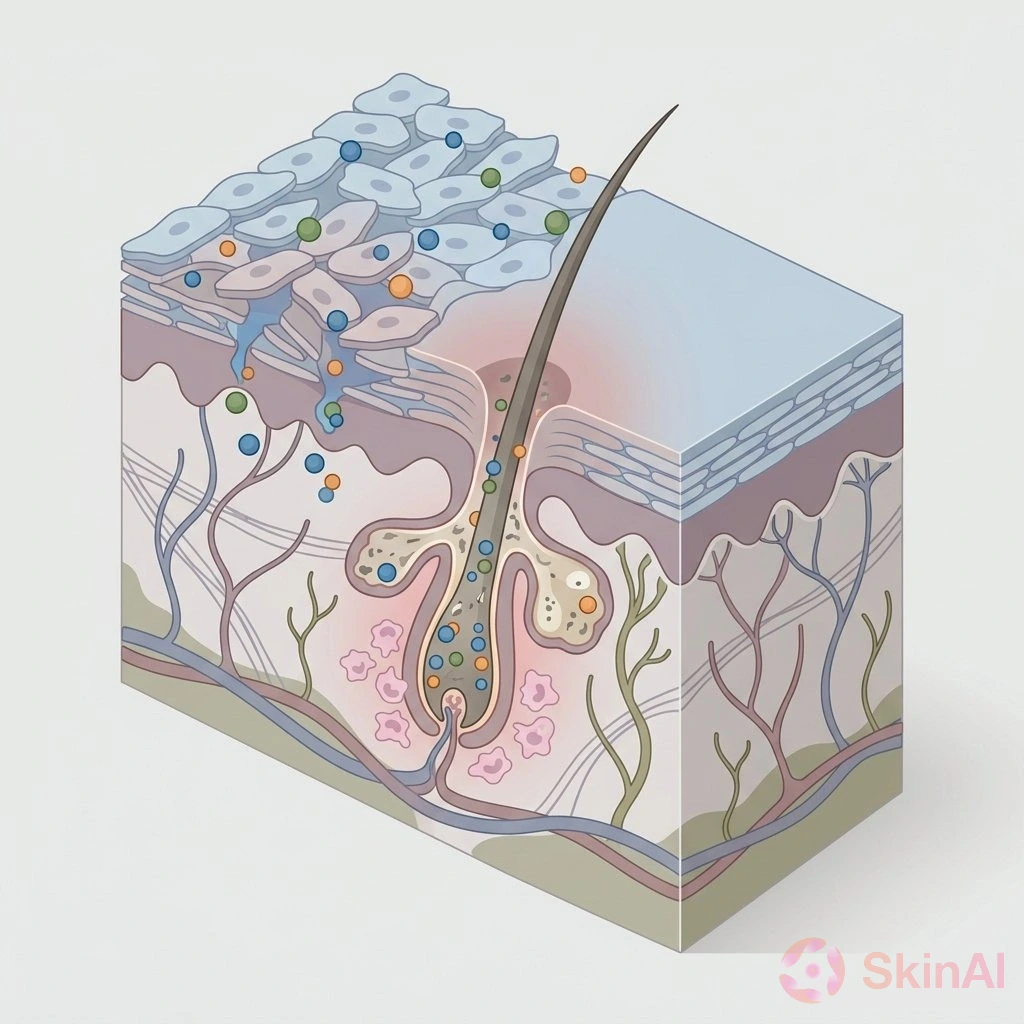
A dermatologist examined each person’s acne severity and checked for skin barrier damage. (The skin barrier is the outermost layer of skin that helps keep moisture in and irritants out.) Patients filled out questionnaires about their social media use, whether they bought products after seeing them online, which kinds of accounts they followed, and whether social media advice had delayed their visit to a doctor.
(Source: Association of Social Media-Driven Cosmetic Consumption With Skin Barrier Damage, Delayed Medical Consultation, and Disease Severity in Acne Vulgaris)
Key findings in plain language
Here are the main results you might notice at a glance.
- About 28.2% of people said they had bought a skin product after seeing it on social media.
- About 34.1% said social media recommendations had caused them to wait longer before seeing a doctor.
- Overall, 25.5% of the group had signs of skin barrier damage.
Buying from social media and skin damage
People who bought products because of social media were much more likely to have skin barrier damage: 64.3% of those buyers had barrier damage, compared with 10.2% of people who did not buy products from social media.
More products, more risk
The study also found that using more cosmetic products was linked with more barrier problems. Damage was seen in:
- 20.4% of people using 1 to 2 products,
- 64.0% of those using 3 to 5 products, and
- 77.8% of those using more than 5 products.
Delaying care and acne severity
Delaying a medical visit was associated with worse outcomes. People who waited had over six times the odds of skin barrier damage (odds ratio, OR = 6.65). Each jump to a higher category of product use increased the odds of barrier damage (OR = 3.94). Buying products after seeing them on social media was also an independent risk factor (OR = 3.25).
Delaying care was linked to more severe acne (OR = 3.03), and having skin barrier damage was itself linked to more severe acne (OR = 2.54). In concrete numbers, 41.7% of people who bought products through social media had severe acne, compared with 18.1% of people who did not make those purchases.
Which social platforms mattered?
The platform and the accounts people followed made a difference.
TikTok users in this study were more likely to buy products after seeing them online, to delay medical care, and to have more severe acne than Instagram users. For example, buying after seeing a product was reported by 58.7% of TikTok users compared with 40.4% of Instagram users; delayed medical visits were reported by 66.7% of TikTok users versus 49.0% of Instagram users. The study also found that TikTok users had a higher average acne severity score than Instagram users.
Influencers versus dermatologists
People who followed only influencer accounts had much higher rates of barrier damage and severe acne than those who followed only dermatologist accounts—even though both groups reported knowing the same number of skin-care terms. Specifically:
- Barrier damage: 53.0% for influencer-only followers vs 8.3% for dermatologist-only followers.
- Severe acne: 42.6% for influencer-only followers vs 12.2% for dermatologist-only followers.
The study also found that following dermatologists appeared protective: following dermatologist accounts was associated with lower odds of barrier damage (OR = 0.28).
The “knowledge paradox”
Interestingly, knowing more dermocosmetic terms (words used to describe skin-care products and ingredients) did not mean better outcomes. People who knew more terms were more likely to buy products after seeing them online, more likely to have barrier damage, and more likely to delay seeing a doctor. Because the study looked at one point in time, it can show associations but cannot prove that one thing caused another.
What this could mean for you
If you’re dealing with acne, where you get information and which products you try may affect your skin. Jumping from one product to another or piling on many new products after seeing them online might increase the risk of irritating or damaging your skin’s protective layer. That damage can make acne harder to treat.
Following licensed dermatologists or evidence-backed medical accounts may help you find reliable guidance and could lead to earlier medical help. The study’s authors suggested that verified health-professional labels and clear, evidence-based content guidelines on social media might help people find sound advice more easily.
When to see a doctor
Talk with a dermatologist or your primary care doctor if:
- Your acne is painful, spreading quickly, bleeding, or showing signs of infection.
- Your acne is affecting your daily life, mood, or self-confidence.
- Your skin becomes very red, sensitive, flaky, or shows new kinds of irritation after trying products.
- Home treatments and over-the-counter products haven’t helped after a few weeks.
It’s best to discuss treatment options with a clinician who can recommend the right approach for your skin. This article is not medical advice.
Keeping track of changes
Taking simple photos of your skin under similar lighting every week or two can help you and your clinician see whether a product is helping or making things worse. Notes about when you started new products or changed routines can also be useful during a clinic visit.
Limitations to remember
This was a cross-sectional study, so it shows links rather than cause-and-effect. The results apply to the people in the study and are a useful signal, but not final proof.
Sources
- Association of Social Media-Driven Cosmetic Consumption With Skin Barrier Damage, Delayed Medical Consultation, and Disease Severity in Acne Vulgaris: A Physician-Assessed Cross-Sectional Study. Journal of Cosmetic Dermatology. 7 (2026): e71020. doi:10.1111/jocd.71020
- Acne Information on Instagram: Quality of Content and the Role of Dermatologists on Social Media. Journal of Drugs in Dermatology. doi:10.36849/JDD.6411