
Zasocitinib’s Unique TYK2 Targeting Shows Promise for Palmoplantar Psoriasis
New oral psoriasis medicine shows promise for palms and soles
If you have psoriasis on your palms or the soles of your feet, you know how frustrating and limiting it can be. These areas can be painful and slow to heal. New data presented in 2026 looked at an oral medicine called zasocitinib for this type of psoriasis, and the results give doctors more to consider when treating hard-to-manage spots.
A quick plain-language summary
Researchers reported phase 3 trial results for adults with moderate palmoplantar psoriasis from two studies called LATITUDE PsO-3001 and 3002. The company that makes the drug shared the data and the results were also presented at the 2026 American Academy of Dermatology Innovation Academy. The main takeaways:
- Zasocitinib uses a different way of working compared with many similar pills for psoriasis.
- Safety data through 24 weeks did not show new safety concerns compared with earlier time points.
- Common side effects included acne, and other typical symptoms such as sore throat, diarrhea, headaches, and nausea.
- One death occurred soon after a participant started the study drug, but investigators did not link it to the medication.
(Source: Takeda press release; LATITUDE PsO-3001 and 3002 presentation at AAD, 2026)
How does zasocitinib work?
To understand what’s different about this pill, it helps to know a little about the cell signals involved in psoriasis.
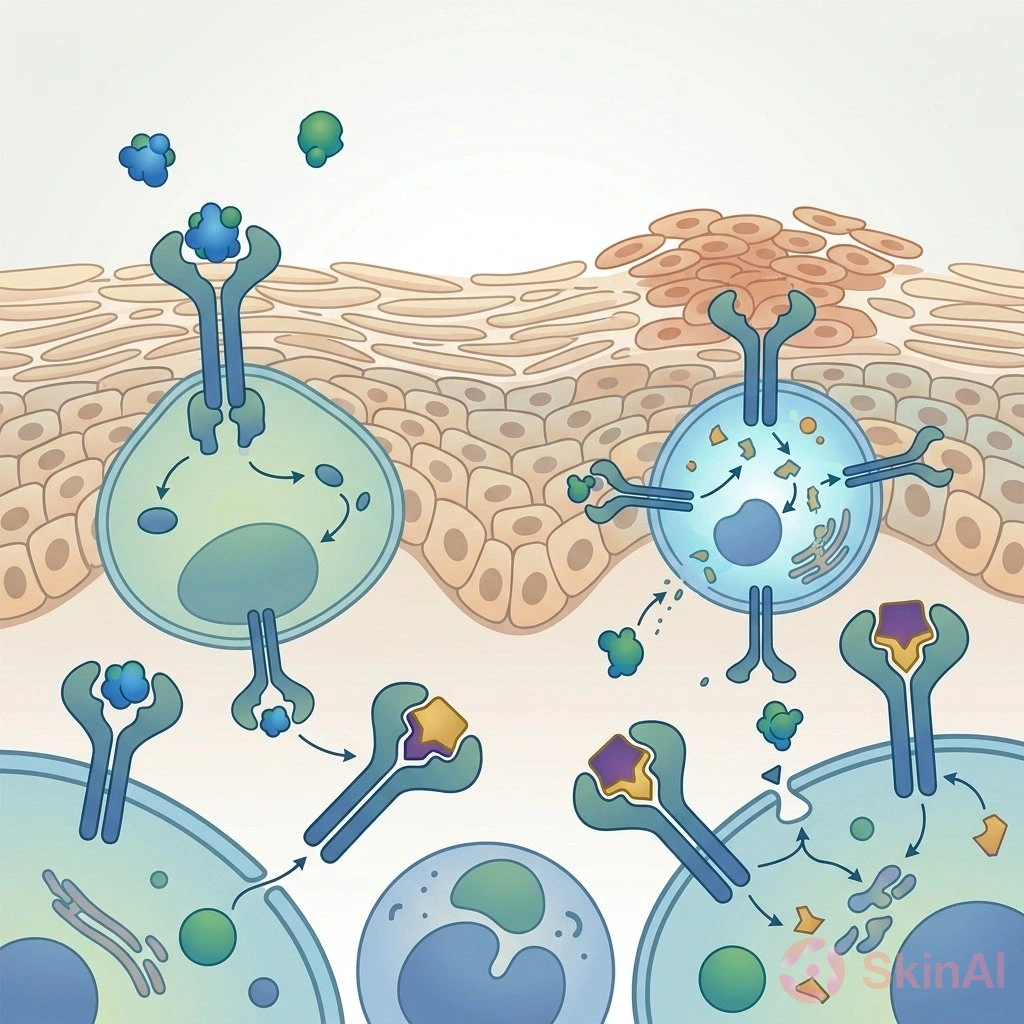
Many newer oral psoriasis drugs target a group of proteins called JAKs (Janus kinases). Those drugs usually block the place where a cell’s energy molecule, ATP, binds. That is called orthosteric inhibition. Zasocitinib is different because it targets a related protein called TYK2 and binds at a separate regulatory spot on the protein, called an allosteric site. That means it changes the shape of the protein instead of competing with ATP directly.
In simple terms, zasocitinib is designed to be very selective for TYK2. The developers report that it binds to TYK2 much more strongly than to the other JAK proteins (JAK1, JAK2, JAK3), with more than a million-fold difference in selectivity. This selectivity may affect how well the drug works in certain areas and may influence the side effect profile. (Source: LATITUDE PsO-3001/3002 presentation, 2026)
What the safety data showed
The phase 3 results compared early safety data at 16 weeks with results out to 24 weeks.
Investigators did not find new safety issues between those time points. The most commonly reported side effect was acne, which is known to happen with TYK2-targeting drugs. Other commonly reported events included nasopharyngitis (a common cold), diarrhea, headaches, and nausea. (Source: LATITUDE PsO-3001/3002 presentation; Takeda press release)
There was one death among people taking zasocitinib that occurred the day after the study began. The study team reported that this death was not considered related to the study medication. Safety details like this are closely reviewed by the study teams and regulators. (Source: LATITUDE PsO-3001/3002 presentation, 2026)
Where this fits in psoriasis treatment
Dermatologists now have many more treatment options than in the past. There are more than 13 biologic medicines (injectable or infusion drugs) approved for psoriasis, and several oral treatments are being studied. Zasocitinib would add another oral option if it continues to show positive results in trials. (Source: expert interview and trial presentations, 2026)
Compared with older scalp and skin treatments—like tar mixes, salicylic acid, and long-term steroid creams—today’s options aim to be more targeted and easier to manage. The new data on zasocitinib are one piece of the evolving picture of care for people with psoriasis.
When to talk with your dermatologist
If your psoriasis affects your palms or soles, or if other areas are not responding to creams or current therapies, it’s reasonable to discuss new treatment options with your dermatologist. They can explain whether a medication like zasocitinib might be appropriate for you, weigh the risks and benefits, and review safety monitoring.
Seek medical advice right away if you have rapidly worsening symptoms, signs of infection (increased pain, swelling, fever), unusual bleeding, new lumps, sudden weight loss, or other concerning changes. These issues need prompt medical evaluation.
Keeping track of visible changes
It can help to photograph affected areas and note dates, symptoms, and treatments you tried. A simple photo record gives your clinician a clearer picture of how your skin responds over time and helps you prepare for visits.
Disclaimer
This article summarizes trial results and expert comments presented at a medical meeting and in a company press release. It is not medical advice and does not replace a conversation with your doctor or dermatologist. Treatment choices should be made with a healthcare professional who knows your medical history.
Sources
- Takeda. “Takeda’s zasocitinib demonstrates consistent, high rates of skin clearance across the body, including hard-to-treat and high-impact sites, in phase 3 psoriasis studies.” Press release, 2026. (Source: Takeda press release)
- Armstrong AW, et al. “Zasocitinib, a once-daily oral TYK2 inhibitor, demonstrates efficacy at high impact sites in adults with moderate-to-severe plaque psoriasis: results from two randomized phase 3 trials (LATITUDE-PsO-3001 and 3002).” Presented at the 2026 American Academy of Dermatology Innovation Academy; July 16, 2026; New York, NY. (Source: LATITUDE PsO-3001/3002 presentation)