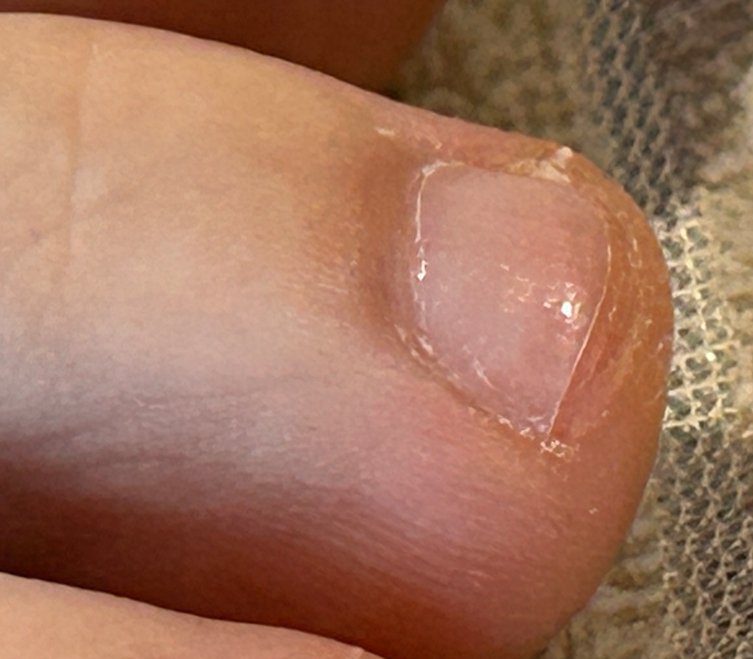
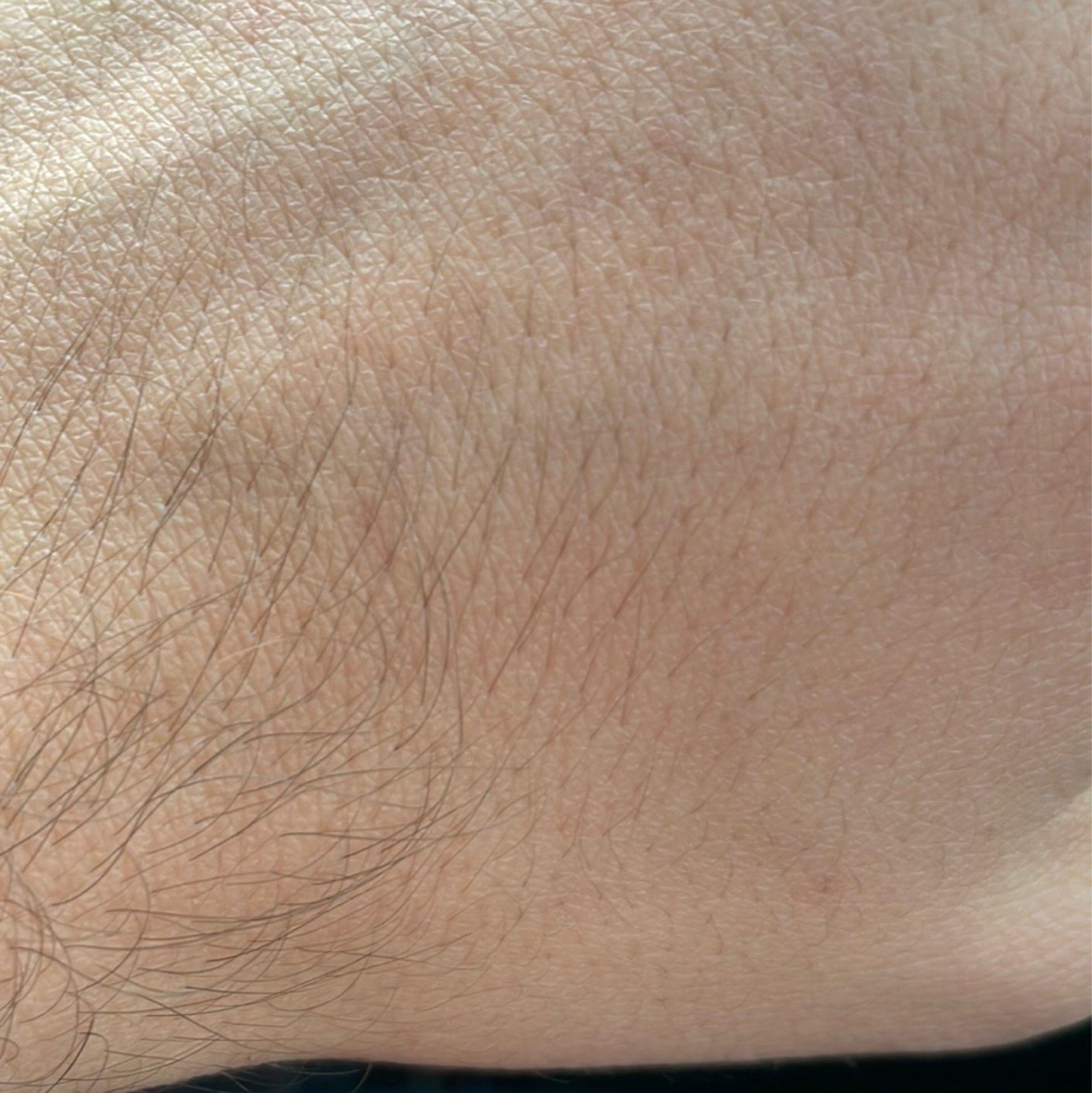
Healthy skin and nails: no pathology
This section is the reference point the rest of the atlas is measured against: skin and nails on which an examination finds nothing that needs treatment. It exists because “no pathology detected” is one of the most common results an AI skin analysis can return, and because that result is easy to read as more reassurance than it actually carries.
Healthy skin is not flawless skin, and healthy nails are not perfect nails. Almost everyone carries marks and variations, and the great majority of them are normal:
- Colour variation: skin tone differs across the body and across the year; sun-exposed areas are darker.
- Ordinary moles, freckles and skin tags: most adults have between ten and forty moles, and a person’s moles tend to resemble one another.
- Texture: visible pores, fine lines, small rough patches on the upper arms, and mild seasonal dryness are all normal findings.
- Nail variations: fine lengthwise ridges that increase with age, small white spots after minor knocks, and a lunula that is prominent on some people and invisible on others.
What a negative result means is narrower than it sounds. It says that in that photograph, of that area, at that moment, no pattern associated with a skin disease was recognised. It is not a full skin examination, it does not cover skin or nails outside the frame, it is not a diagnosis, and it does not override a symptom. Its value comes from repetition: knowing what your skin looks like when it is healthy is what lets you recognise, quickly, the day something changes.
Explanation of risks:
- Low Risk: No disease pattern was recognised in the submitted image. This is a good outcome, but it is not a clearance — a screening result describes one area at one moment and cannot exclude a lesion elsewhere, an early change below the resolution of a phone camera, or a condition that has yet to appear.
💊 Treatment: There is nothing to treat when no pathology is found. What is worth doing is establishing a baseline: know what your skin and nails normally look like, keep photographs of anything you intend to watch, and bring anything that changes to a clinician early. Do not self-treat or remove a lesion you have not had identified in person.
💡 Skin Self-Exams Tips: Check your own skin once a month in good light, using a mirror for the back and a partner’s help where needed. Include the scalp, behind the ears, between the fingers and toes, the soles and the nails. A mole that is changing, a lesion unlike your others, a sore that has not healed in about four weeks, or a new dark streak under a nail should be assessed in person regardless of any screening result.

Medical review
Board-Certified Dermatologist · Fellow of the American Academy of Dermatology (FAAD)