
Understanding and Treating Port Wine Stains: Latest Advances Explained
What are port wine birthmarks and why they matter
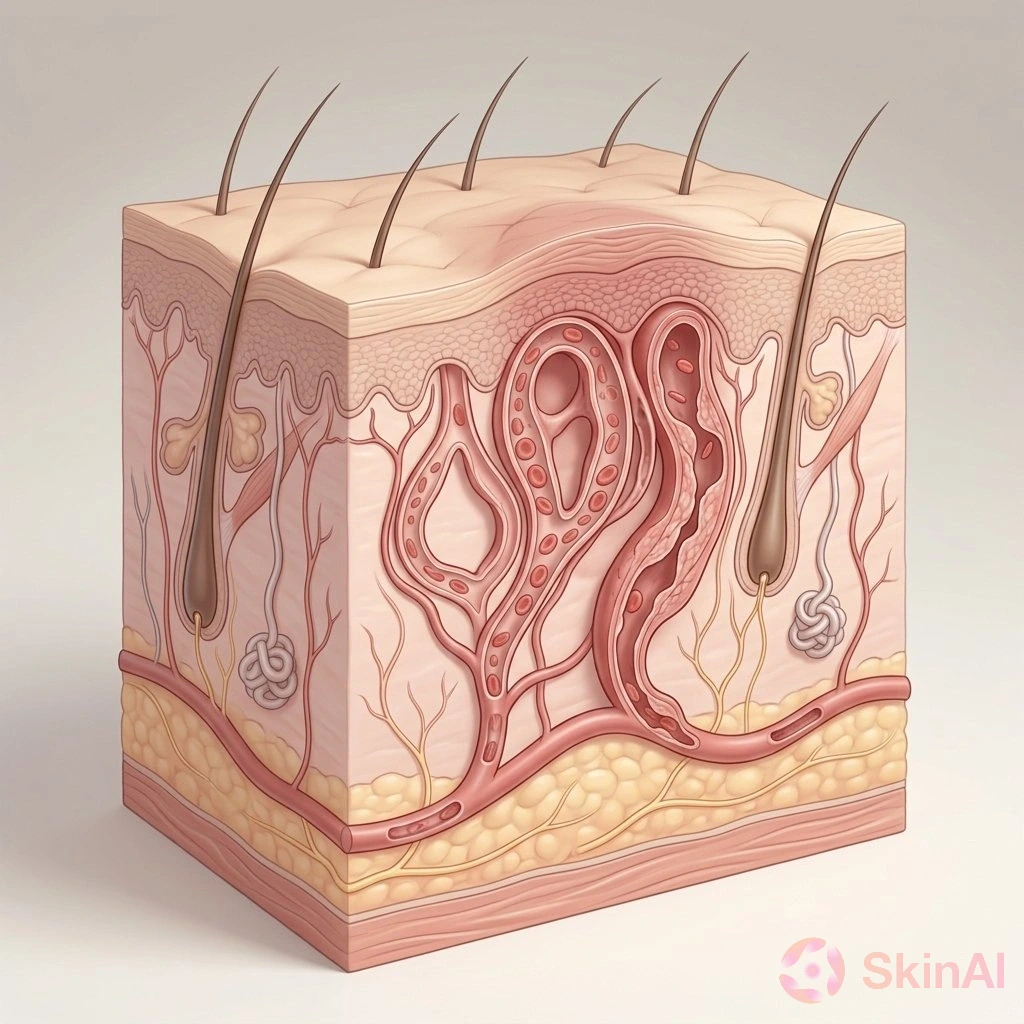
Port wine capillary malformations (PWCMs), often called port wine stains or birthmarks, are patches of extra blood vessels in the skin that some people are born with. They usually show up as flat pink, red, or purple areas at birth. Over time, some of these marks can change — becoming thicker, developing small bumps, or involving deeper tissues. These changes can affect how the marks look and how well treatments work. (Source: Don’t Be Rash podcast interview with Kristen Kelly, MD and Andrew Krakowski, MD)
How PWCMs can change over time
At birth, a PWCM is usually flat and fairly light in color. But these lesions can slowly evolve over years or decades. Some become darker or thicker, and a few develop visible vascular nodules or affect underlying structures. The size and depth of the blood vessels vary from person to person, which is one reason treatment responses are hard to predict. (Source: Don’t Be Rash podcast interview with Kristen Kelly, MD and Andrew Krakowski, MD)
What causes them?
PWCMs are caused by genetic changes that affect some of the blood vessels in the skin. Researchers are especially interested in a gene called GNAQ, which is commonly involved in these birthmarks. Scientists hope that learning more about these genetic pathways will help guide better treatments in the future. (Source: Don’t Be Rash podcast interview with Kristen Kelly, MD and Andrew Krakowski, MD)
Treatment options explained in plain language
The most commonly used and well-studied treatment for PWCMs is the pulsed dye laser (PDL), a type of laser that targets blood vessels and has a long safety record. Doctors often consider PDL the standard option, and it can sometimes be started very early in life, even within the first few weeks. Early treatment may lead to better fading in some children. (Source: Don’t Be Rash podcast interview with Kristen Kelly, MD and Andrew Krakowski, MD)
Why earlier treatment can help: younger skin often has smaller, more superficial vessels and lower skin pigment, which can let the laser reach the blood vessels more effectively. Babies also have more fetal hemoglobin, which may make the laser work differently. Starting treatment early may also help reduce the social or emotional effects of a visible birthmark before school age. (Source: Don’t Be Rash podcast interview with Kristen Kelly, MD and Andrew Krakowski, MD)
Other procedures doctors may consider
Not every PWCM responds the same way, so other light- and laser-based options might be used in certain situations. These include shorter-wavelength 532-nm lasers, intense pulsed light (IPL), and deeper-penetrating lasers like 755-nm or 1064-nm systems. The deeper lasers can reach thicker or nodular lesions, but they also carry higher safety risks and are generally used more in adults. Photodynamic therapy, which combines an injected light-sensitive medicine with a light source, is another option being explored. It may work across different skin tones, but it can cause system-wide light sensitivity and discomfort during the procedure. (Source: Don’t Be Rash podcast interview with Kristen Kelly, MD and Andrew Krakowski, MD)
Why PWCMs sometimes come back or don’t fully clear
Even after laser treatment, some port wine marks can partially return. That happens because the underlying genetic change remains in some of the blood vessel cells, and new vessels can form. Response also varies by location — facial lesions often lighten more readily than those on arms or legs, and side-of-face marks may respond better than those in the center of the face. Right now, clinicians cannot reliably tell how many treatments a person will need or how complete the clearing will be. (Source: Don’t Be Rash podcast interview with Kristen Kelly, MD and Andrew Krakowski, MD)
Research and what may come next
Researchers are looking more closely at the biology behind PWCMs and at imaging tools such as optical coherence tomography, which can map how deep and dense the blood vessels are. These advances could help doctors pick the best treatment for each person and predict who is most likely to improve. Patient and advocacy groups like the Sturge-Weber Foundation and the Vascular Birthmark Foundation have also helped raise awareness and support research efforts. (Source: Don’t Be Rash podcast interview with Kristen Kelly, MD and Andrew Krakowski, MD)
When you might want to see a doctor
Talk with a pediatrician or dermatologist if a birthmark is changing quickly, starts bleeding, becomes painful, looks infected, or grows rapidly. You may also want to see a specialist if the mark affects your or your child’s self-esteem or social life. A dermatologist can discuss options, risks, and what to expect from treatment. Treatment decisions should always be made together with a medical professional. (Source: Don’t Be Rash podcast interview with Kristen Kelly, MD and Andrew Krakowski, MD)
Keeping photos over time can be helpful. Taking regular, well-lit pictures of the birthmark lets you and your doctor see subtle changes and track response to treatment.
Short disclaimer
This article summarizes information from a podcast interview and is meant to help you understand PWCMs in plain language. It is not medical advice. For personal recommendations or urgent concerns, please see a healthcare professional.
Sources
- Don’t Be Rash podcast interview with Kristen Kelly, MD and Andrew Krakowski, MD (episode produced in collaboration with the Society for Pediatric Dermatology).
- Society for Pediatric Dermatology (mentioned in the podcast production).
- Sturge-Weber Foundation (mentioned in the podcast).
- Vascular Birthmark Foundation (mentioned in the podcast).