
Sun Safety Insights July 2026: Melasma Care, Tanning Myths, and Melanoma Risks
Why this matters now
Summer brings more time outside, and with that comes questions about sun protection, skin color changes, and how we find and treat worrying spots. This article pulls together several timely topics: a new sunscreen ingredient approval that’s getting attention, practical care for melasma (a common brown patch condition), trends in tanning and sunburns in unexpected places, and a look at recent drug trial results for psoriasis. The goal is to help you understand what to watch for and when to see a clinician.
A hidden sunburn risk: melanoma where people don’t look
People usually check their face, arms, and legs for unusual moles. But some spots are easy to miss. One real-life example involved a woman named Kelly English, who noticed an irritated mole on her lower back after starting a new exercise routine. While checking that area, she and her doctor found another lesion in the center of her buttocks.
A dermatologist evaluated the spot and, after a biopsy, confirmed it was a stage I superficial spreading melanoma. Melanoma is a type of skin cancer that starts in pigment-producing cells. Stage I means it was caught relatively early, which typically improves the outlook, but Kelly still faced a difficult recovery. The surgery site reopened, required daily wound care, and caused weeks of pain because the area moves a lot.
Kelly’s story highlights something dermatologists are seeing more of: sunburns and tanning in places that don’t usually come up in sun-protection talks, and cancers that appear in locations people rarely inspect. When sunscreen and sun-avoidance advice focus only on the face and arms, other exposed or intermittently exposed areas can be overlooked.
What to look for
- New or changing moles, especially those with uneven color, irregular borders, or that are larger than a pencil eraser.
- Lesions that itch, bleed, become painful, or look different from your other moles.
- Spots in places you don’t usually check, such as the back, buttocks, scalp, under the breasts, or between toes.
When to see a doctor
If a mole or spot is changing, painful, bleeding, or you’re simply worried, make an appointment with a primary care clinician or dermatologist. If you can’t get a timely in-person visit, mention the change during telehealth and ask how quickly you can be seen in person. For fast-growing or very symptomatic lesions, seek urgent evaluation.
Melasma: more than a patch of darker skin
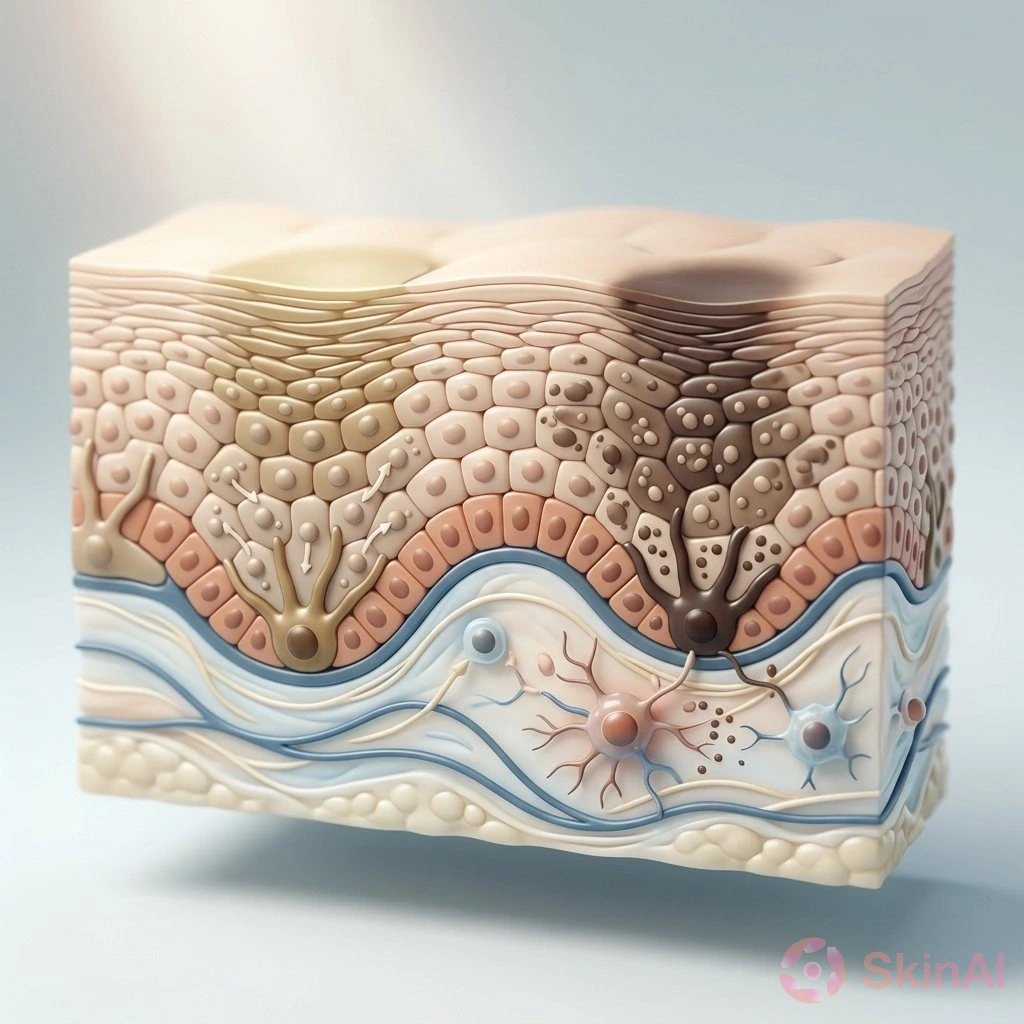
Melasma is a common condition that causes brown or gray-brown patches, usually on the face. Although it may look small or only cosmetic to some clinicians, people living with melasma often feel a real emotional or social burden from it.
Melasma is especially common in people with darker skin tones. That matters because some treatments that work for lighter skin can cause postinflammatory hyperpigmentation (PIH) in darker skin, meaning the skin can darken more after an aggressive treatment. That makes choosing the right approach more delicate.
Practical care approaches
In a recent interview, dermatologist Jane Yoo discussed how she balances effective care with minimizing harm. Some of the practical points she mentioned include:
- Using tinted sunscreens to improve daily use. Tinted sunscreens can help mask brown patches and encourage people to wear them regularly.
- How and when to stop hydroquinone. Hydroquinone is a commonly used lightening cream, but doctors often cycle it on and off to reduce side effects.
- Careful choice of lasers and chemical peels. These can help some patients, but they must be chosen and timed carefully to avoid making pigmentation worse.
- Considering oral versus topical tranexamic acid (TXA). Both forms are being used for melasma, and which is appropriate depends on individual risks and preferences.
- Watching for new research targets. Some promising ideas are still early, and not yet ready for routine use.
Treatment decisions for melasma depend on skin type, how much the condition affects daily life, and past treatment responses. If you have melasma, discuss options and risks with a dermatologist who has experience treating darker skin tones.
New drug data for plaque psoriasis: what the trial found
There’s growing interest in new oral treatments for psoriasis, an immune-related skin disease that causes red, scaly patches. A phase 3 trial called LATITUDE Atlas compared two oral medicines for moderate to severe plaque psoriasis.
In that trial (registered as NCT06973291), 606 adults were randomly assigned to take either zasocitinib 30 mg once daily or deucravacitinib 6 mg once daily for 16 weeks. The main measure was how many people reached PASI 100, meaning complete skin clearance, at week 16.
Results showed that more than 35% of patients taking zasocitinib achieved complete clearance at week 16, compared with about 14% of those taking deucravacitinib. The difference was statistically significant, and the separation between the groups appeared as early as week 8.
These results suggest that zasocitinib showed stronger short-term skin clearance in this study. If you’re considering treatment options for psoriasis, talk with your dermatologist about what the latest trial data might mean for you, including benefits, side effects, and long-term safety. Treatment choices should always be individualized.
When diagnostic tools aren’t always available
Some skin exams and minor procedures are simple in well-equipped clinics, but they can be hard to do in other settings. A playful story mentioned a dermatologist doing an emergency tracheostomy on a plane; the point is that tools and trained staff aren’t always where patients are.
Examples of barriers include:
- Rural clinics that take a long time to return biopsy results.
- Urgent care or mobile clinics that don’t have microscopes or pathology support.
- Patients who are too anxious, have cognitive disabilities, or other reasons that make a biopsy difficult.
- Telemedicine-only encounters where an in-person exam can’t happen for months.
These situations create real diagnostic challenges and can delay care. If you find yourself in one of these situations, ask your clinician about alternatives, referrals, or ways to speed up follow-up.
Keeping track of visible changes
It can help to document any new or changing spots with photos taken over time. A simple photo series makes it easier to notice slow changes and gives your clinician useful information at your visit. If you do take photos, try to use consistent lighting and angles.
Quick checklist: when to get checked
- Any new mole that looks different from your other moles.
- Moles that grow quickly, bleed, itch, or hurt.
- Brown patches or pigmentation that changes in size, color, or texture.
- Persistent rashes, painful skin changes, or wounds that don’t heal.
When in doubt, reach out to a healthcare provider. If a lesion looks rapidly worse, painful, or infected, seek prompt care.
Disclaimer
This article is for general information and is not medical advice. Treatment choices and diagnoses should be discussed with a healthcare professional. For any changing, painful, bleeding, or worrying skin lesion, contact a clinician promptly.
Sources
- Interview with Jane Yoo, MD, MPP, FAAD (Skin of Color Society member), July issue interview.
- Interview with Whitney Hovenic, MD, including the patient case of Kelly English, July issue interview.
- LATITUDE Atlas trial (NCT06973291), phase 3 randomized, double-blind trial comparing zasocitinib and deucravacitinib. (Study details reported in the July issue.)
- Article by Rivkah Epstein, PA-C, on diagnostic challenges in settings with limited access to tools and procedures, July issue article.