
Personalizing Alopecia Areata Treatment with FDA-Approved JAK Inhibitors
Why this matters
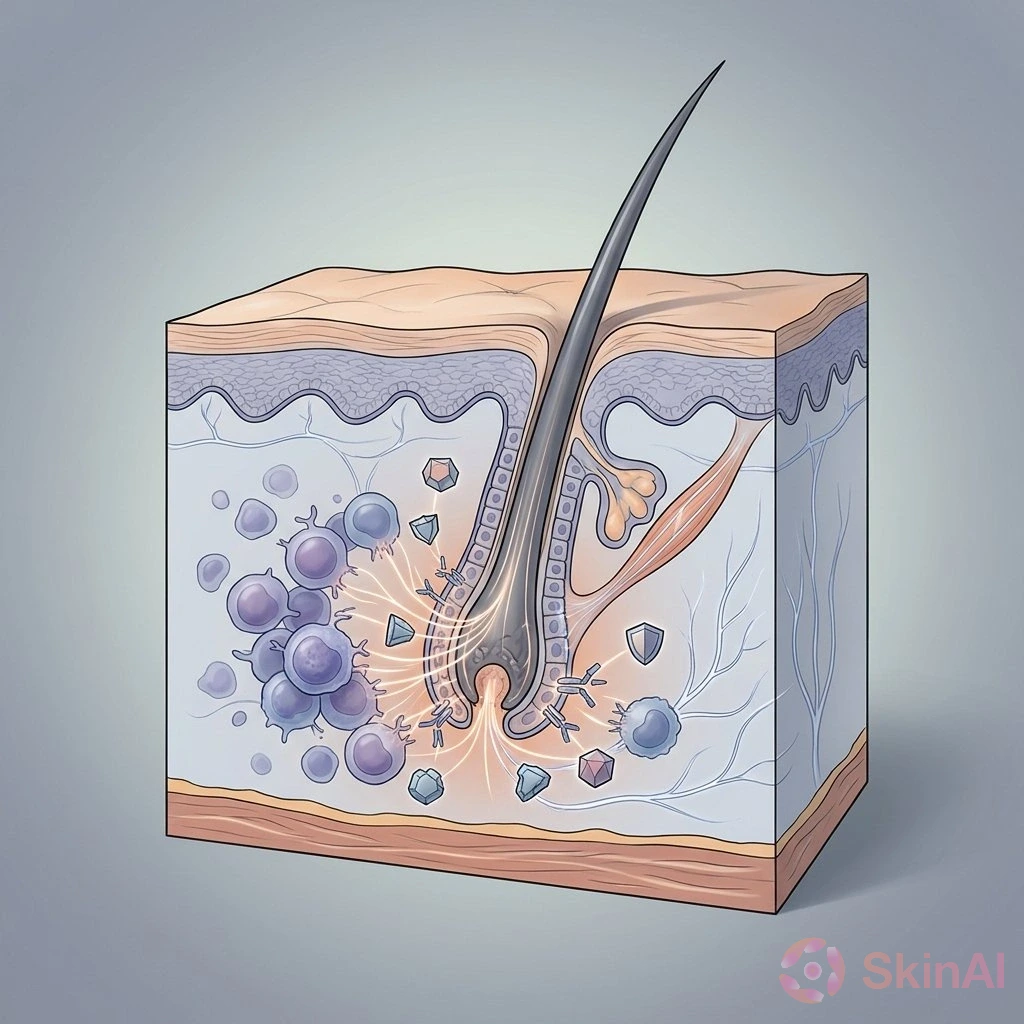
If you or someone you care about is losing hair suddenly in patches, you might be dealing with alopecia areata, an autoimmune condition that causes hair to fall out from the scalp and sometimes the face or body. At a recent case-based dermatology roundtable in Baltimore, clinician Chesahna Kindred, MD, discussed real patient stories and how doctors think about treatment choices for people with this condition. The discussion focused on practical issues: when to try pills called JAK inhibitors, how fast hair can come back, and what safety checks are needed.
Quick plain-language summary
Alopecia areata can range from small patches to almost complete hair loss. Doctors often weigh two things when deciding on stronger treatments: the amount of hair loss (measured with a tool called the SALT score) and how much the hair loss is affecting a person’s mental health and daily life. Three oral JAK inhibitors approved by the FDA for severe cases were discussed: deuruxolitinib (Leqselvi), ritlecitinib (Litfulo), and baricitinib (Olumiant).
How clinicians decided what to try
At the meeting, clinicians answered polling questions about their usual practice. For example, when to move from creams and injections to a systemic medicine taken by mouth. Of 11 respondents in one poll, 5 (45.5%) said the SALT score (a measure of how much scalp is affected) was the most important trigger for starting systemic therapy, while 4 (36.4%) said the psychosocial impact was the main factor.
Case 1: A wedding and time-sensitive hopes
The first case was a 33-year-old man with about 45% scalp hair loss who had a wedding in 6 months and had tried topical corticosteroids for 4 months with little improvement. Clinicians split on the approach. Some would try injections into the patches and reassess in 3 to 4 weeks. Others would start an oral JAK inhibitor right away because speed mattered.
In a poll, 8 of 11 respondents (72.7%) said how quickly a treatment works was extremely influential for this patient. When counseling this patient about deuruxolitinib (brand name Leqselvi), Dr. Kindred said, “You have a 30% chance of having at least 80% scalp coverage by the day of your wedding.” She also noted that baricitinib’s effects can increase with dose and that many people continue to improve over time. Still, she tells most patients to expect a full timeline of about a year for meaningful regrowth.
Some clinicians mentioned combining treatments, such as adding oral minoxidil and injections while on a JAK inhibitor. One comment from the group was, “You’re not married to your medication,” meaning treatments can be adjusted or combined based on how someone responds and what they prefer.
Case 2: Fast progression and the emotional impact
The second case was a 29-year-old woman whose scalp hair loss grew from 21% to 36% in three months. She felt anxious and avoided social situations despite trying rosemary oil and a topical corticosteroid for three months. Clinicians considered her disease severe, and several said her anxiety alone would push her into that category.
When asked what factors guide their choice among JAK inhibitors, clinicians most often picked effectiveness. In one poll, 9 of 27 selections (33.3%) picked efficacy first, followed by safety (8 selections, 29.6%) and insurance access (6 selections, 22.2%).
The panel reviewed patient-reported benefit data. For example, in the THRIVE-AA studies of deuruxolitinib, 22.5% of people taking 8 mg twice daily improved by six or more points on the Hospital Anxiety and Depression Scale, compared with 11.8% on placebo (P = .0003) (Source: THRIVE-AA trials). Other reported quality-of-life scores also improved in people taking ritlecitinib and baricitinib, with lower Skindex-16 scores reported at 24 to 48 weeks (Source: roundtable discussion).
Clinicians noted that what counts as “success” goes beyond the SALT number. Quality of life, confidence, and being able to participate in daily life were key goals for patients. On how long to wait before calling a treatment a nonresponse, attendees said they typically wait between six months and two years, and if needed many would switch to another JAK inhibitor—6 of 10 poll respondents (60%) said they would do that.
Case 3: Extensive loss and facial involvement
The third case described a 42-year-old man with 85% scalp hair loss and new loss of eyebrow and beard hair after six months of high-potency topical steroid plus minoxidil. Clinicians said facial hair loss adds to the emotional burden and makes injections harder to use. Facial hair can also carry particular cultural importance for some people.
For baseline testing before starting oral JAK inhibitors, clinicians usually order lab tests similar to those used before isotretinoin treatment, plus screening for tuberculosis and hepatitis. Dr. Kindred described checking labs at baseline, again at one to three months, and then coordinating yearly monitoring with the person’s primary care doctor.
One important safety note discussed was genetic testing for CYP2C9, an enzyme that affects how some drugs are processed. The FDA requires CYP2C9 testing before using deuruxolitinib. In a poll, 4 of 10 respondents (40%) said they do not order this test.
About blood clot concerns, presenters noted that the few reported venous thromboembolism (VTE) cases in some datasets involved people with a known clotting condition called factor V Leiden. The THRIVE-AA trials did not report deep vein thrombosis, pulmonary embolism, heart attack, or stroke through 24 weeks (Source: THRIVE-AA trials). Dr. Kindred said she was not convinced the available data prove an increased clot risk, and she encouraged clinicians to use their own judgment and comfort level when deciding how to monitor patients.
Another practical question was whether people stop therapy. The group heard that roughly half of people keep their regrown hair after stopping treatment and that if hair loss returns, about 80% can recapture regrowth when treatment is restarted (Source: roundtable discussion).
Practical challenges
Clinicians also talked about real-world issues like insurance approvals and the extra staff time needed to manage prescriptions and monitoring. In the final poll, 6 of 13 respondents (46.2%) said they already felt comfortable prescribing JAK inhibitors, while 4 (30.8%) said they wanted more guidance on monitoring and safety best practices.
What this means for patients
- Treatment decisions are personal. Doctors consider how much hair is lost and how much the loss affects a person’s life when choosing treatments.
- Oral JAK inhibitors are an option for severe or rapidly progressing alopecia areata. Three drugs were discussed: deuruxolitinib (Leqselvi), ritlecitinib (Litfulo), and baricitinib (Olumiant). Talk with your dermatologist about what might be right for you.
- Monitoring and testing matter. Labs, infection screening, and in some cases genetic testing (CYP2C9) are part of safe prescribing and follow-up.
- Mental health is a big part of care. Anxiety and social withdrawal can change how doctors classify disease severity and how quickly they may recommend stronger treatments.
Tracking changes to your hair
Keeping a simple photo diary can help you and your doctor see how your hair changes over time. Take clear photos from the same angles under similar lighting every few weeks, and note any new symptoms like scalp pain, redness, or breaks in the skin. This can make appointments more productive.
When to see a doctor
See a dermatologist if you have sudden patchy hair loss, if hair loss is spreading quickly, or if the hair loss is affecting your mood or daily life. Also seek care if you notice signs of infection, increasing pain, bleeding, or other new symptoms. Treatment choices and monitoring should be made with a healthcare professional.
Disclaimer
This article summarizes discussion from a clinical roundtable and reported study results. It is for information only and is not medical advice. Treatment decisions should be made with your dermatologist or healthcare provider.
Sources
- Case-based dermatology roundtable led by Chesahna Kindred, MD, Baltimore, Maryland. (Event summary used as a source for patient cases, clinician polling, and discussion points.)
- King B, Senna MM, Mesinkovska NA, et al. Efficacy and safety of deuruxolitinib, an oral selective Janus kinase inhibitor, in adults with alopecia areata: results from the Phase 3 randomized, controlled trial (THRIVE-AA1). doi:10.1016/j.jaad.2024.06.097 (Source: THRIVE-AA trials)
- Tsianakas A, Passeron T, Magnolo N, et al. Efficacy and safety of deuruxolitinib, an oral selective Janus kinase 1/2 inhibitor, in adults with alopecia areata: results from the THRIVE-AA2 Phase 3, randomized, double-blind, controlled trial. 2026;94(4):1134-1143. doi:10.1016/j.jaad.2025.11.070 (Source: THRIVE-AA trials)