
FDA Approves Rinvoq as First Oral Drug for Nonsegmental Vitiligo
FDA Approves First Whole-Body Treatment for Nonsegmental Vitiligo
The US Food and Drug Administration (FDA) has approved upadacitinib (Rinvoq) for people ages 12 and older with nonsegmental vitiligo, according to the drug’s manufacturer, AbbVie. Taken as a 15-milligram pill once a day, it is the first FDA-approved systemic treatment for this form of vitiligo. A systemic treatment works throughout the body, rather than being applied to individual areas of skin. (Source: AbbVie press release, November 23, 2026)
Nonsegmental vitiligo is a long-lasting, unpredictable autoimmune condition. This means the immune system is involved in the loss of skin pigment, or color. The condition can affect people emotionally as well as physically. AbbVie estimates that nearly 3 million US adults have nonsegmental vitiligo. (Source: AbbVie press release)
Before this approval, no systemic medicine had an FDA indication specifically for nonsegmental vitiligo. Treatment approaches often focused on individual areas where pigment had been lost.
Chris Bunick, MD, PhD, of Yale School of Medicine, said in an interview that treatment goals include slowing disease activity and restoring lost pigment. He described the availability of a whole-body option as a meaningful development, particularly for people with widespread vitiligo. (Source: Interview with Chris Bunick, MD, PhD)
How Upadacitinib Works
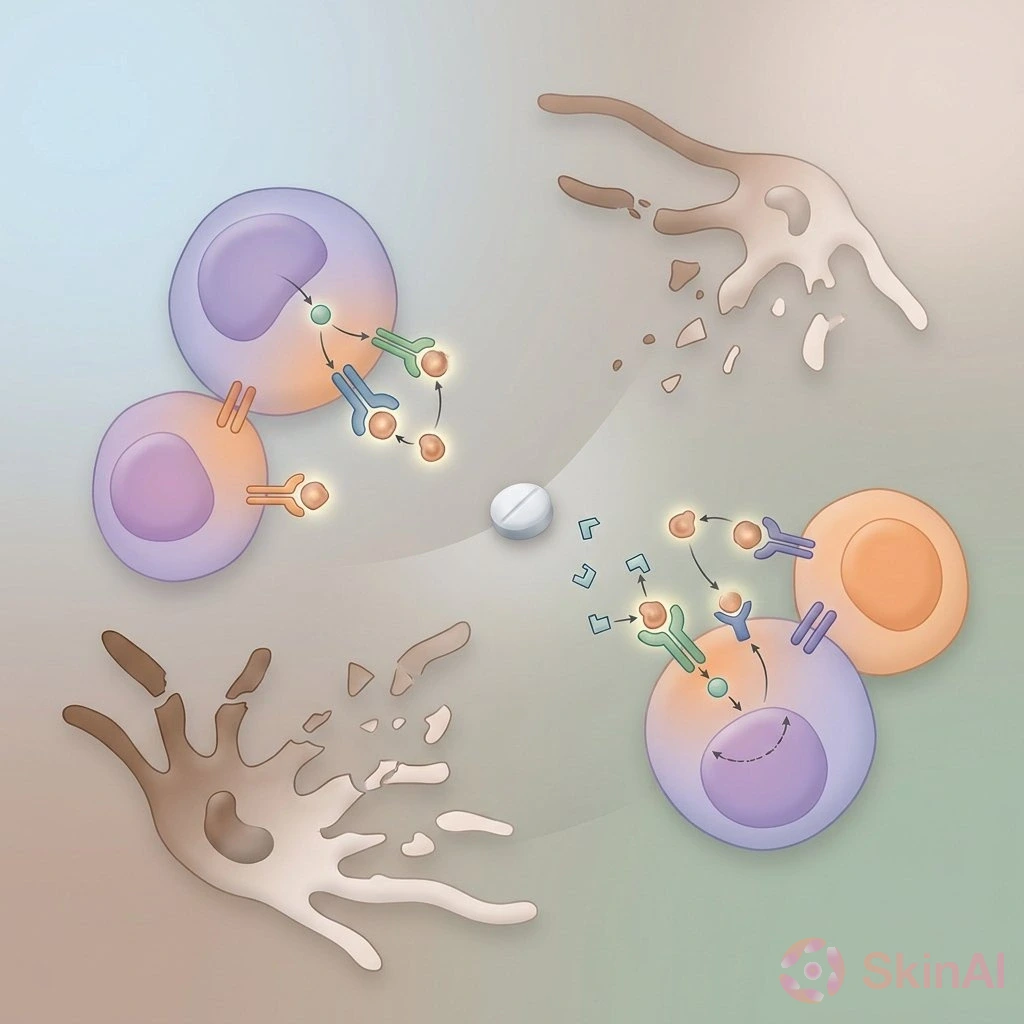
Upadacitinib belongs to a group of medicines called Janus kinase, or JAK, inhibitors. These medicines affect signals involved in the immune system. In laboratory testing, upadacitinib showed greater activity against one of these signaling proteins, JAK1, than against JAK2, JAK3, or tyrosine kinase 2. (Source: AbbVie press release)
The vitiligo approval brings the medicine’s number of approved uses in the United States to 10, according to AbbVie. Its other approved uses include atopic dermatitis, a common form of eczema. (Source: AbbVie press release)
What the Vitiligo Studies Found
The approval was based on results after 48 weeks in two phase 3 studies called Viti-Up-1 and Viti-Up-2. Phase 3 studies are large studies used to assess how well a treatment works and monitor its safety. (Source: AbbVie press release)
The two studies followed the same plan and included 614 people ages 12 and older who were eligible for systemic treatment. Viti-Up-1 included 308 participants, and Viti-Up-2 included 306. Participants were randomly assigned to take either 15 milligrams of upadacitinib or a placebo, an inactive pill, once a day. For every participant assigned to the placebo, about two were assigned to upadacitinib. (Source: Viti-Up studies; HCPLive, March 30, 2026)
For the first 48 weeks, neither the participants nor the study teams knew who was taking the medicine and who was taking the placebo. This is called a double-blind study. Each trial also included a planned 112-week open-label extension, during which participants knew they were receiving the medicine. (Source: AbbVie press release)
At week 48, researchers looked at two main measures: whether participants had at least a 75% improvement in their facial vitiligo score, and whether they had at least a 50% improvement in their total-body vitiligo score. These scores measure changes in areas affected by pigment loss. (Source: AbbVie press release)
- In Viti-Up-1, 25% of people taking upadacitinib reached the facial improvement target, compared with 6% taking the placebo. The total-body target was reached by 19% and 6%, respectively.
- In Viti-Up-2, 23% of people taking upadacitinib reached the facial improvement target, compared with 7% taking the placebo. The total-body target was reached by 21% and 6%, respectively.
The differences for both main measures met the studies’ threshold for statistical significance. In other words, the results were unlikely to be explained by chance alone under the statistical tests used. The researchers also adjusted for making multiple comparisons. (Source: AbbVie press release)
Researchers also looked at a higher facial improvement target of at least 90%. In Viti-Up-1, 16% of people taking upadacitinib reached that target, compared with 2% taking the placebo. In Viti-Up-2, the figures were 12% and 3%, respectively. These results show that some participants had substantial improvement, but many did not reach these targets within 48 weeks. (Source: AbbVie press release)
Seemal R. Desai, MD, president of the Global Vitiligo Foundation and an investigator in the trials, said in a statement that vitiligo’s effects extend beyond visible pigment loss. He noted that treatment has historically focused on individual affected areas rather than addressing the condition more broadly. (Source: AbbVie press release)
What Happened After 76 Weeks?
Results presented at the 2026 Fall Clinical Dermatology Conference suggest that improvement continued for some people who remained on upadacitinib. At week 76, the share who reached at least a 75% improvement in their facial score was 55% in Viti-Up-1 and 47% in Viti-Up-2. The share reaching at least a 50% improvement in their total-body score was 43% and 40%, respectively. (Source: Desai and colleagues, Viti-Up conference poster; AbbVie press release)
These later results need some context. They were based on the participants with data available at week 76, and AbbVie described them as descriptive results. By this point, the studies were open-label, so participants knew they were receiving upadacitinib. People who had taken the placebo through week 48 also switched to upadacitinib during the extension. The week 76 figures should not be read as a direct comparison with a group still taking a placebo. (Source: AbbVie press release)
Desai said the findings were encouraging because restoring pigment takes time. The reported facial and total-body response rates roughly doubled or nearly doubled between weeks 48 and 76, although the later figures reflect the participants with available data. (Source: AbbVie press release)
Safety and Monitoring
According to AbbVie, the safety findings in the two Viti-Up studies were generally consistent with what has been seen across the medicine’s other approved uses. (Source: AbbVie press release)
Upadacitinib’s prescribing information lists serious infections, cancer, major cardiovascular events such as heart attacks or strokes, and blood clots among its risks. People taking the medicine need laboratory tests before and during treatment. The original company announcement also notes a higher risk of cardiovascular events and death for people ages 50 and older who have at least one cardiovascular risk factor. (Source: AbbVie press release and prescribing information)
These risks are important to discuss with a doctor or dermatologist when considering treatment. The potential benefits and risks can differ from person to person.
Other Areas of Research
AbbVie reports that upadacitinib is also being studied in phase 3 trials for alopecia areata, an autoimmune condition that can cause hair loss; hidradenitis suppurativa, a condition that causes recurring painful skin lumps; Takayasu arteritis, inflammation of large blood vessels; and systemic lupus erythematosus, an autoimmune disease that can affect several parts of the body. Being studied for these conditions does not mean the medicine has been approved for them. (Source: AbbVie press release)
When to Talk With a Doctor
A doctor or dermatologist can help assess changes in skin color and discuss available treatment options. Seek medical advice about a skin change that is painful, bleeding, growing quickly, showing signs of infection, or otherwise concerning or uncertain.
This article is for general information and is not medical advice. Treatment decisions should be made with a doctor or dermatologist.
Sources
- AbbVie. “AbbVie’s RINVOQ (upadacitinib) approved as the first systemic therapy in the U.S. to treat adult and pediatric patients with nonsegmental vitiligo.” Press release, November 23, 2026. Read the press release.
- Desai SR, Turchin I, Grimes P, et al. “Long-term efficacy and safety of upadacitinib through week 76 in adults and adolescents with non-segmental vitiligo: results from 2 phase 3 studies (Viti-Up).” Poster presented at the 26th Annual Fall Clinical Dermatology Conference, October 8–11, 2026, Las Vegas, Nevada.
- HCPLive. “Upadacitinib safe, effective over 48 weeks for non-segmental vitiligo, with Thierry Passeron, MD, PhD.” Published March 30, 2026. Read the article.
- Interview with Chris Bunick, MD, PhD, Yale School of Medicine, quoted in the original article.