
New AAD Pediatric AD Guidelines Endorse Roflumilast, Ruxolitinib, Tapinarof Creams
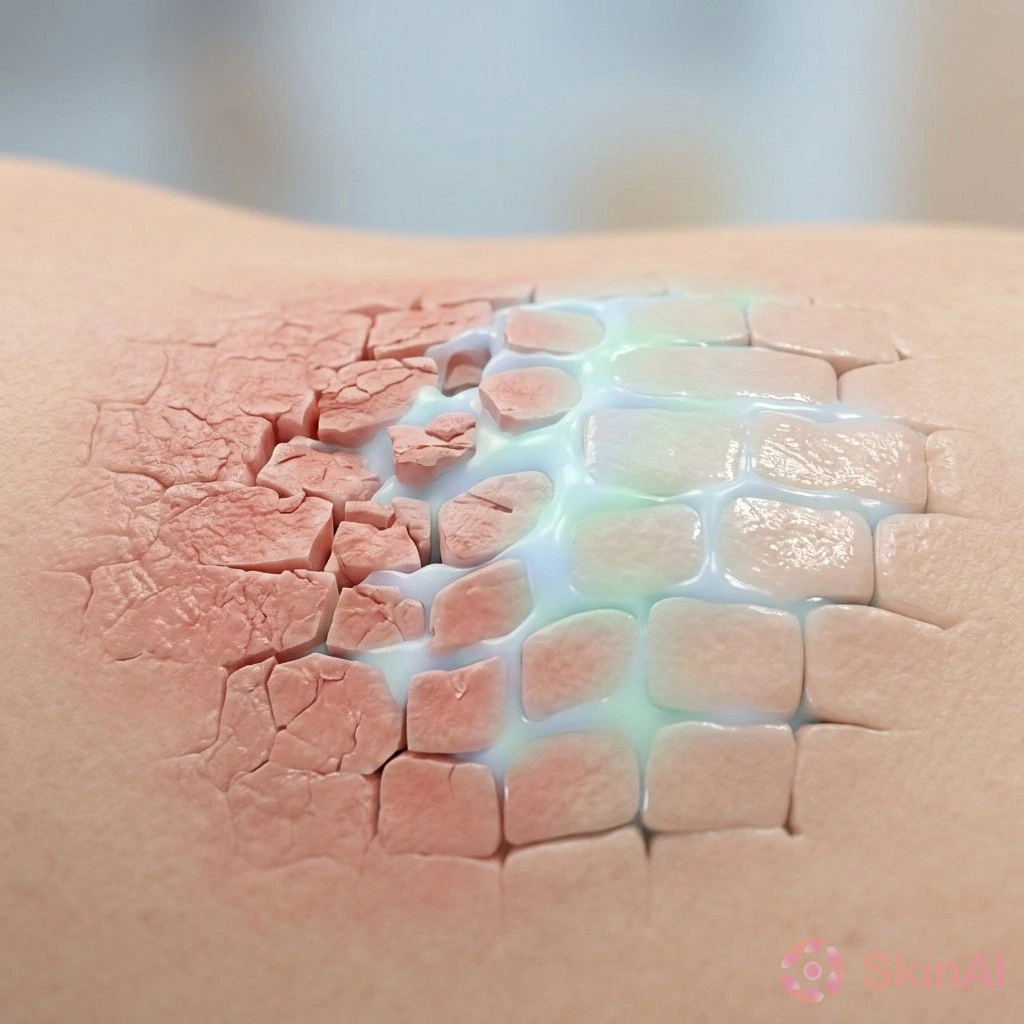
Why this matters
If your child has persistent eczema, recent pediatric guidelines bring more treatment choices that may reduce reliance on steroid creams. The American Academy of Dermatology (AAD) has released its first major update in over a decade for treating atopic dermatitis in children. Atopic dermatitis, often called eczema, causes red, itchy, inflamed skin and can be upsetting for families. The new guidance highlights several newer nonsteroidal creams that doctors can consider for kids as young as 2 years old. (Source: Guidelines of care for the management of atopic dermatitis in pediatric patients, Journal of the American Academy of Dermatology, 2026)
Quick takeaways
The guideline:
- Strongly supports three newer nonsteroidal topical creams—roflumilast, ruxolitinib, and tapinarof—for children from age 2. (Source: Guidelines of care for the management of atopic dermatitis in pediatric patients, 2026)
- Reminds clinicians that established options—steroid creams and topical calcineurin inhibitors—remain useful, but now there are more steroid-sparing choices, including crisaborole (approved for infants from 3 months). (Source: Guidelines of care for the management of atopic dermatitis in pediatric patients, 2026)
- Notes differences in how the new creams work and their side effects, so the best pick depends on age, where the rash is, safety concerns, and family preferences. (Source: Guidelines of care for the management of atopic dermatitis in pediatric patients, 2026)
What’s new in the guideline
The guideline is based on a careful review of the evidence and includes 27 recommendations. Three newer creams received strong, high-certainty endorsements for use in children. That means the guideline authors felt the evidence was solid enough to support recommending them as reasonable first-line options for inflamed skin. (Source: Guidelines of care for the management of atopic dermatitis in pediatric patients, 2026)
Newer creams explained
Here’s a plain-language look at the three key nonsteroidal topical treatments the guideline highlights.
Roflumilast cream
What it is: Roflumilast is a phosphodiesterase-4 (PDE-4) inhibitor. In simple terms, it reduces inflammation in the skin. The guideline recommendation is supported by several randomized trials, including a pediatric study called INTEGUMENT-PED in children aged 2 to 5. (Source: INTEGUMENT-PED trial)
How it performed in studies: Once-daily roflumilast cream showed better results than a placebo cream after 28 days, with more children achieving meaningful improvement in eczema severity. Dosing used in trials was 0.05% for ages 2–5 and 0.15% for ages 6 and up. (Source: INTEGUMENT-PED trial)
Side effects: Reported problems were generally mild. Some children had mild stinging or irritation at the application site, but overall side effects were similar to placebo in the trials. (Source: INTEGUMENT-PED trial)
Ruxolitinib cream
What it is: Ruxolitinib is a topical Janus kinase (JAK) inhibitor. It acts on inflammatory pathways in the skin and is approved for use in children 2 years and older whose eczema isn’t controlled by other topical treatments. The guideline reviewed several trials, including TRuE-AD3, a pediatric study in kids aged 2 to 11. (Source: TRuE-AD3 study)
How it performed in studies: Ruxolitinib significantly lowered eczema severity and increased the number of children judged “clear” or “almost clear” by doctors in clinical trials. A pooled analysis also found its effects similar to potent steroid creams. (Source: TRuE-AD3 study; Guidelines of care, 2026)
Safety note: The cream carries a boxed warning that comes from safety signals seen with an oral JAK drug (tofacitinib). Those signals include risks such as serious infections, certain cancers, major heart problems, and blood clots. These problems were not seen in the topical ruxolitinib trials, but because a small amount of medicine can be absorbed through the skin, the guideline advises limiting use to no more than 20% of the body’s surface area and avoiding it in children with risk factors related to the boxed-warning concerns. Families should discuss risks and benefits with their doctor. (Source: Guidelines of care, 2026)
Tapinarof cream
What it is: Tapinarof works through a different anti-inflammatory mechanism and was tested in the phase 3 ADORING trials, which included many children. (Source: ADORING trials)
How it performed in studies: Among the three new options, tapinarof showed the largest estimates of benefit in the trials. More children using tapinarof reached substantial improvement in eczema severity and meaningful itch relief compared with placebo. (Source: ADORING trials)
Side effects: Tapinarof was more often linked with folliculitis (inflamed hair follicles) and acne-like bumps. The guideline recommends discussing these possible reactions with families before starting treatment. (Source: ADORING trials; Guidelines of care, 2026)
How these creams differ and what that means
All three received strong recommendations, but they are not identical. Briefly:
- Roflumilast: once-daily dosing, minimal application-site reactions in trials.
- Ruxolitinib: potent anti-inflammatory effect, effectiveness similar to strong topical steroids, but has a boxed warning carried over from an oral JAK drug and guidance to limit treated area to 20% of body surface area. (Source: Guidelines of care, 2026)
- Tapinarof: showed the biggest benefit estimates in trials, but may cause folliculitis and acne-like eruptions. (Source: ADORING trials)
Because they work in different ways and have different safety profiles, doctors can choose the best option based on your child’s age, where the rash is, past treatments, and family preferences.
Where these creams fit in the treatment plan
The guideline places roflumilast, ruxolitinib, and tapinarof alongside topical corticosteroids and topical calcineurin inhibitors as first-line options for inflamed areas of skin. That means they can be considered early, rather than only after steroid creams have been tried. Phototherapy (light treatment) and systemic medicines (pills or injections that work throughout the body) are recommended for children whose eczema does not respond to well-managed topical therapy. (Source: Guidelines of care, 2026)
Safety and family conversations
All three creams had generally favorable safety profiles in trials, but each has unique side effects that are important to discuss:
- Application-site stinging or pain was most commonly seen with crisaborole and, to a lesser extent, roflumilast. (Source: Guidelines of care, 2026)
- Tapinarof had more treatment-related events like folliculitis and acne-like eruptions. (Source: ADORING trials)
- Ruxolitinib has a boxed warning derived from oral JAK inhibitor data, so the guideline suggests caution and limiting treated body area. (Source: Guidelines of care, 2026)
Talk with your child’s clinician about the likely benefits, possible side effects, and monitoring plans for any treatment you consider.
A note about the evidence
The guideline authors called for future head-to-head trials comparing these newer creams directly with generic steroid creams, and for studies that look at long-term safety and cost. That means while current evidence supports their use, more research would help clarify which medicine is best for which child. (Source: Guidelines of care, 2026)
When to see a doctor
See a pediatrician or dermatologist if your child’s eczema is:
- Severe, widespread, or not improving with regular treatment.
- Bleeding, very painful, or showing signs of infection such as increasing redness, warmth, yellow crusting, or pus.
- Causing sleep loss, major daily disruption, or emotional distress.
Always discuss new treatments with a clinician before starting them. This article is informational and not medical advice.
Keeping an eye on visible changes
Watching photos or notes over time can help you track whether a rash is improving, spreading, or changing in appearance. Keeping a simple record can make conversations with your child’s clinician more useful and may help spot worrying changes earlier.
Disclaimer
This article explains the recent guideline and study findings in plain language. It does not replace medical advice. Talk with your child’s doctor or a dermatologist to discuss treatment options tailored to your child’s situation.
Sources
- Guidelines of care for the management of atopic dermatitis in pediatric patients. Journal of the American Academy of Dermatology. 2026;95(1):121.e1-121.e26. doi:10.1016/j.jaad.2026.02.113. (Source: Guidelines of care for the management of atopic dermatitis in pediatric patients, Journal of the American Academy of Dermatology, 2026)
- Eichenfield LF, Serrao R, Prajapati VH, et al. Efficacy and safety of once-daily roflumilast cream 0.05% in pediatric patients aged 2-5 years with mild-to-moderate atopic dermatitis (INTEGUMENT-PED): a phase 3 randomized controlled trial. doi:10.1111/pde.15840. (Source: INTEGUMENT-PED trial)
- Eichenfield LF, Stein Gold LF, Simpson EL, et al. Efficacy and safety of ruxolitinib cream in children aged 2 to 11 years with atopic dermatitis: results from TRuE-AD3, a phase 3, randomized double-blind study. doi:10.1016/j.jaad.2025.05.1385. (Source: TRuE-AD3 study)
- Silverberg JI, Eichenfield LF, Hebert AA, et al. Tapinarof cream 1% once daily: significant efficacy in the treatment of moderate to severe atopic dermatitis in adults and children down to 2 years of age in the pivotal phase 3 ADORING trials. doi:10.1016/j.jaad.2024.05.023. (Source: ADORING trials)