
Fall Clinical 2026 Highlights: Advances in Skin Cancer and Psoriasis Care
What experts shared on Day 3 of the 2026 Fall Clinical Dermatology Conference
This report summarizes patient-focused takeaways from Day 3 of the 2026 Fall Clinical Dermatology Conference in Las Vegas. Speakers covered creams and foams for psoriasis, how to set realistic expectations for people with hidradenitis suppurativa, long-term safety data for certain eczema medicines, the dermatologist’s role in advanced skin cancer, tips for aesthetic and hair-loss visits, and the importance of clinician education for new treatments.
Quick summary
Highlights included new trial data showing that the topical medication roflumilast can improve sexual function and relationships for people with plaque psoriasis that affects the genitals. Experts also talked about what “success” can realistically look like for hidradenitis suppurativa, reassuring long-term safety signals for some JAK inhibitor treatments in atopic dermatitis (eczema), and why dermatologists should stay involved when squamous cell skin cancer becomes advanced. There were also practical tips for aesthetic consultations and for diagnosing and treating hair loss.
Roflumilast for psoriasis that affects the genitals
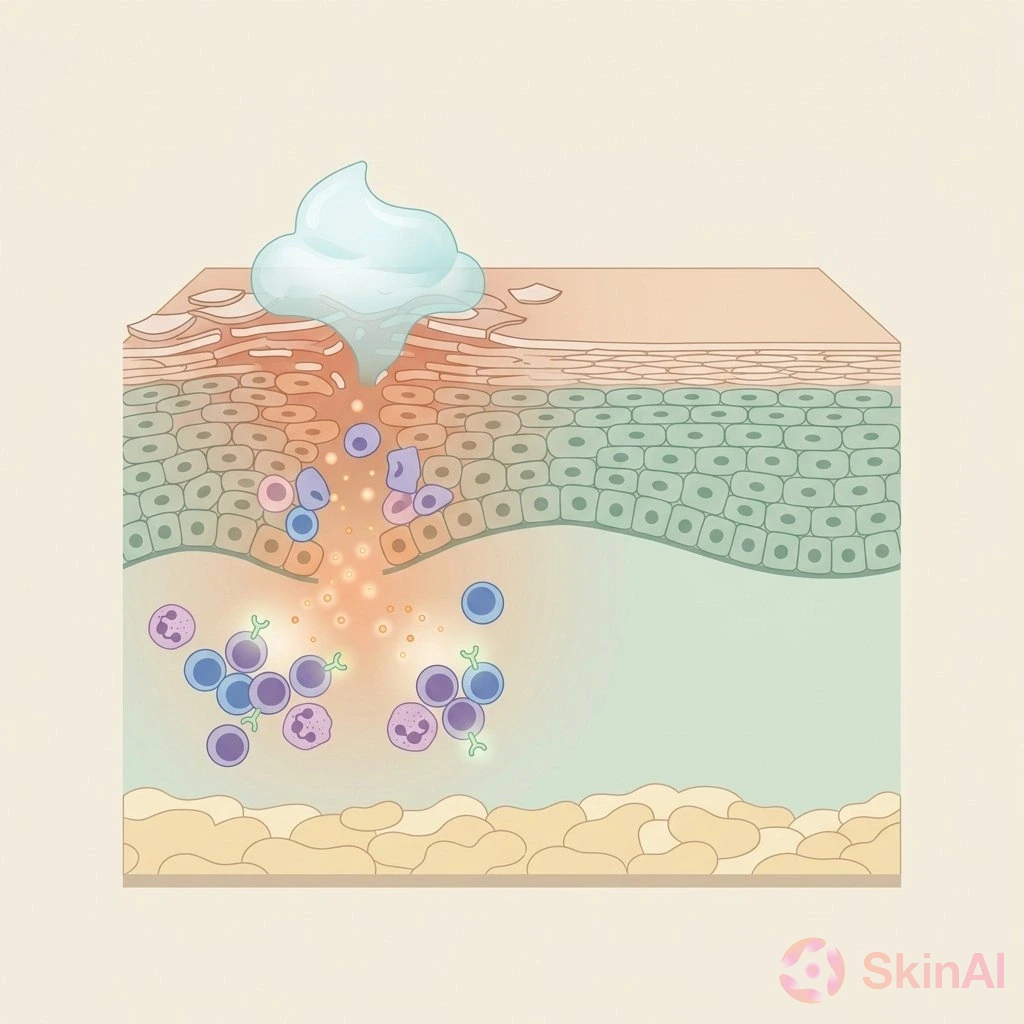
Several clinical trials looked at roflumilast in a cream 0.3% (Zoryve) and a foam 0.3%. Roflumilast is a topical prescription medicine applied to the skin. An analysis of the phase 3 DERMIS-1, DERMIS-2, and ARRECTOR trials found that people with plaque psoriasis generally saw better skin results and reported improvements in sexual function and personal relationships when the drug was used, including among those who had genital involvement at the start of the trials.
Key numbers from the trials at week 8:
- In DERMIS‑1/2, about 40% of people using the cream reached a clear or almost clear skin rating compared with about 6% using the vehicle (inactive) treatment.
- In the ARRECTOR trial, about 45% of people in the foam group reached that same skin outcome versus about 6% with vehicle in the subgroup who had genital psoriasis.
Quality-of-life measures also favored roflumilast, and patients reported fewer sexual difficulties and relationship problems compared with vehicle. Fewer than 1% of participants said they had definite discomfort 10 to 15 minutes after the first application.
These results were reported at the conference. The authors noted that p values for the genital subgroups were nominal, which means those subgroup findings should be interpreted with some caution. If you have genital psoriasis, you may want to bring up how symptoms affect intimacy when you talk with your dermatologist.
Setting realistic expectations for hidradenitis suppurativa (HS)
Hidradenitis suppurativa is a chronic skin condition that causes painful lumps, usually in areas where skin rubs together. One speaker stressed that early success with HS treatments often means fewer, smaller, and shorter flares rather than completely clear skin right away.
She suggested that patients and clinicians agree on specific things to watch between visits, such as:
- less drainage
- less pain
- new lumps that are fewer in number, smaller, and resolve more quickly
Checking progress at about 3 to 4 months helps decide whether a treatment is working. Because there are limited approved treatment options for HS, she recommended not switching therapies too quickly so a plan has time to work.
Long-term safety for JAK inhibitors in atopic dermatitis
Another session reviewed long-term safety data for two oral medicines called JAK inhibitors—upadacitinib (Rinvoq) and abrocitinib (Cibinqo)—used for moderate to severe atopic dermatitis, also known as eczema.
The reviewers looked at rates of major heart problems (MACE), blood clots (VTE), and cancers, and compared those rates with other medicines, including the biologic tralokinumab and the drug apremilast. Long-term data now cover roughly seven years. The presenters reported that, in people with atopic dermatitis, the safety rates for these JAK inhibitors are not higher than the rates seen with apremilast in conditions such as psoriasis or psoriatic arthritis.
The session also discussed reductions in markers of inflammation in the blood, such as high-sensitivity C-reactive protein, and real-world cases involving patients with a history of cancer, clotting, or heart disease. The overall message was cautiously reassuring, while reminding doctors to continue assessing individual patient risks and to monitor patients appropriately.
If you are considering one of these medicines, talk with your dermatologist about your personal health history and what monitoring might be needed.
When squamous cell skin cancer becomes advanced
Most cases of cutaneous squamous cell carcinoma (cSCC)—a common type of skin cancer—are treatable with surgery or other local methods. About 95% are manageable, but roughly 5% can become locally advanced or spread and be harder to treat.
Dermatologists are often the first to spot cSCC and should stay involved even after a patient is referred to an oncologist. There are three immune checkpoint inhibitor drugs discussed at the meeting that are used to treat advanced cSCC: pembrolizumab (Keytruda), cemiplimab (Libtayo), and cosibelimab (Unloxcyt). Ongoing research is looking at injecting some of these medicines directly into tumors, which might allow certain treatments to be delivered in a dermatology office in the future.
The session also raised concerns about proposed Medicare cuts that could reduce access to timely skin cancer care for older patients. The speaker suggested clinicians consider advocacy resources if they are worried about how policy changes might affect patients.
Practical tips for aesthetic visits and hair loss
On aesthetic consultations, one presenter emphasized that the initial consult is the most important part of care. She recommended routine screening for body dysmorphic disorder, a condition where people have an excessive preoccupation with perceived flaws, because it can be more common than expected. She also advised carefully documenting informed consent and taking clinical photos before starting any aesthetic treatment.
When it comes to hair loss, she stressed the importance of making the correct diagnosis first. Hair loss often has several causes at once, and starting combination treatment early can improve outcomes. Patients should expect it to take 6 to 12 months before seeing dramatic improvement. Treatments in development include topical antiandrogens, topical or oral JAK inhibitors, stem cell approaches, and exosome-based products, according to the presenter.
Why clinician education matters for new treatments
A speaker representing a pharmaceutical company said that developing new treatments is only the first step; educating clinicians so they can use those options safely and effectively is just as important. The company highlighted long-term partnerships with academic dermatology teams and noted continued interest in conditions such as alopecia areata and hidradenitis suppurativa because of their impact on quality of life.
The company presented two-year data for an alopecia areata treatment at this meeting and at the European Academy of Dermatology and Venereology. Those reports showed sustained responses for some patients, and the speaker noted that dermatologists will continue to want long-term safety and effectiveness data.
Keeping an eye on visible changes
If you have a skin condition, it can help to track visible changes over time with photos or notes about symptoms. This makes it easier to see whether a treatment is helping and to share clear information with your clinician at follow-up visits. If a spot changes in color, size, shape, or becomes painful, bleeds, or looks infected, contact a healthcare professional.
When to see a doctor
See a dermatologist or other healthcare provider if you have:
- new or changing skin growths, moles, or spots that worry you
- painful, recurring bumps or drainage (possible HS)
- severe eczema not controlled by over-the-counter measures
- hair loss that is sudden or getting worse
- concerns about how a skin condition affects intimacy or daily life
For serious symptoms such as rapid growth, bleeding, signs of infection, or sudden severe pain, seek care promptly.
Disclaimer
This article summarizes presentations and reported trial results from the 2026 Fall Clinical Dermatology Conference and related company-reported data. It is for informational purposes and not medical advice. Treatment decisions should be made together with your dermatologist or healthcare provider.
Sources
- 2026 Fall Clinical Dermatology Conference, Las Vegas — Day 3 presentations and posters.
- Phase 3 DERMIS-1 and DERMIS-2 clinical trials and the ARRECTOR trial — roflumilast cream and foam 0.3% results reported at the conference.
- Interview with Jennifer Hsiao, MD, on setting expectations for hidradenitis suppurativa (interview reported in conference coverage).
- JAK inhibitor safety symposium presentations reviewing long-term epidemiology data for upadacitinib (Rinvoq) and abrocitinib (Cibinqo) in atopic dermatitis; comparisons with tralokinumab and apremilast (presented at the conference).
- Presentations on locally advanced and metastatic cutaneous squamous cell carcinoma, including discussion of pembrolizumab, cemiplimab, and cosibelimab (conference session).
- Lectures on aesthetic patient evaluation and alopecia diagnosis and treatment (conference presenters).
- Company presentation by Sun Pharmaceuticals North America on clinician education and two-year alopecia areata data presented at the conference and at the European Academy of Dermatology and Venereology (EADV).