
Biofrontera Seeks FDA Approval to Expand Ameluz PDT for Full-Body Actinic Keratoses
Why this matters
If you’ve ever had rough, scaly patches on sun-exposed skin, you may have been told those could be actinic keratoses, or AKs. AKs are common, usually caused by long-term sun exposure, and can sometimes turn into a type of skin cancer called squamous cell carcinoma. A company called Biofrontera has asked the U.S. Food and Drug Administration (FDA) to expand the approved use of a skin treatment called Ameluz together with red light therapy so it can be used on AKs across the body, not just on the face and scalp. (Source: Biofrontera Inc., press release)
What the company is asking for
Biofrontera filed a supplemental New Drug Application (sNDA) with the FDA to allow Ameluz (aminolevulinic acid hydrochloride) 10% gel plus red light photodynamic therapy (PDT) using the RhodoLED lamps to be used for mild-to-moderate AKs on the arms, legs, neck, chest, and back as well as the face and scalp. Ameluz with red light is already approved in the U.S. for AKs on the face and scalp and, as reported by the company, for superficial basal cell carcinoma as of September 2026. If approved, the company says it would be the only PDT cleared in the U.S. for AKs across the whole body. (Source: Biofrontera Inc., press release)
How the treatment works, in plain language
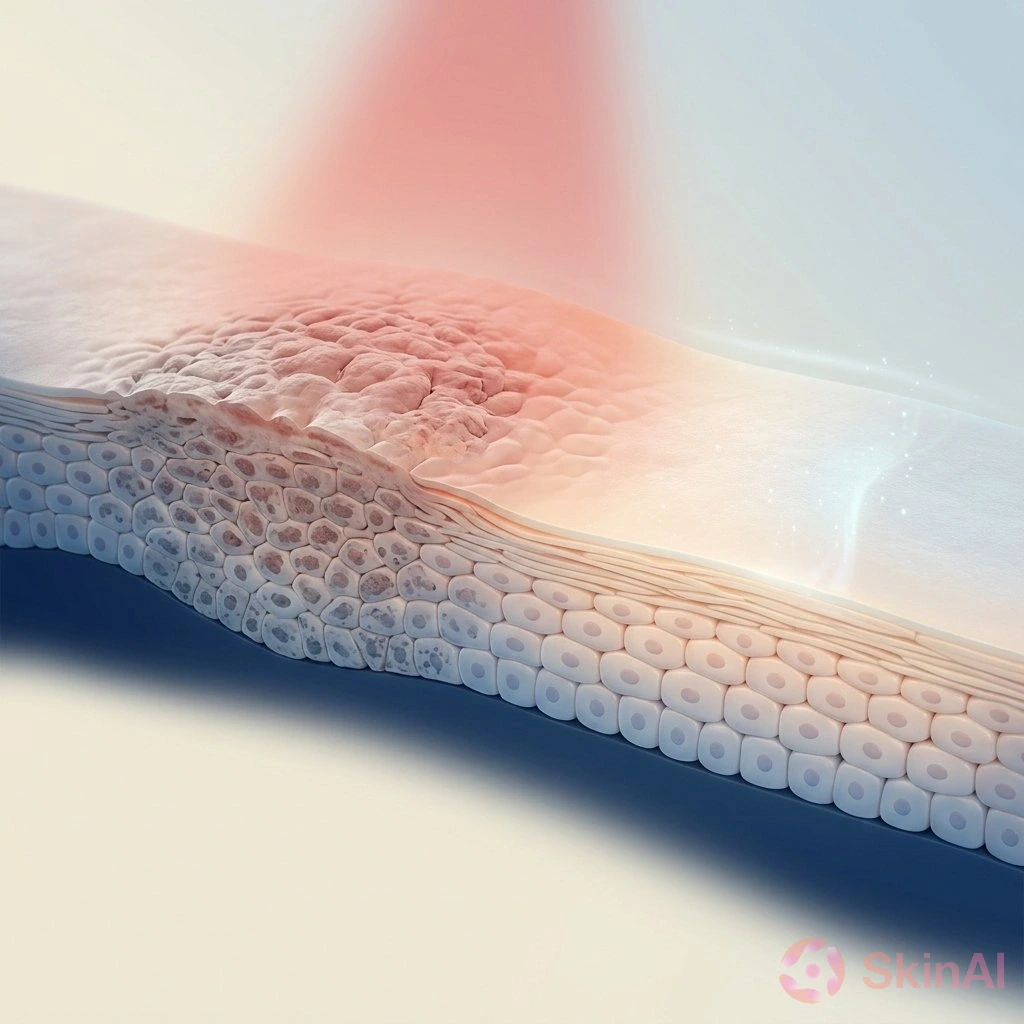
PDT combines a medication applied to the skin with a specific type of light. The medication makes the abnormal cells more sensitive to the light. When the light is applied, it activates the medicine and helps destroy the damaged cells. In this case, the medicine is a gel you apply to the skin and the light comes from a RhodoLED lamp.
What the study did and found
Biofrontera’s application is supported by a phase 3 clinical trial and a smaller phase 1 study looking at how the drug behaves when used over larger areas. The phase 3 trial included 172 people with 4 to 15 AKs in treatment areas roughly the size of 80, 160, or 240 cm². Patients received one PDT session and a second session at week 12 if lesions remained. (Source: Biofrontera Inc., press release)
At 12 weeks after the last PDT session, the study reported that 45.6% of people treated with Ameluz plus red light had complete clearance of all treated AK lesions, compared with 16.7% of people who received the gel vehicle plus red light. The company reported this difference as statistically significant. Patients continued to be followed for about one year after treatment to monitor longer-term outcomes. (Source: Biofrontera Inc., press release)
How patients felt about the results
Investigators reported good cosmetic outcomes. In the study, 75.2% of investigators rated the treated areas as “good” or “very good,” and 70.9% of patients gave the same ratings themselves. Also, 86.3% of patients said they would choose PDT again for future treatment. (Source: Biofrontera Inc., press release)
A change to how the light is given
Along with the expanded use, Biofrontera is asking the FDA to approve a modified way of delivering the light called an adjusted illumination protocol. Under the proposed method, the lamp’s intensity would be increased slowly to full strength, held there for a few minutes, then turned on and off in cycles until the full light dose of 37 J/cm² is given over a total of 15 minutes. The company says this approach is meant to make the treatment more comfortable, since pain during PDT can rise when treating larger skin areas. In their study, they reported pain during illumination was not worse than in an earlier Ameluz study that treated much smaller areas. (Source: Biofrontera Inc., press release)
What this could mean for people with AKs
AKs most often appear on sun-exposed places like the face and scalp, but they can also crop up on the arms, legs, neck, chest, and back. Many patients and doctors would welcome an approved option that covers those areas, especially since treatment choices for AKs outside the head and neck are more limited. Biofrontera and the researchers highlighted this point when they announced the application. (Source: Biofrontera Inc., press release)
Important cautions and context
This article is based on a company press release and reported trial results. While the study results sound promising, they come from a trial reported by the company that makes the medicine. Approval is not guaranteed. The FDA typically has 60 days to decide whether a supplemental application is complete enough to start a full review. (Source: Biofrontera Inc., press release)
Also remember that study conditions and results may not always match what happens in routine clinical care. Talk with your dermatologist about whether any treatment is right for you and about other options for AKs. (Source: Biofrontera Inc., press release; Eisen et al., Guidelines of care for the management of actinic keratosis, 2021)
When to see a doctor
See a healthcare professional if you have a rough, scaly, or crusty patch that is changing, bleeding, painful, getting larger, or if you are unsure what it is. Also talk to your dermatologist if you have many AKs or if they cover large areas of skin. They can recommend the best treatment for your situation.
Tracking visible changes
Keeping a simple photo diary of any spot that worries you can help you and your doctor spot changes over time. Photos can make it easier to notice growth, color changes, or new symptoms to bring up at your appointment.
Disclaimer
This article is for information only and is not medical advice. Treatment decisions should be made with your doctor or dermatologist. If you have concerning symptoms or rapidly changing skin lesions, seek medical attention promptly.
Sources
- Biofrontera Inc. Biofrontera submits supplemental New Drug Application to FDA to expand Ameluz red light PDT to actinic keratoses on the full body. Published October 8, 2026. (Source: Biofrontera Inc., press release)
- Eisen DB, Asgari MM, Bennett DD, et al. Guidelines of care for the management of actinic keratosis. 2021;85(4):e209-e233. doi:10.1016/j.jaad.2021.02.082. (Source: Eisen et al., 2021)