
Upadacitinib Outperforms Dupilumab in Early Skin Barrier Repair for Atopic Dermatitis
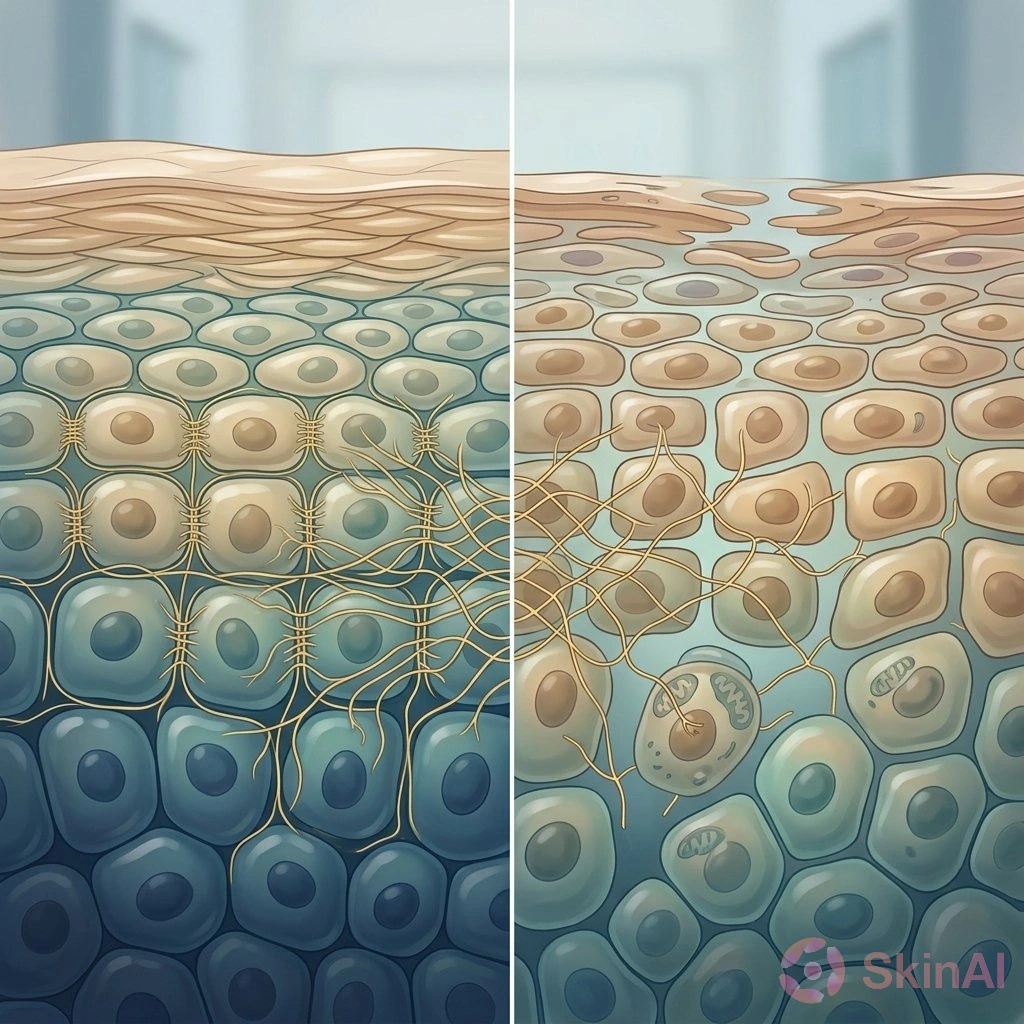
New lab results: how two eczema drugs affect skin at the molecular level
If you or someone you care for has moderate-to-severe atopic dermatitis (often called eczema), new lab analyses from a head-to-head study may be of interest. Researchers compared two prescription medicines used for this type of eczema — upadacitinib (brand name Rinvoq) and dupilumab (brand name Dupixent) — by looking directly at skin samples.
Quick plain-language summary
A small research group took skin biopsies from people in the Level Up study and examined gene activity and tissue changes. The results presented at a 2026 dermatology meeting suggest that upadacitinib may act faster and affect a wider range of inflammatory signals in the skin than dupilumab. Upadacitinib was also linked to early signs of repair in the skin’s barrier proteins, including higher filaggrin levels (filaggrin is a protein that helps the skin hold in moisture). The findings are interesting but preliminary, and the study had a small number of biopsies and was funded by the drug company AbbVie.
What the study looked at and why
The researchers wanted to understand how these two drugs change inflammation inside eczema skin. Atopic dermatitis is driven mainly by what doctors call type 2 inflammation, but other types of immune activity (called type 1 and type 17/22) can also play a role, especially in long-standing disease. Dupilumab works by blocking a specific receptor involved in type 2 inflammation (the interleukin-4 receptor alpha). Upadacitinib is a JAK1 inhibitor, which works inside cells to affect several different inflammatory pathways (the JAK-STAT pathway).
To compare them at the tissue level, the team examined optional skin biopsies from adults in the Level Up trial. This was an open-label, assessor-blinded biomarker group comparing upadacitinib 15 mg once daily to dupilumab given as labeled. Biopsies taken before treatment (baseline) and during treatment were analyzed using gene-expression testing and traditional histology (microscope-based tissue study).
In total, lesional (inflamed) skin samples were available from 33 people: 14 who received upadacitinib and 19 who received dupilumab. Nonlesional (unaffected-looking) biopsies came from 28 people, and tissue from 33 healthy volunteers served as a comparison.
What they found in the skin
Broader and earlier changes with upadacitinib
By week 4 of treatment, upadacitinib showed sizable changes in gene activity in the inflamed skin that lasted through week 16. These changes included reductions in markers linked to type 2 inflammation and also to type 1 and type 17/22 pathways. Some specific inflammatory signals that decreased with upadacitinib were IL-22, PI3, S100A12, and the interferon-related chemokines CXCL10 and CXCL11. Several of these shifts were already visible at week 4.
By contrast, dupilumab caused more modest gene-expression changes in this small group. The study also noted that lesional and nonlesional skin gene profiles began to look more similar over time, particularly with upadacitinib.
Early signs of skin barrier repair
Along with reduced inflammation, upadacitinib was linked to early increases in genes tied to skin barrier function, such as FLG (filaggrin), FLG2, several LCE family genes, and loricrin. The analysis also saw higher expression of IL-34 and IL-37, which the authors describe as molecules that can help dampen inflammation. These gene-level changes were noted as early as week 4.
Under the microscope, patients who achieved at least a 75% improvement on the Eczema Area and Severity Index (EASI75) showed less epidermal thickening (less skin overgrowth) and stronger filaggrin staining at week 4 with upadacitinib. Representative biopsy pictures presented at the conference illustrated reduced epidermal thickness and more filaggrin in responders to upadacitinib. Comparable statistically significant tissue changes were not seen with dupilumab in this small cohort.
What this might mean
The authors suggest that JAK1 inhibition (upadacitinib) may produce faster and broader effects in the skin compared with blocking IL-4Rα (dupilumab). That broader effect may include lowering several types of inflammation and helping repair the skin barrier earlier. These tissue-level changes could help explain clinical differences seen in the Level Up study.
However, the investigators were careful to say that these results are not final proof and that confirmatory studies are needed.
Limitations to keep in mind
This biomarker analysis used a relatively small number of optional biopsies. The design was open-label, meaning people and some study staff knew which treatment was given, although outcome assessors were blinded. The study was funded by AbbVie, and the company took part in study design, data collection and analysis, and review of the presentation. Some authors are AbbVie employees and may hold company stock or stock options. These factors can affect how findings should be interpreted, so more independent and larger studies would be helpful.
When to talk with your doctor
If your eczema is moderate-to-severe and treatments aren’t working well, discuss options with your dermatologist or prescribing clinician. This study provides lab-based information about how two medicines may act in the skin, but it does not replace a personalized medical recommendation. Your doctor can help weigh potential benefits and risks, consider your medical history, and choose the right treatment for you.
Keeping an eye on visible changes
It can be useful to track your skin over time by taking photos or notes about symptoms, especially before and after starting a new treatment. This helps you and your clinician see whether the skin is improving, staying the same, or getting worse.
Disclaimer
This article is for informational purposes only and is not medical advice. Treatment decisions should always be made with a healthcare professional. If you have severe symptoms, signs of infection (increasing redness, warmth, pus), bleeding, rapid changes, or severe pain, seek medical care promptly.
Sources
- Presentation: Bunick CG, Cotter D, Eyerich K, et al. “Upadacitinib targets multiple disease-relevant inflammatory pathways and restores skin barrier in atopic dermatitis lesions: Extending beyond Type 2 responses.” Presented at: European Academy of Dermatology and Venereology (EADV) Congress; September 30–October 3, 2026; Vienna, Austria. (Source: EADV presentation)
- Level Up study biomarker cohort data as presented at EADV 2026. (Source: Level Up study presentation)
- Journal references cited by the original presentation: Fyhrquist N, et al. J Allergy Clin Immunol. Guttman-Yassky E, et al. J Allergy Clin Immunol. (Source: Journal citations listed in the original material)
- Study funding and disclosures: The study was funded by AbbVie and the company participated in trial design, data collection and analysis, interpretation, and review. Several study authors are AbbVie employees and may hold company stock or stock options. (Source: original study disclosure)