
Bimekizumab Shows Superior Results Over Risankizumab in Psoriatic Arthritis Trial
New head-to-head PsA study: what was tested and why it matters
At the 2026 EULAR meeting, the drug company UCB presented 16-week results from a phase 3 trial called BE BOLD that compared two biologic medicines for adults with active psoriatic arthritis (PsA).
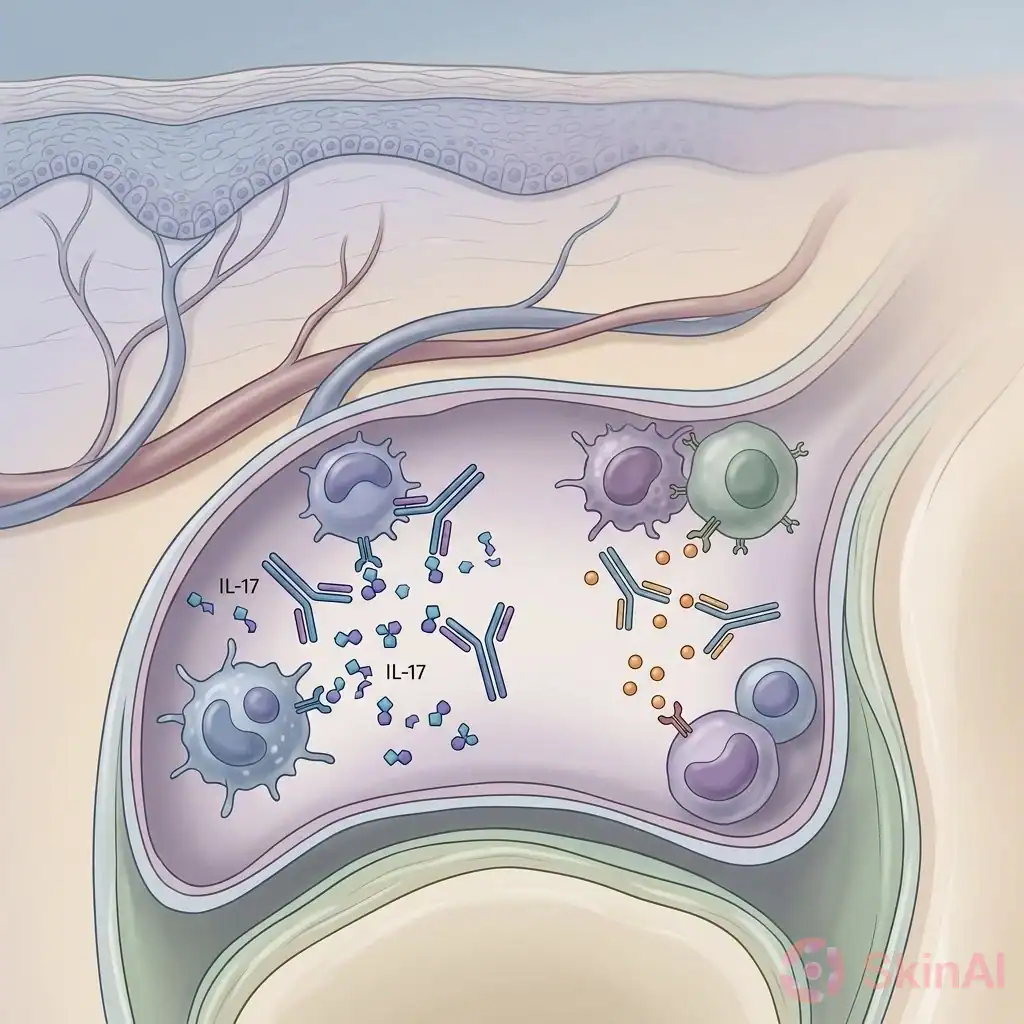
The study directly compared bimekizumab (brand name Bimzelx), which blocks two immune proteins called IL-17A and IL-17F, with risankizumab (brand name Skyrizi), which targets a different immune protein called IL-23. This is the first head-to-head trial in PsA to compare these two treatment approaches. (Source: UCB press release, BE BOLD week 16 data)
Quick plain-language summary
After 16 weeks, more people on bimekizumab reached a widely used measure of joint improvement than people on risankizumab. Other results, such as skin improvement and how quickly people felt better, also tended to favor bimekizumab, but some of those results were not counted as formally conclusive because of the trial’s testing rules. Side effects were similar overall, although mild fungal (Candida) infections were more common with bimekizumab, which fits with how that drug works.
What the key measures mean
Here are a few terms used in the study, explained simply:
- ACR50: a standard way to say a person had 50% improvement in joint pain, swelling, and other arthritis symptoms. It’s often used in trials to measure meaningful improvement in joints.
- PASI100: complete clearing of psoriasis skin plaques. PASI stands for Psoriasis Area and Severity Index.
- MDA (minimal disease activity): a combined measure that means disease is controlled across joints, skin, pain, function, and other areas important to patients.
- DAPSA: a score used to say whether a person has low disease activity or remission in PsA.
Main results from BE BOLD (week 16)
The trial met its main goal. At week 16, 49.1% of people taking bimekizumab reached ACR50, compared with 38.4% of those taking risankizumab. This difference was statistically significant, meaning it was unlikely to be due to chance. (Source: UCB press release, BE BOLD week 16 data)
UCB reported that this is the first biologic to show statistically significant superiority in ACR50 in a head-to-head PsA study.
Secondary and other findings
The first-ranked secondary outcome was MDA at week 16. MDA was reached by 43.0% on bimekizumab and 39.9% on risankizumab, but this difference was not statistically significant under the trial’s predefined testing plan (p=0.4408). Because of the trial’s hierarchical testing rules, later secondary outcomes were treated as descriptive rather than formally conclusive.
Still, several other measures favored bimekizumab numerically. For example:
- Both ACR50 and complete skin clearance (PASI100) at week 16 happened in 33.5% of people on bimekizumab versus 24.4% on risankizumab.
- Joint improvement showed up earlier with bimekizumab: 19.9% of people had ACR50 by week 4, compared with 7.2% on risankizumab.
- Exploratory skin results at week 16 showed PASI100 in 53.4% of people on bimekizumab and 46.6% on risankizumab.
- Low disease activity or remission by DAPSA was reported in 65.3% on bimekizumab and 54.7% on risankizumab.
Safety and side effects
Overall safety findings were similar to what is already known about both drugs. Treatment-emergent adverse events were reported in 57.0% of people on bimekizumab and 52.0% on risankizumab.
Serious adverse events were uncommon: 1.8% with bimekizumab and 2.9% with risankizumab. Severe adverse events occurred in 1.8% of people in each group. Discontinuations because of side effects were low and the same between the two arms.
Candida (a type of yeast) infections were more common with bimekizumab, which fits with blocking IL-17 because that pathway helps protect against fungal infections. According to the investigators, all Candida cases were mild or moderate, none were serious or systemic, and none led to stopping the medicine. The study did not report any cases of suicidal thoughts or behavior during the 16-week period. (Source: UCB press release, BE BOLD week 16 data)
Who was in the trial and how the medicines were given
BE BOLD enrolled adults with active psoriatic arthritis. The analysis used a non-responder imputation method, which counts people who drop out or miss data as non-responders for the main results.
Dosing in the trial:
- Bimekizumab: either 160 mg every 4 weeks, or 320 mg every 4 weeks followed by every 8 weeks, depending on how severe the person’s psoriasis was.
- Risankizumab: 150 mg at the start, at week 4, and at week 16.
What this might mean for people with PsA
Psoriatic arthritis is an inflammatory condition that can affect joints, the places where tendons attach to bone (enthesitis), entire fingers or toes (dactylitis), the spine, and the skin with psoriasis. Because the disease can affect both skin and joints, doctors often choose treatments that help both areas.
These 16-week results suggest bimekizumab may provide faster and, in some measures, greater joint and skin improvement than risankizumab in this trial. However, the MDA result did not meet formal significance, and later outcomes were considered descriptive because of the trial’s testing plan. Longer follow-up and more studies would help clarify how these two options compare over time. UCB also notes this is the fourth head-to-head trial in its bimekizumab program showing superiority over another biologic, though prior head-to-heads focused on plaque psoriasis rather than PsA. (Source: UCB press release, BE BOLD week 16 data)
When to see a doctor
If you have joint pain, swelling, morning stiffness, new or changing psoriasis, fingertip or toe swelling, or symptoms that limit your daily activities, talk with your rheumatologist or dermatologist. Treatment choices depend on many things, including which parts of the body are involved, how active the disease is, other health conditions, and personal preferences.
If you notice new infections, rapidly worsening symptoms, fever, severe pain, or any concerning changes while on treatment, contact your healthcare provider right away.
Keeping an eye on skin changes
If you have psoriasis or PsA, it can help to keep photos or notes about new or changing plaques, joint symptoms, or swelling. That can make it easier to describe changes to your clinician and track how well a treatment is working over time.
Disclaimer
This article summarizes results presented by UCB at a medical meeting and reported by the company. It is for general information and does not offer medical advice. Treatment decisions should be made with your doctor or specialist.
Sources
- BIMZELX (bimekizumab) demonstrates superior efficacy over SKYRIZI (risankizumab) in psoriatic arthritis: BE BOLD week 16 data. UCB press release. Published May 19, 2026. Accessed May 19, 2026. https://www.ucb.com/newsroom/press-releases/article/bimzelxrbimekizumab-demonstrates-superior-efficacy-over-skyrizir-r-risankizumab-in-psoriatic-arthritis-be-bold-week-16-data (Source: UCB press release, BE BOLD week 16 data)
- Azuaga AB, Ramírez J, Cañete JD. Psoriatic arthritis: pathogenesis and targeted therapies. Published 2023 Mar 3. doi:10.3390/ijms24054901