
Nearly 1 in 10 US Adults Report Chronic Hand Eczema Diagnosis
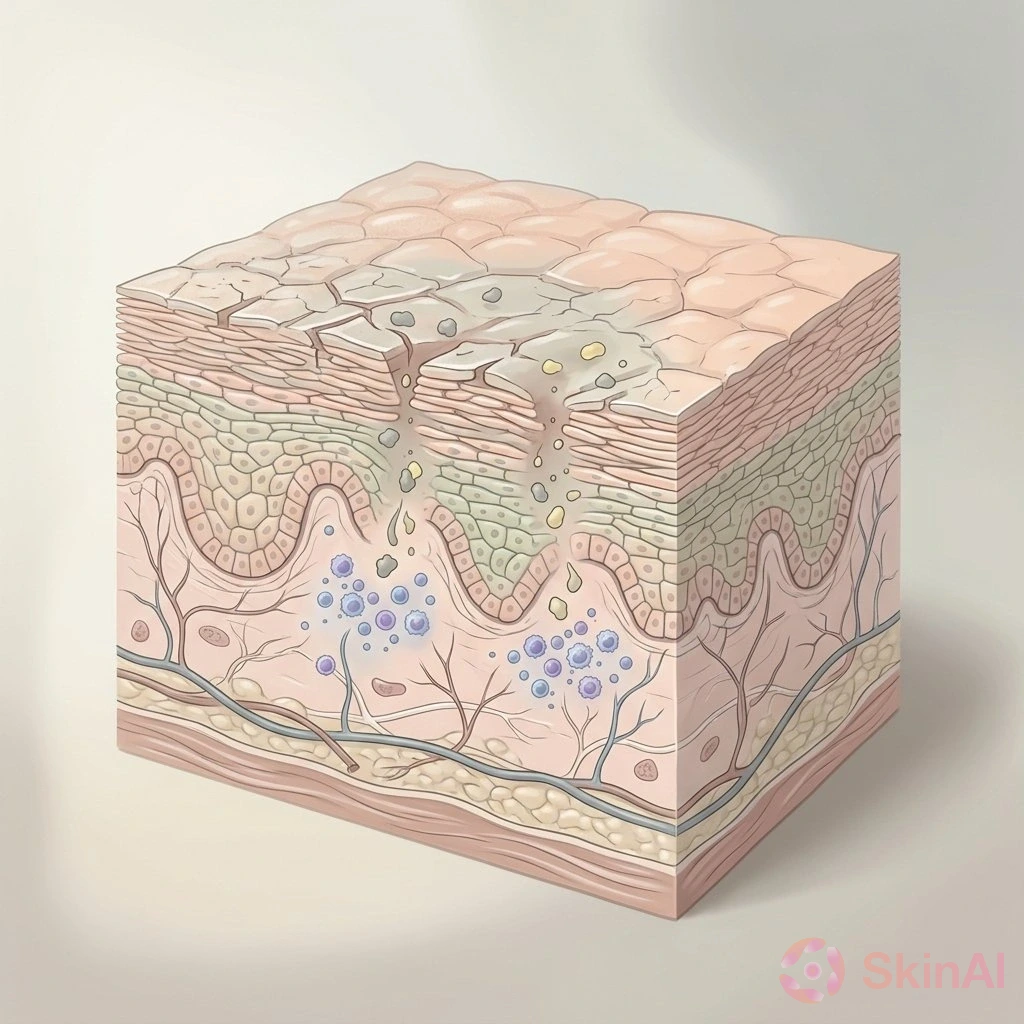
Skin conditions can affect more than how skin looks. They may be uncomfortable, come and go over time, or raise questions about other health risks. Several recent studies published in JAMA Dermatology looked at chronic hand eczema, two skin-related conditions linked with cancer, pernio, hidradenitis suppurativa, and tools used to estimate melanoma risk.
Here is what the studies found, along with the limits of what they can tell us.
Chronic hand eczema was common among adults surveyed
Chronic hand eczema is inflammation of the skin on the hands that lasts at least 3 months or comes back in repeated flare-ups. In a survey of 10,636 U.S. adults, 1,019 people, or 9.6%, said a health care professional had diagnosed them with the condition. (Source: JAMA Dermatology, “Prevalence of Chronic Hand Eczema in Adults”)
Reported diagnoses were more common among men than women, at 10.5% compared with 8.7%. They were also more common among employed adults than unemployed adults, at 10.3% compared with 7.8%, and among people living in urban areas than those in rural areas, at 10.4% compared with 6.3%.
Younger adults had particularly high rates. More than 13% of people in both the 18-to-29 and 30-to-39 age groups reported a diagnosis.
The survey relied on participants remembering and reporting a diagnosis from a health care professional. It may have missed people with hand eczema who had not been diagnosed, and it could not fully distinguish the different causes of their symptoms.
More research may help explain how workplace exposures, demographic factors, and difficulties getting a diagnosis affect who develops or is diagnosed with chronic hand eczema.
Cancer occurred more often in people with morphea or systemic sclerosis
A separate study followed 6,181 people with morphea, a condition that causes patches of hardened skin, and 8,133 people with systemic sclerosis, a condition that can cause skin thickening and may also affect internal organs. (Source: JAMA Dermatology, “Incidence of Cancer in Morphea and Systemic Sclerosis”)
During the follow-up period, 782 people with morphea, or 12.65%, developed cancer. Among people with systemic sclerosis, 1,104, or 13.57%, developed cancer.
Compared with the general population, the overall rate of cancer was about 24% higher in the morphea group and 37% higher in the systemic sclerosis group. These figures describe differences between groups; they do not mean that every person with either condition will develop cancer.
Cancers that form solid tumors occurred more often in both groups than in the general population. Blood cancers were significantly more common only in the systemic sclerosis group.
The types of cancer seen most often also differed. Breast and female reproductive cancers were most common in the morphea group, while lung cancer was most common in the systemic sclerosis group.
The findings suggest that cancer risk may be worth considering in people with morphea, even though it mainly affects the skin. But the study observed patterns over time, so it cannot show that either condition caused cancer. Its results alone do not support more intensive cancer screening than established recommendations call for.
Further research is needed to identify whether some people might benefit from a more individualized approach to cancer screening and follow-up.
Pernio may have different underlying causes
Pernio, also called chilblains, is an inflammatory skin condition that commonly affects areas such as the fingers and toes after exposure to cold, damp conditions. A research letter in JAMA Dermatology examined how pernio appeared in patients, possible associated conditions, and treatment outcomes. (Source: JAMA Dermatology, “Clinical Characteristics, Etiologic Associations, and Treatment Outcomes of Pernio”)
Pernio often goes away on its own. However, similar skin changes can sometimes occur alongside autoimmune conditions, in which the immune system mistakenly attacks the body, or other illnesses affecting the body.
The researchers looked at differences in symptoms and care among people with different possible underlying associations. Their work highlights why it can matter to distinguish pernio with no identified underlying cause from skin changes associated with another condition, especially when the affected areas keep returning, persist, or look unusual.
A person’s health history, skin examination, and other symptoms can help a clinician decide whether further evaluation is needed. Because the report was a research letter and the available treatment outcome information was limited, it cannot establish which treatments work better than others.
Timing of symptoms may help guide discussions about hidradenitis suppurativa treatment
Hidradenitis suppurativa (HS) is a long-term inflammatory skin condition that can cause painful lumps and sores. Some people are treated with biologics, medicines that target parts of the immune system involved in inflammation.
In a study of 107 people whose HS had improved only partly with biologic treatment, researchers looked at whether the timing of symptoms could help guide the next steps. (Source: JAMA Dermatology, “End-of-Dose Effect as a Guide for Biologic Optimization in Hidradenitis Suppurativa”)
Some participants noticed that their symptoms worsened shortly before their next scheduled dose. Researchers called this an end-of-dose effect. These patients had their biologic treatment intensified. Patients who did not report this pattern received additional long-term antibiotic treatment.
The approach was associated with improvements in all seven clinical measures the researchers had selected in advance at 3 to 5 months. The reported benefits continued through 6 to 12 months.
The timing of returning symptoms may be one useful point to discuss when a biologic is not helping enough. Worsening before the next dose could reflect a treatment effect wearing off, while symptoms that persist throughout the dosing period may call for a different discussion.
Still, participants were assigned treatments based on their symptom patterns rather than by chance. The study therefore cannot show whether this approach works better than other ways of adjusting treatment. More controlled studies are needed. Decisions about changing or adding treatment should be discussed with a doctor or dermatologist.
Melanoma risk calculators did not always predict risk accurately
Melanoma is a type of skin cancer. Some tools estimate a person’s chance of developing it, but their accuracy can vary depending on the people they are used for.
A study tested six melanoma risk prediction models using information from up to 43,235 participants in Australia’s Sax Institute 45 and Up Study. The researchers checked how well each model distinguished people who later developed melanoma from those who did not. They also compared the models’ predicted risks with what actually happened. (Source: JAMA Dermatology, “Evaluating the Performance of Melanoma Risk Prediction Models”)
The models’ scores for distinguishing between the two groups ranged from 0.58 to 0.70. On this scale, 0.5 is no better than chance, while 1.0 represents perfect separation. Most of the models also underestimated melanoma risk in the population studied.
The findings show why a risk tool should be tested in different groups before it is relied on in care. A model developed for one population may be less accurate in another, partly because the people and their underlying melanoma rates may differ.
Risk models may still help inform conversations about prevention and monitoring, but the researchers said the tools may need further testing and adjustment before they can reliably estimate individual risk.
When to seek medical advice
Consider contacting a doctor or dermatologist about a rash or other skin change that persists, returns, or is difficult to explain. Seek professional advice for a changing or fast-growing mole or lesion, bleeding, pain, or possible signs of infection, as well as whenever you are unsure about a skin change.
Photos or brief notes about when a visible skin change appears and how it changes over time can help you document it for a medical visit. They cannot establish a diagnosis.
This article is for general information and is not medical advice. Screening and treatment decisions should be discussed with a doctor or dermatologist.
Sources
- Chovatiya R, Balu S, Bin Sawad A, et al. “Prevalence of Chronic Hand Eczema in Adults.” JAMA Dermatology. Published online November 11, 2026. doi:10.1001/jamadermatol.2026.4674.
- Muha J, Joly-Chevrier M, Nedjar H, et al. “Incidence of Cancer in Morphea and Systemic Sclerosis.” JAMA Dermatology. Published online November 11, 2026. doi:10.1001/jamadermatol.2026.4685.
- Martins K, Ristianto ZA, Manduca S, et al. “Clinical Characteristics, Etiologic Associations, and Treatment Outcomes of Pernio.” JAMA Dermatology. Published online November 11, 2026. doi:10.1001/jamadermatol.2026.4339.
- Lynch A, Archimbaud J, Lesort C, et al. “End-of-Dose Effect as a Guide for Biologic Optimization in Hidradenitis Suppurativa.” JAMA Dermatology. Published online November 4, 2026. doi:10.1001/jamadermatol.2026.4435.
- “Evaluating the Performance of Melanoma Risk Prediction Models.” JAMA Dermatology. Published online October 21, 2026. doi:10.1001/jamadermatol.2026.4097.