
Socrodeucitinib Shows Strong Results in Phase 2 Trial for Plaque Psoriasis
New oral pill for plaque psoriasis shows promise in a small trial
If you or someone you care for has moderate to severe plaque psoriasis, new research may be of interest. An experimental pill called socrodeucitinib (also known as HS-10374) helped many people clear or greatly improve their skin in a 12-week clinical trial. The results are early but encouraging, and researchers are moving ahead with larger studies.
What the drug is and how it works
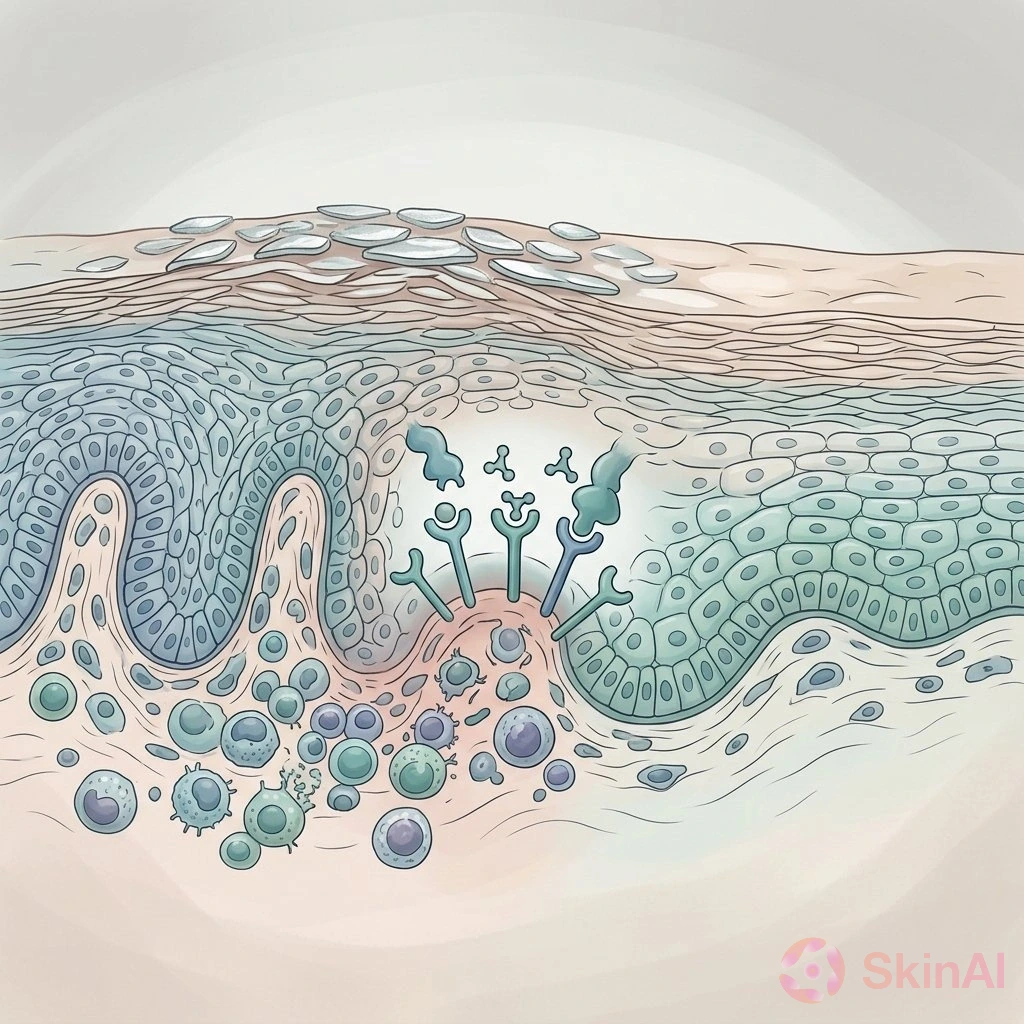
Socrodeucitinib is an oral medication that targets a protein called TYK2. TYK2 is part of a cell-signaling system (often called the JAK-STAT pathway) that helps certain immune signals get into cells. Some of those signals, including interleukin-12, interleukin-23, and type I interferons, are involved in the inflammation that causes psoriasis.
Unlike drugs that block several related proteins, socrodeucitinib is designed to be selective. It binds to a specific part of TYK2 called the pseudokinase domain, which limits its effect on other related proteins such as JAK1, JAK2, and JAK3. That selectivity could matter for both how well it works and which side effects people might notice.
About the study
This was a phase 2, randomized, double-blind, placebo-controlled trial. That means neither the participants nor the researchers knew who was getting the active drug or placebo, and people were assigned to groups at random. The trial included 125 adults with moderate to severe plaque psoriasis treated at 38 centers in China between September 2023 and April 2024 (Source: Han L et al., J Eur Acad Dermatol Venereol, 2026).
Participants were split into three groups to take one pill once daily for 12 weeks: socrodeucitinib 6 mg, socrodeucitinib 12 mg, or placebo. To join the study, people were 18 to 70 years old, had plaque psoriasis for at least 6 months, had a Psoriasis Area and Severity Index (PASI) score of 12 or higher, at least 10% of their body surface affected, and a physician’s assessment score showing at least moderate disease.
What the study measured
The main goal was the proportion of people who reached PASI 75 at week 12. PASI is a common score that measures how much skin is affected and how severe the plaques are. PASI 75 means a 75% improvement from where someone started. Researchers also reported higher levels of clearance such as PASI 90 (90% improvement) and PASI 100 (complete clearance). They used another simple measure called the static Physician’s Global Assessment (sPGA), where scores of 0 or 1 mean clear or almost clear skin.
How well it worked
The higher 12 mg dose performed best:
- By week 12, 72.1% of people on 12 mg reached PASI 75, compared with 28.6% on 6 mg and 7.5% on placebo.
- PASI 90 was seen in 46.5% of the 12 mg group, 7.1% of the 6 mg group, and none in the placebo group.
- Complete skin clearance (PASI 100) happened in 11.6% of people on 12 mg and 2.4% on 6 mg; no one on placebo reached PASI 100.
- At week 12, 65.1% of the 12 mg group achieved an sPGA of 0 or 1 (clear or almost clear), compared with 33.3% of the 6 mg group and 10% of placebo.
Some improvement showed up quickly. Overall PASI scores and percentage reductions were noticeable by week 2, and many people had PASI 75 by week 4. The 12 mg dose also appeared to be in the right range for exposure and response, so researchers chose it for upcoming phase 3 trials.
Other benefits reported
People taking socrodeucitinib saw greater reductions in the amount of skin affected and improvements in quality of life measures made for skin conditions, such as the Dermatology Life Quality Index (DLQI). The 12 mg dose tended to show the biggest gains, with some benefits visible by week 4 and lasting through week 12.
Safety and side effects
Side effects were common across all groups but were mostly mild to moderate. Overall adverse events were reported in 70.0% of placebo patients, 76.2% of the 6 mg group, and 88.4% of the 12 mg group. The most common complaint was an upper respiratory tract infection, which rose with dose: 7.5% placebo, 16.7% 6 mg, and 23.3% 12 mg.
Other events such as fever, slow heart rate (sinus bradycardia), and irregular heart rhythm (sinus arrhythmia) were reported but were generally mild. Serious adverse events were uncommon. The investigators did not find any meaningful patterns in lab tests for liver function, cholesterol and other lipids, blood counts, or kidney function.
Because of the balance of benefits and side effects and exposure-response data, the research team selected the 12 mg once-daily dose for further testing in phase 3 trials. They noted that larger and longer studies are needed to better understand how well the drug works and how safe it is over time.
What this means for people with psoriasis
These results suggest socrodeucitinib may help many people with moderate to severe plaque psoriasis, particularly at the higher dose tested. However, this was a relatively small, short trial. Phase 3 studies will include more people and follow them for longer to confirm the findings and better define safety.
Tracking visible changes
If you’re monitoring your own skin, keeping photos and notes about red patches, new spots, or symptoms such as pain, bleeding, or signs of infection can help you and your clinician spot changes early and make treatment decisions.
When to see a doctor
Talk with your dermatologist or healthcare provider before making any changes to treatment. Seek medical care if you notice rapidly changing lesions, heavy bleeding, pain, signs of infection, or other concerning symptoms.
Disclaimer
This article is informational only and is not medical advice. Treatment decisions should be made with your doctor or dermatologist. The study described here is an early-phase trial. Larger and longer studies are needed to confirm these results.
Sources
- Han L, Geng S, Ding Y, et al. A randomized phase 2 trial of socrodeucitinib in moderate-to-severe plaque psoriasis. J Eur Acad Dermatol Venereol. Published online July 28, 2026. doi:10.1111/jdv.70643 (Source: J Eur Acad Dermatol Venereol, 2026)
- Tokarski JS, Zupa-Fernandez A, Tredup JA, et al. Tyrosine Kinase 2-mediated Signal Transduction in T Lymphocytes Is Blocked by Pharmacological Stabilization of Its Pseudokinase Domain. 2015;290(17):11061-11074. doi:10.1074/jbc.M114.619502 (Source: Journal of Biological Chemistry, 2015)