
How FDA Review of Botox for Masseter Could Change Facial Contouring
Why people are talking about jawline contouring
More people are choosing non-surgical ways to change the look of their lower face. One common approach is treating an enlarged jaw muscle, called the masseter, with neurotoxin injections. Recently, the U.S. Food and Drug Administration (FDA) accepted for review a supplemental application that could lead to an official, on-label use of onabotulinumtoxinA (BOTOX Cosmetic) for reducing masseter prominence. That would formalize a treatment area that has mostly been done off-label until now. (Source: FDA acceptance for review of a supplemental Biologics License Application for onabotulinumtoxinA (BOTOX Cosmetic))
A quick summary
In a recent Q&A, ophthalmologist Steve Yoelin, MD, who has more than 25 years of experience with injectables and medical aesthetics, talked about the clinical evidence behind the application, what the studies showed, and how approval could affect injector training, patient conversations, and treatment planning.
What the studies found
Two pivotal phase 3 studies—called M21-416 and M21-417—support the application. Both studies reached their main goals, showing that treated patients had noticeable reduction in masseter prominence and a softer, narrower jawline compared with people given placebo. (Source: M21-416 and M21-417 studies)
Patients also reported higher satisfaction after treatment. About 58% to 59% of people who received BOTOX Cosmetic said they were “Satisfied” or “Very Satisfied” with their lower facial contour, compared with about 22% to 26% in the placebo group. The studies reported a safety profile similar to that already known for BOTOX Cosmetic, with no new safety concerns identified. (Source: M21-416 and M21-417 studies)
How the treatment is done
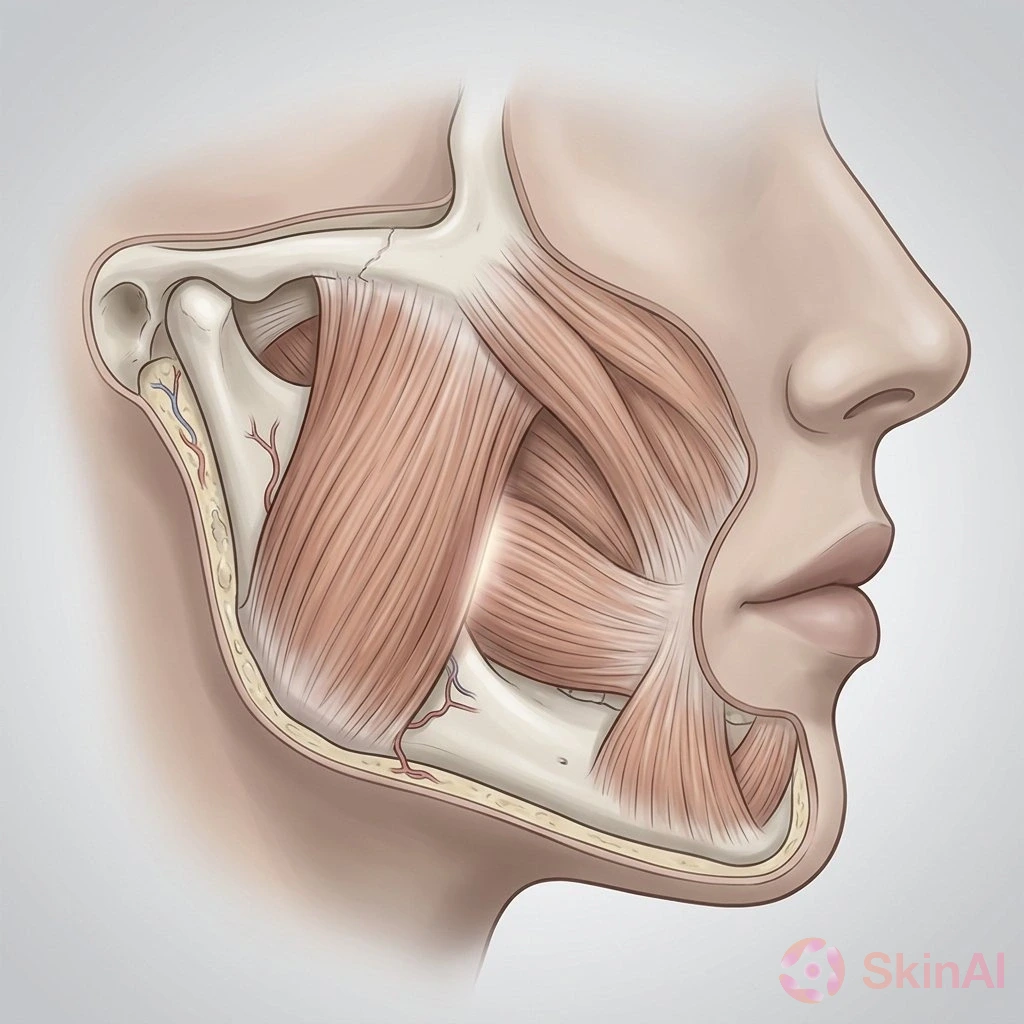
The masseter is one of the chewing muscles, and it can become thicker or more pronounced with use. When providers treat this muscle, they aim for the lateral (outer) and lower parts of the masseter, just above the jawbone.
In the clinical trials, each masseter received three injections of 8 units, for a total of 24 units per side and 48 units overall. The recommended technique involved placing a short thread of the injection where the muscle is most prominent. Providers typically use a small-bore needle about 1/2 inch long and may start the injection with the patient’s mouth gently open so the muscle is relaxed.
Because nearby muscles control the mouth and smile, it’s important to avoid the risorius muscle. Injecting too close to that muscle can cause an uneven smile. Results usually begin to appear around two weeks after treatment.
Aesthetic treatment versus functional problems
One important distinction: treating the masseter for facial shape is an aesthetic use. This potential indication is meant to reduce jaw muscle prominence and change the look of the lower face.
It is not an approved treatment for functional conditions such as bruxism (teeth grinding) or TMJ (temporomandibular joint) pain. If you have grinding, jaw pain, or other bite-related symptoms, you should speak with an oral surgeon, dentist, or a TMJ specialist. Treating masseter prominence for appearance alone may not address those underlying issues.
What approval could mean for patients and providers
If the FDA grants an on-label indication for the masseter, it would give clinicians clearer, research-based guidance on how to treat this area. That could help make treatment protocols, consent conversations, and patient expectations more consistent.
It would also add a lower-face option to the list of existing FDA-approved aesthetic uses for BOTOX Cosmetic, joining indications for frown lines, forehead lines, crow’s feet, and platysma neck bands. Having an on-label option may make it easier for providers to include masseter treatment as part of a whole-face plan that balances the upper, middle, and lower face.
Questions to ask your provider
If you’re considering treatment, here are some useful topics to discuss:
- What specific results can I reasonably expect?
- Is my jaw prominence due to muscle, bone, or both?
- Do you screen for or discuss functional issues like teeth grinding or jaw pain?
- What dose and injection technique do you use, and what are the possible side effects?
- How long until I might see a change, and how long does it last?
When to see a doctor
See a medical professional if you have new or worsening jaw pain, trouble opening or closing your mouth, persistent headaches tied to jaw movement, or any signs of infection or other concerning symptoms. For cosmetic questions, consult a qualified, experienced injector to discuss risks and realistic outcomes.
Disclaimer
This article summarizes a Q&A with Steve Yoelin, MD, and the results reported from studies M21-416 and M21-417 and the FDA’s acceptance for review of a supplemental application. It does not provide medical advice. Treatment decisions should be made with a doctor or dermatologist who knows your medical history. For functional jaw problems such as bruxism or TMJ pain, seek evaluation from an oral health or TMJ specialist.
Sources
- Q&A with Steve Yoelin, MD (interview).
- M21-416 and M21-417 studies (pivotal phase 3 trials supporting the supplemental Biologics License Application).
- FDA acceptance for review of a supplemental Biologics License Application for onabotulinumtoxinA (BOTOX Cosmetic).