Bacterial and parasitic skin infections
Bacterial and parasitic skin infections are caused by living organisms that colonise or invade the skin — bacteria such as streptococci and staphylococci, the spirochaete that causes syphilis, and parasites such as the scabies mite. What groups them together is that each has an identifiable cause and, in most cases, a specific and effective treatment.
They are placed here rather than among the viral or fungal sections on purpose. Scabies is caused by a mite, not a fungus; syphilis is caused by a bacterium, not a virus. Filing them by the organism responsible makes the difference in treatment visible: antibiotics, antiparasitics and antifungals are not interchangeable.
Conditions covered in this section:
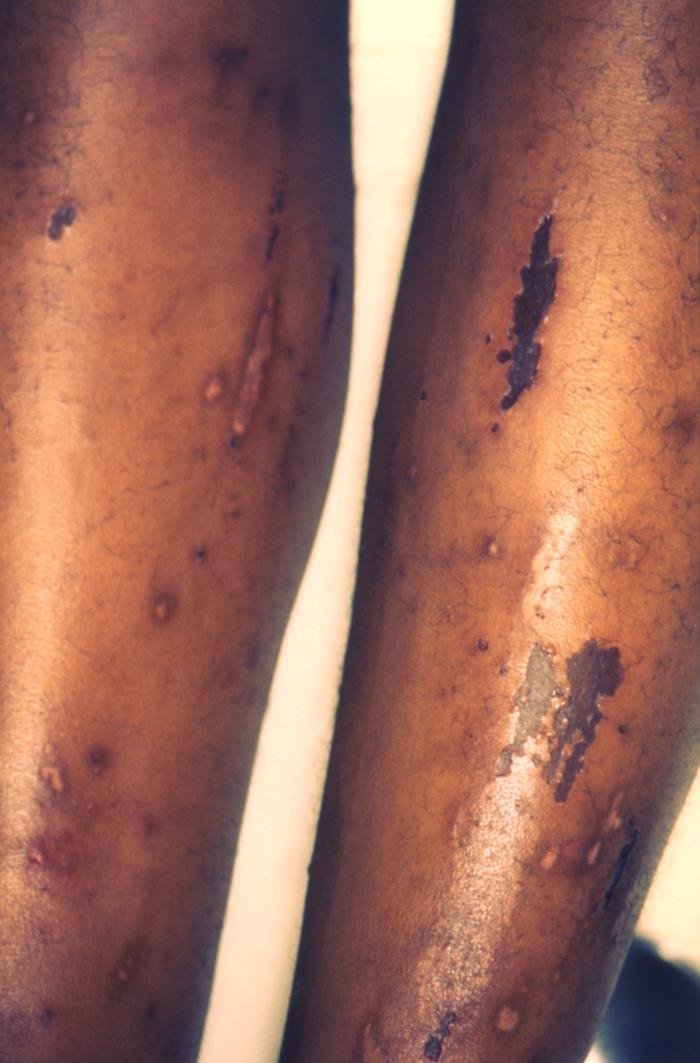
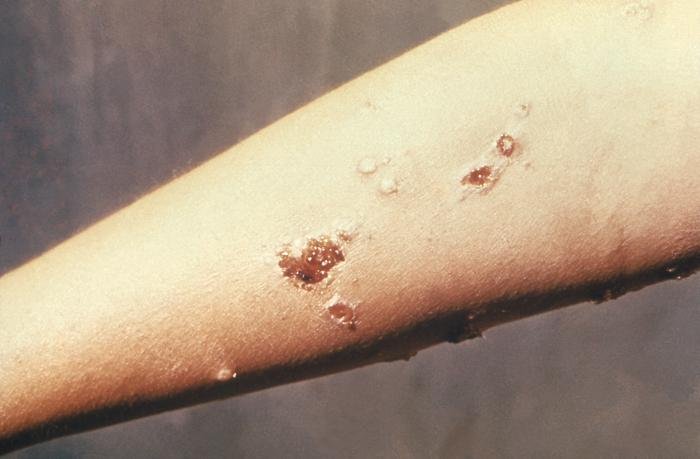
- Impetigo: a very contagious superficial infection with golden crusts, most common in children.
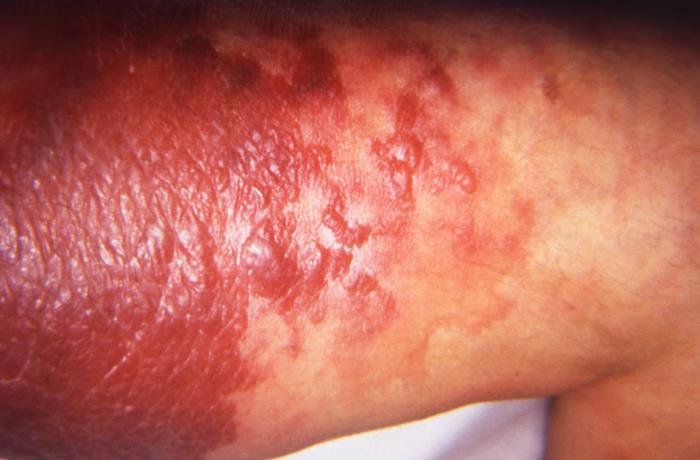
- Erysipelas: an acute, sharply bordered streptococcal infection of the skin, usually on the lower leg, with fever and rapid onset.
- Scabies: an infestation by a burrowing mite, causing intense itch that is worse at night.
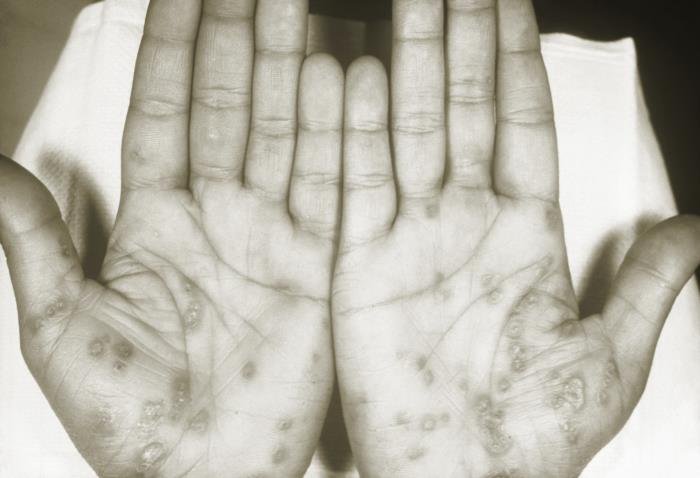
- Cutaneous syphilis: the skin signs of a sexually transmitted bacterial infection that is entirely curable but does not resolve on its own.
None of these conditions is a reflection of a person's hygiene, income or character. Scabies occurs in every standard of housing, impetigo in every kind of household, and syphilis affects people who do not consider themselves at any risk.
Explanation of risks:
- High Risk: These are treatable infections, but several of them need medical care rather than waiting. Erysipelas can spread into deeper tissue or the bloodstream and needs same-day assessment; pain out of proportion to the appearance, rapidly spreading redness or dusky skin needs emergency care. Untreated syphilis remains in the body after the rash fades and can cause lasting harm years later, and in pregnancy it can seriously affect the baby. Scabies and impetigo are not dangerous in themselves but spread to others until they are treated.
💊 Treatment: Each condition has a specific treatment, and the choice depends on the organism rather than on how the rash looks. Antibiotics treat impetigo, erysipelas and syphilis; scabies needs an antiparasitic applied to the skin or taken by mouth. Drug choice, dosing and duration vary by country, so follow local guidance. Do not use leftover antibiotics or a corticosteroid cream on an undiagnosed rash — both can suppress the appearance while the infection continues.
💡 Skin Self-Exams Tips: Look for what spreads and what does not settle. Crusted spots that multiply, an itch that is worse at night — especially if others in the household itch too — a painless genital or oral ulcer, or an area of skin that becomes red, hot and tender with fever, all warrant assessment. Tell close contacts: with scabies, impetigo and syphilis, treating one person without the others is how the cycle continues.

Medical review
Board-Certified Dermatologist · Fellow of the American Academy of Dermatology (FAAD)