
Rash on neck: causes, pictures and when to see a doctor
This tool is for informational purposes only and does not constitute medical advice. Always consult a qualified dermatologist.
What causes a rash on the neck?
The neck is close to necklaces, perfume, hair products, collars and a razor, and it sweats. Conditions that can cause a rash there include contact dermatitis, eczema, heat rash, hives, seborrheic dermatitis at the hairline and folliculitis after shaving; fungal patches, sunburn and shingles can appear there too, and in someone who is unwell, a rash that starts on the face and behind the ears can be measles. Pictures can help you describe a rash, but they cannot tell you which one you have. Some signs need help quickly: all of them, and how soon to act on each, are in one place, the list of when to see a doctor below.
Sources: NHS — Contact dermatitis · NHS — Atopic eczema · NHS — Heat rash (prickly heat) · NHS — Hives · DermNet — Seborrhoeic dermatitis · DermNet — Pseudofolliculitis barbae (razor bumps) · NHS — Pityriasis versicolor · NHS — Ringworm · NHS — Sunburn · NHS — Shingles · NHS — Measles
When to see a doctor about a rash on the neck
Most neck rashes are not serious, but some need help quickly, and some signs are different for babies and children. This is the only place on the page where the signs and how soon to act are listed; the rest of the page links back here.
Call emergency services now — don’t wait for a photo check — for:
Trust your instincts: someone with meningitis might not have every symptom listed, so get help if you think someone is seriously ill. For a serious allergic reaction, call for an ambulance and do not stand or walk. For every other item, do not drive yourself to A&E: ask someone to drive you or call for an ambulance, and bring any medicines you take.
- A rash or spots that do not fade when you press the side of a clear glass firmly against the skin. A meningitis rash usually starts as small red pinpricks and spreads quickly into red or purple blotches; on brown or black skin check paler areas: the palms, the soles of the feet, the roof of the mouth, the whites of the eyes or inside the eyelids. Not everyone with meningitis gets a rash, so the other signs below matter as much
- When it could be meningitis in a baby or child under 5: a temperature of 38C or more under 3 months old or 39C or more at 3 to 6 months, a temperature below 36C, feeling cold to the touch or shivery, a weak, high-pitched or continuous cry, not responding as usual, not feeding, being floppy, difficult to wake or more sleepy than usual, or symptoms you are worried might be meningitis
- In an adult or a child aged 5 or over, when it could be meningitis: a very high or very low temperature, feeling hot or cold to the touch or shivery, a very painful headache, being confused, slurred speech or not making sense, a stiff neck and not being able to look at bright lights, a seizure (fit) for the first time, or symptoms you are worried might be meningitis
- A child who is unwell with a rash and has a stiff neck, is bothered by light, seems confused, agitated or is not responding as usual, has difficulty breathing (grunting, the tummy sucking in under the ribs), is breathless or breathing very fast, or whose skin, lips or tongue look pale, blue, grey or blotchy
- Signs of a serious allergic reaction: the lips, mouth, throat or tongue suddenly swell; breathing very fast or struggling to breathe; the throat feels tight or it is hard to swallow; skin, tongue or lips turn blue, grey or pale (on brown or black skin this may be easier to see on the palms or soles); suddenly becoming very confused, drowsy or dizzy; someone faints and cannot be woken; or a child is limp, floppy or not responding as usual. Use an adrenaline auto-injector if you have one, call for an ambulance and say you think it is anaphylaxis, and lie down — you can raise your legs, and if you are struggling to breathe, raise your shoulders or sit up slowly (if you are pregnant, lie on your left side). If symptoms have not improved after 5 minutes, use a second auto-injector. Do not stand or walk at any time, even if you feel better
- Painful, hot, swollen skin, which can be cellulitis, together with a very high temperature or feeling hot, cold or shivery, a fast heartbeat or fast breathing, purple patches (less obvious on brown or black skin), feeling dizzy or faint, confusion, cold, clammy or pale skin, or not responding
- Psoriasis where the skin quickly turns red and then white bumps filled with pus appear and join together, psoriasis patches on the feet that turn yellow-brown and fill with pus, or red, scaly bumps filled with pus on the tips of the fingers and toes — redness may be harder to see on brown or black skin
- Measles with a seizure, severe difficulty breathing, being unable to stay awake, sudden confusion (a child may be very unsettled, behaving differently or crying non-stop), a child who is limp, floppy or not responding normally, a rash that does not fade under a glass, or a stiff neck or finding light uncomfortable or painful
Same day — urgent medical advice
Get urgent medical advice the same day — an urgent GP appointment or NHS 111 in the UK — unless an emergency sign above applies, for:
- skin that is painful, hot and swollen, which can be cellulitis — redness can be harder to see on brown or black skin
- hives that have not improved after 2 days, are spreading or keep coming back, come with a high temperature and feeling unwell or with swelling under the skin, or a child’s hives you are worried about
- eczema that is blistered, crusty, leaking fluid or has spots filled with pus, is painful, swollen or feels warm, suddenly gets worse or bigger, or comes with a high temperature or feeling generally unwell — these can be signs that eczema is infected or of a more serious condition called eczema herpeticum
- possible measles — cold-like symptoms first, then a rash that starts on the face and behind the ears and spreads to the rest of the body — or, with measles: a high temperature that has not come down after paracetamol or ibuprofen, an adult with difficulty breathing or feeling more short of breath than usual (a child with a rash who has difficulty breathing is in the emergency list above), a baby or young child feeding or drinking less, peeing less or fewer wet nappies, or feeling very unwell or worried that something is seriously wrong; also close contact with measles for a baby under 1, if you are pregnant or have a weakened immune system, or if you have not had measles or 2 doses of the MMR or MMRV vaccine; measles spreads easily, so phone before you go in
- sunburn with blistered or swollen skin, a very high temperature or feeling hot, cold or shivery, feeling very tired, dizzy or sick, a headache or muscle cramps, or sunburn on a baby or young child
- a child with a rash you are worried about and are not sure what to do; a child who feels hotter than usual when you touch their back or chest or feels sweaty; or a child aged 6 months or older with a temperature of 39C or higher — but a temperature of 38C or more under 3 months or 39C or more at 3 to 6 months, a very low temperature or shivering in any child, and a child aged 5 or over who feels hot or cold to the touch together with other signs that could be meningitis are in the emergency list above
- swollen glands in the neck and great difficulty swallowing, or difficulty breathing
- a shingles-type rash — painful blotches or blisters on one side only — if you are pregnant, are breastfeeding and the rash is on your breasts, are 17 or younger, have a severely weakened immune system, or the rash is on your eye or nose or your vision has changed
Pharmacist first
A pharmacist can advise first — unless an emergency or same-day sign above, or a sign in the “See a GP” list below, applies — for:
- a painful rash of blotches or blisters on one side of the neck or body, which can be shingles, if you are 18 or older: try to see a pharmacist within 3 days of the rash appearing, because antiviral medicine works best when started early
- heat rash, mild contact dermatitis, small dry patches of eczema in an adult, hives without any of the signs above, ringworm on the skin (not the scalp), impetigo in anyone aged 12 months or over, scabies in anyone aged 2 or over, or itchy skin: a pharmacist can recommend treatment and tell you if you should see a GP
Book an appointment
See a GP — unless an emergency or same-day sign above applies — for:
- swollen glands in the neck that are getting bigger or have not gone down within 1 week, feel hard or do not move when you press them, come with night sweats or a very high temperature, or come with no other sign of illness or infection; and swollen glands just above or below the collarbone
- eczema in a child, symptoms of eczema, or eczema treatments that are not helping; and contact dermatitis that is persistent, keeps coming back or is severe
- symptoms of psoriasis, psoriasis treatment that is not working or is giving you side effects, or psoriasis with pain, stiffness and swelling in the joints that keeps coming back
- heat rash that does not improve after a few days, or cellulitis that is not starting to feel better 2 to 3 days after starting antibiotics
- ringworm that has not improved with medicine from a pharmacist, ringworm on the scalp, or ringworm with a weakened immune system
- patches of skin that have changed colour — if it is pityriasis versicolor it will usually only go away if treated, and similar patches can be other conditions — or any other change to your skin that worries you
- symptoms of scarlet fever — a high temperature, a sore throat and swollen neck glands, then a rash of small raised bumps that feels rough like sandpaper — or feeling unwell after contact with someone who has it, not getting better within a week after seeing a GP, scarlet fever and chickenpox at the same time, or being ill again weeks after scarlet fever got better; it spreads very easily, so check with the GP surgery before you go in
- impetigo in a baby aged 11 months or younger, impetigo sores on the breasts while breastfeeding, or impetigo that has come back within a year, got worse after treatment or comes with a weakened immune system; scabies in a child under 2 or in a household with a child under 2, scabies with skin that may be infected or another skin condition such as eczema, a crusted, flaky rash on the elbows, knees, hands or feet, or skin still itching 2 to 4 weeks after finishing pharmacy treatment for scabies
- itching that affects your daily life, does not get better with self-care or keeps coming back, is all over your body, is severe, comes with a new rash, lump or swelling that worries you, or happens during pregnancy
Sources: NHS — Meningitis · NHS — Rashes in babies and children · NHS — Anaphylaxis · NHS — Impetigo · NHS — Scabies · NHS — Cellulitis · NHS — Psoriasis · NHS — Measles · NHS — Hives · NHS — Atopic eczema · NHS — Sunburn · NHS — Swollen glands · NHS — Shingles · NHS — Heat rash (prickly heat) · NHS — Contact dermatitis · NHS — Ringworm · NHS — Pityriasis versicolor · NHS — Scarlet fever · NHS — Itchy skin
Why the neck gets rashes
Several things the neck meets every day can set off a rash. Knowing what changed recently — a new necklace, perfume, shampoo or shirt, a hot day, a fresh shave — is often the best clue.
-
Necklaces, perfume and hair products
Allergic contact dermatitis can be triggered by some metals, including nickel, and by substances in cosmetics; our atlas lists common allergens such as “Metals (nickel, chromium)”, fragrances and “Hair dyes and nail products”. DermNet notes that a chemical in permanent hair dye “causes swelling and blistering of the face and neck”. See contact dermatitis.
-
Collars, sweat and heat
Heat rash is usually caused by sweating a lot. Hives can be triggered by hot, sweaty skin and by scratching or pressing on the skin, such as wearing itchy or tight clothing. Heat rash.
-
Shaving
Shaving can inflame hair follicles (folliculitis), and cut hairs can grow back into the skin as razor bumps, typically under the jawline. See folliculitis.
-
The hairline and behind the ears
Seborrheic dermatitis can cause flaky patches on the hairline; DermNet notes it can spread over the scalp, neck and trunk. See seborrheic eczema.
-
Sun
Sunburn makes the skin hot, sore or painful, and it can flake, peel or blister; on black or brown skin you may not notice a change in colour. Less often, a product on the skin reacts with sunlight: our atlas explains that “Photoallergic reactions require both allergen and sunlight to trigger inflammation”. Sunburn.
-
Patches in warm, oily skin
Pityriasis versicolor, a common fungal infection, usually appears on the chest, upper back, upper arms, neck or tummy. See tinea versicolor.
Sources: NHS — Contact dermatitis · Atlas — Contact dermatitis · DermNet — Allergic contact dermatitis · NHS — Heat rash (prickly heat) · NHS — Hives · DermNet — Folliculitis · DermNet — Pseudofolliculitis barbae (razor bumps) · DermNet — Seborrhoeic dermatitis · NHS — Sunburn · NHS — Pityriasis versicolor
Possible causes: examples with pictures
Grouped by how the rash looks, not by every way a condition can look. Groups overlap and cannot identify or rule out a condition, so look through all of them. Each card description is quoted word for word from the atlas article, and the group notes come from the NHS and DermNet pages linked below the cards; open a card for the full article and all its photos.
Itchy, dry or scaly patches
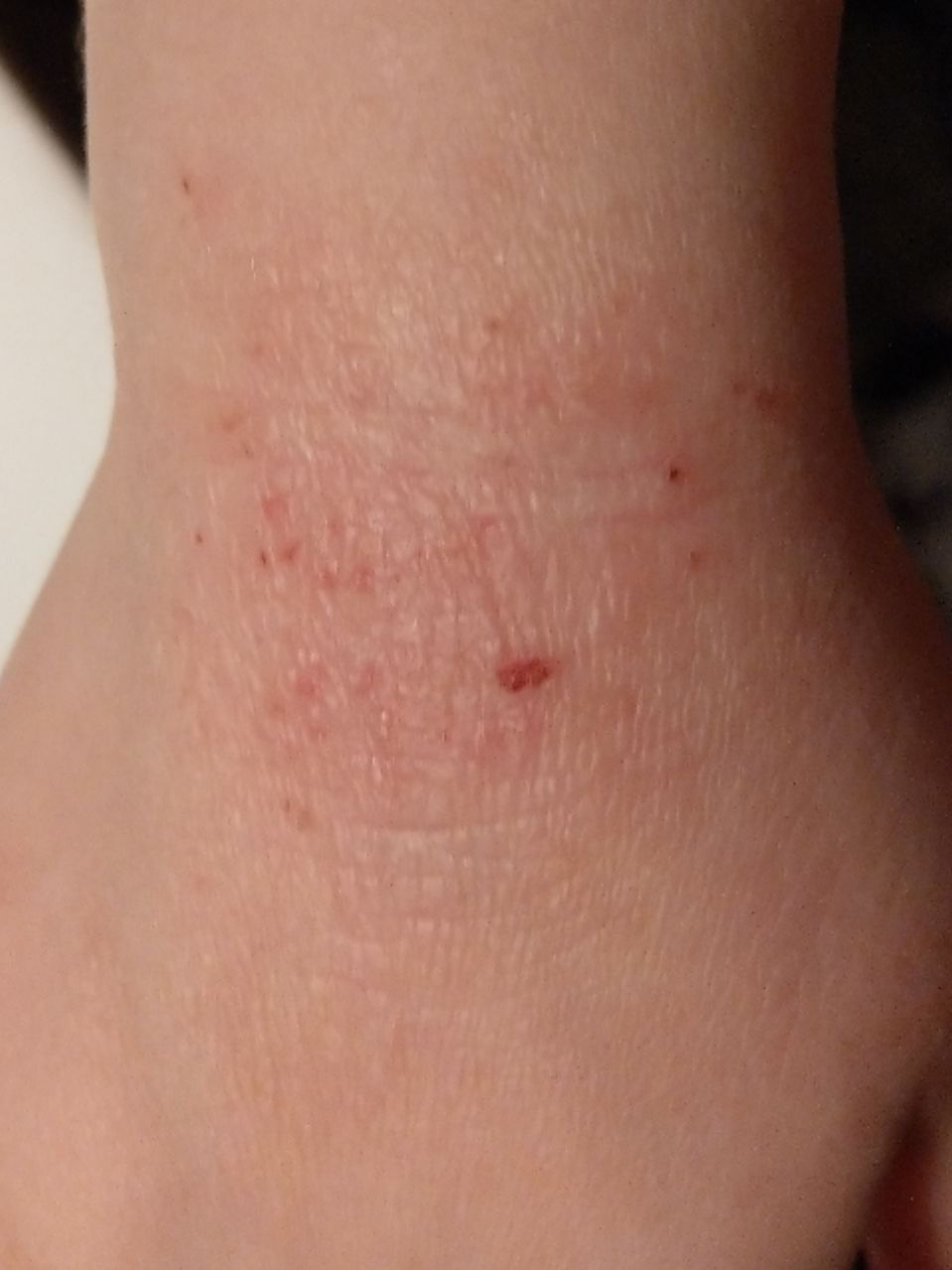
Contact dermatitis makes skin itchy, blistered, dry and cracked; on lighter skin it can look red, and on darker skin dark brown, purple or grey, and it usually improves or clears once the substance causing it is identified and avoided. In children, eczema is common behind the knees, the elbows and the neck. Atopic eczema is not contagious. Words in the quotes: flexural sites are skin creases, such as the inside of the elbows and the backs of the knees; erythematous means red; plaques are raised patches.
 24 photos
Atopic dermatitis (atopic eczema)
“Lesions tend to be more generalized or affect typical flexural sites, the face, neck, and upper limbs.”
Read the article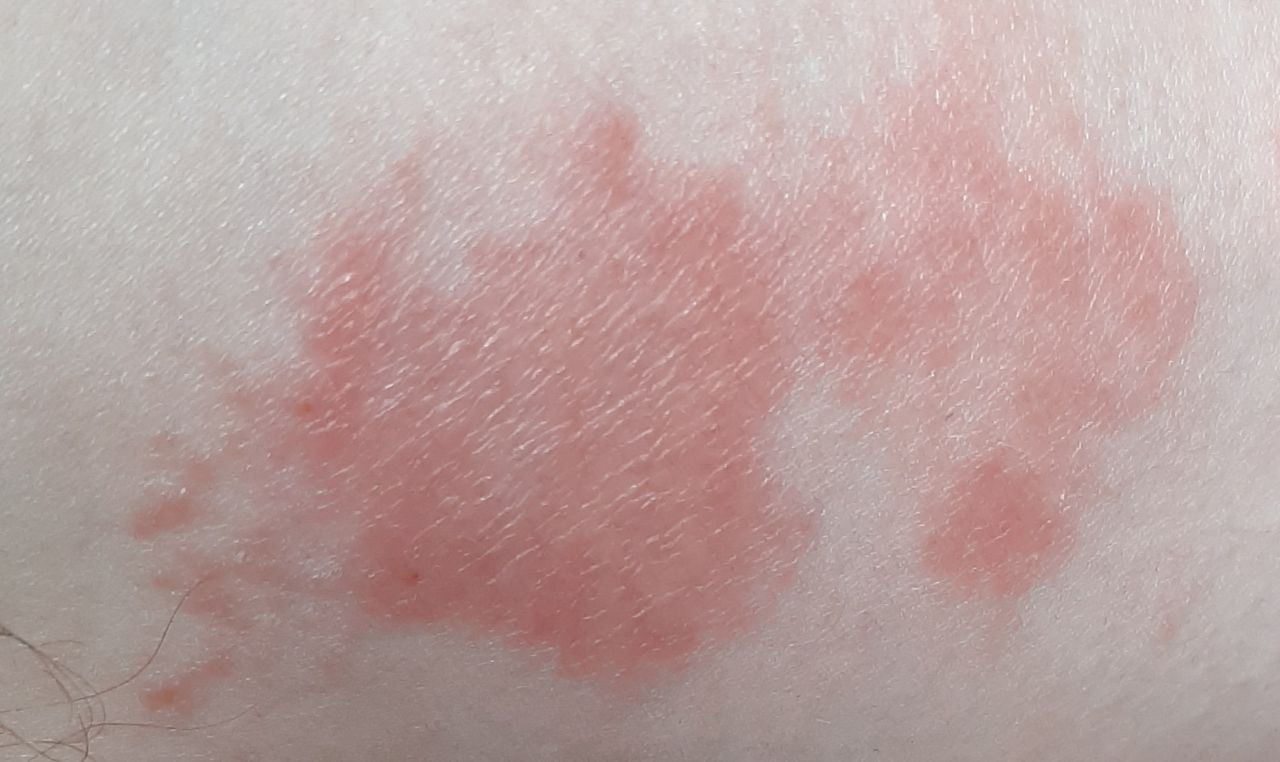 25 photos
Contact dermatitis
“Subjective symptoms: Intense itching, sometimes burning or soreness.”
“Airborne allergens can affect exposed areas (e.g., face, neck)”
Read the article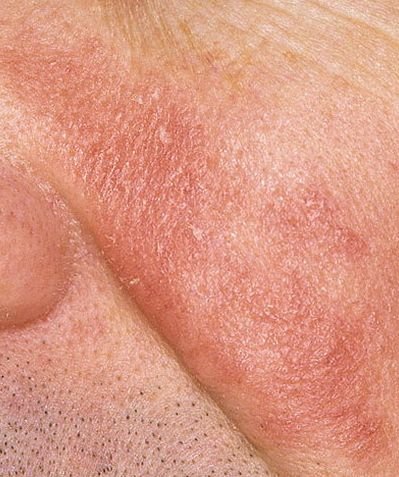 4 photos
Seborrheic eczema (seborrheic dermatitis)
“Scalp seborrheic eczema: Heavier scaling with redness, sometimes extending to the hairline, the ears and the neck.”
Read the article 30 photos
Psoriasis (psoriasis vulgaris)
“Psoriasis vulgaris typically presents with erythematous plaques covered by thick, white or silvery scales.”
Read the articleSpots and bumps
Hives can be raised bumps or patches that feel itchy, sting or burn; triggers include hot, sweaty skin and emotional stress. Hives that do not improve or keep coming back are in the list of when to see a doctor. Folliculitis bumps each sit around a hair; razor bumps, a related problem, are most often on the face and neck after shaving. Words in the quotes: pustules are small spots filled with pus; wheals are raised welts.
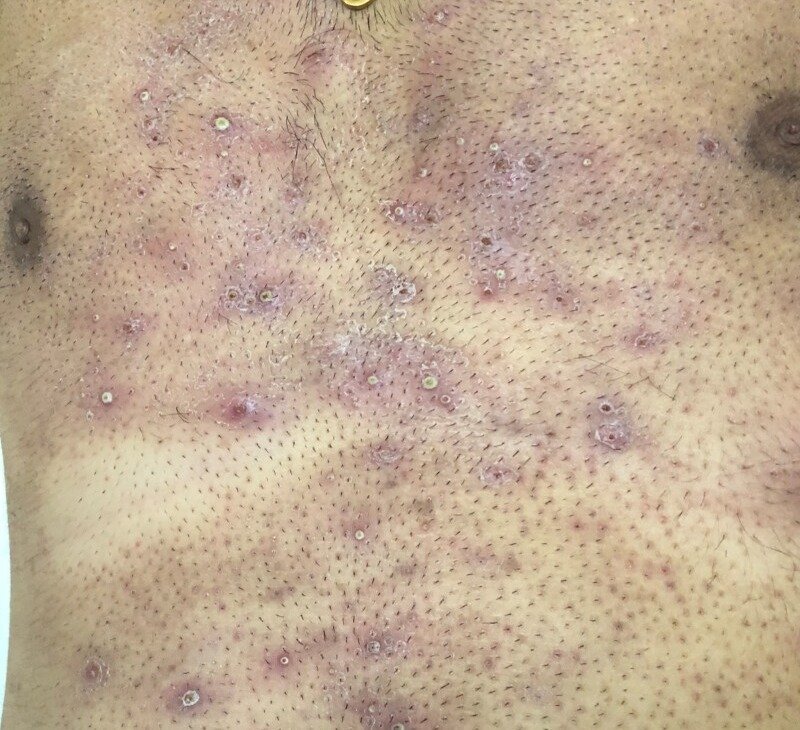
Folliculitis
“It appears as small red bumps or pustules, each one centred on a hair, and it can affect any part of the body that grows hair — most often the scalp, beard area, chest and back, armpits, buttocks and thighs.”
Read the article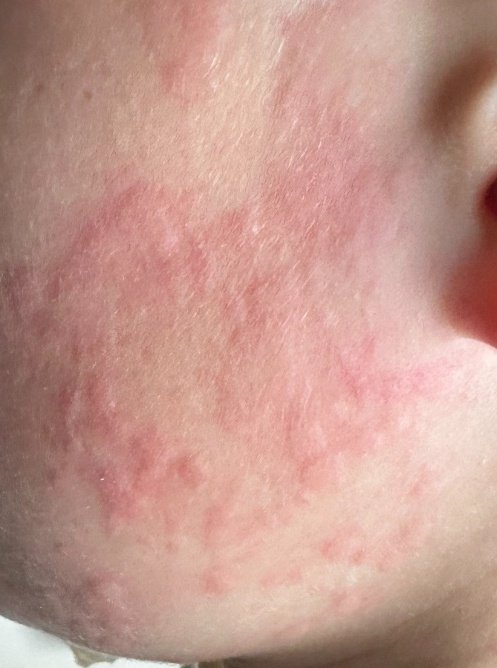 24 photos
Hives (urticaria)
“The rash typically presents as itchy, red or pink wheals (hives) with clear edges and no peeling.”
Read the articlePatches that change colour or form rings
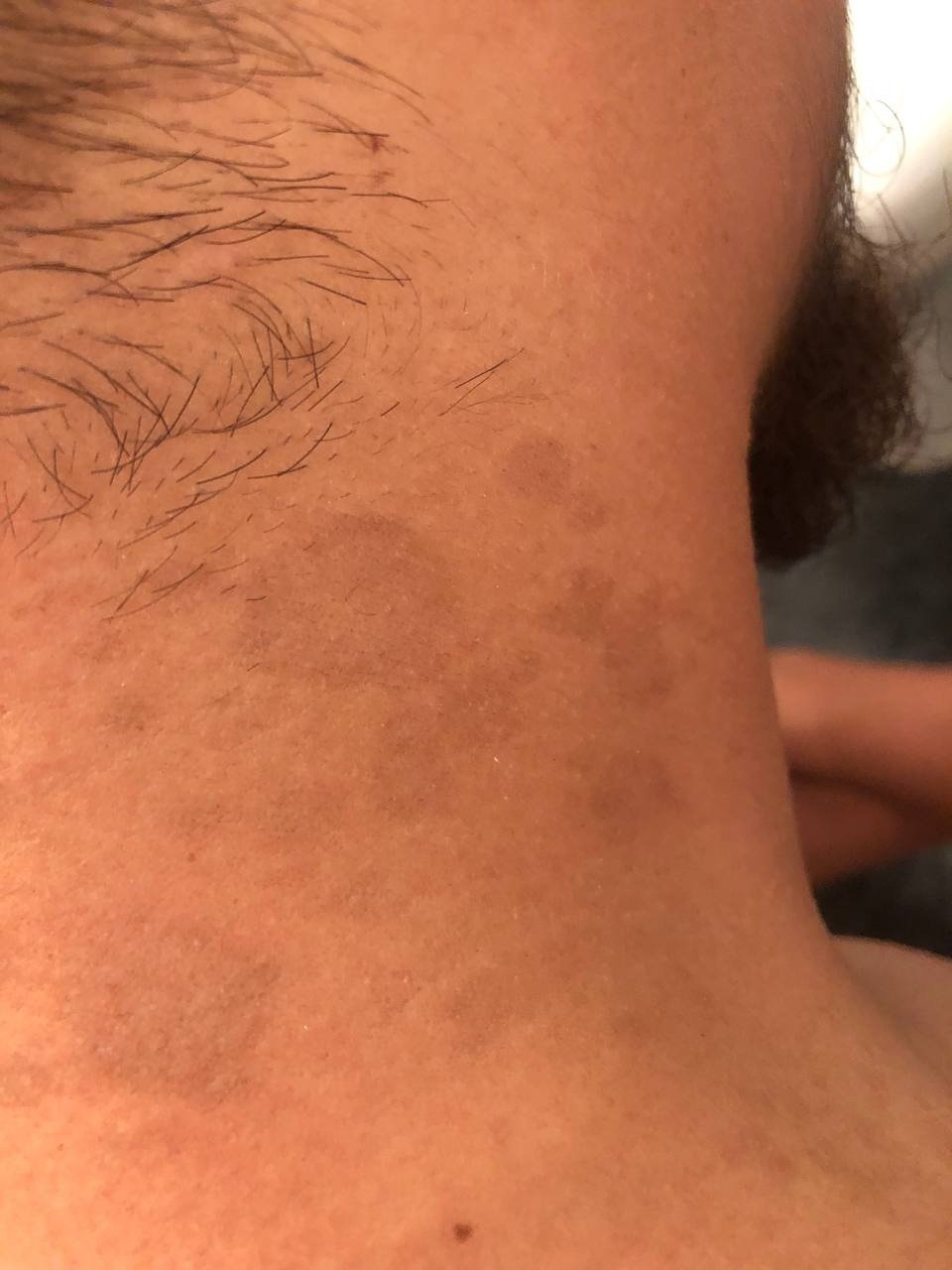
Pityriasis versicolor patches are flat and round, may feel scaly and usually appear on the chest, upper back, upper arms, neck or tummy; on brown or black skin they tend to be paler than the surrounding skin. Ringworm is usually ring-shaped, but the NHS notes it may look different on the face, neck or scalp. Ringworm can be passed on by close contact; pityriasis versicolor cannot. Words in the quotes: well-demarcated means with clear edges; hypopigmented means paler than the skin around it; erythematous means red; vesiculated means with small blisters.
 25 photos
Tinea versicolor (pityriasis versicolor)
“The hallmark of pityriasis versicolor is the development of well-demarcated, scaly, discolored patches that vary in hue—from pink, tan, and light brown to hypopigmented or chalky white, especially in darker-skinned individuals.”
Read the article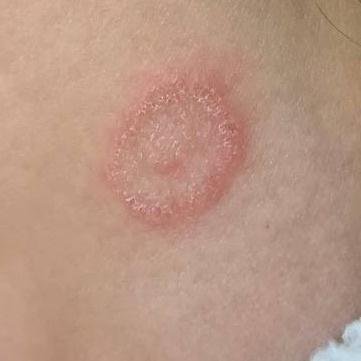 29 photos
Ringworm (tinea corporis)
“Ring-shaped erythematous patches with active, scaly, vesiculated borders and a central area that may be clear or slightly scaly.”
Read the articleA painful band on one side
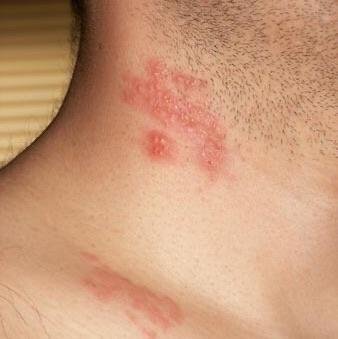
Shingles often starts with tingling or pain in one area of skin; a rash of blotches that turn into itchy, oozing blisters usually follows a few days later, on one side of the body only. A rash on both sides is unlikely to be shingles. Words in the quote: vesicular means made of small blisters; a dermatome is the strip of skin served by one nerve. How soon to get it checked: see the list of when to see a doctor.
 32 photos
Shingles (herpes zoster)
“The hallmark symptom of herpes zoster is a localized, painful vesicular rash that typically appears on one side of the body, following the distribution of a single dermatome—the area of skin supplied by one sensory nerve.”
Read the articleSources for the group notes: NHS — Contact dermatitis · NHS — Rashes in babies and children · NHS — Atopic eczema · NHS — Hives · DermNet — Folliculitis · DermNet — Pseudofolliculitis barbae (razor bumps) · NHS — Pityriasis versicolor · NHS — Ringworm · NHS — Shingles
Other common causes
Described from the linked NHS pages; scabies also has an article in our atlas. Measles and scarlet fever are infections that usually make you feel unwell before or with the rash.
Heat rash (prickly heat)
Neck, under collars, where you sweat
Small, raised spots with an itchy, prickly feeling and mild swelling. It looks red on white skin and may be harder to see, or look grey or white, on brown or black skin. It is usually caused by sweating a lot, cannot be passed on to other people, and usually gets better on its own after a few days.
Keep the skin cool: loose cotton clothing, cool showers, and pat rather than scratch. When to see a doctor.
Dry, irritated skin
Itching is sometimes caused by dry, cracked or irritated skin. Tight clothes, wool or synthetic fabrics and perfumed soaps or moisturisers can make it worse.
Use an unperfumed moisturiser, wear loose cotton or silk, and choose a laundry product for sensitive skin. When to see a doctor.
Sunburn
Back and front of the neck
Skin that feels hot to touch, sore or painful, and may flake or peel a few days later; severe sunburn can blister. On white skin it is usually red or pink; on black or brown skin you may not notice a change in colour.
Cool the skin with a cool shower or a damp towel, drink plenty of water, and stay out of the sun. When sunburn needs a doctor.
Measles
Starts on the face and behind the ears
Cold-like symptoms come first; a rash usually appears a few days later, starting on the face and behind the ears before spreading to the rest of the body. The spots are sometimes raised and join into blotchy patches, are not usually itchy, look brown or red on white skin and may be harder to see on brown and black skin. Measles spreads to others easily.
Scarlet fever
Swollen neck glands, then a rash on the chest and tummy
Flu-like symptoms come first, including a high temperature, a sore throat and swollen neck glands. A rash of small, raised bumps appears 12 to 48 hours later, starting on the chest and tummy and spreading; it makes the skin feel rough, like sandpaper. It spreads very easily.
Scabies
Head and neck in young children and older people
The scabies rash usually spreads across the whole body apart from the head and neck, but older people and young children may develop a rash on their head, neck, palms and soles of their feet. It spreads by close contact, and everyone in the home needs treating at the same time.
Swollen glands (a lump, not a rash)
Sides of the neck, under the chin
Tender, painful lumps on each side of the neck or under the chin, usually a sign that the body is fighting an infection such as a cold or a throat infection. They are rarely caused by anything more serious, such as lymphoma (cancer of the lymph system).
How long is too long, and the other signs that need a doctor: when to see a doctor.
Neck rashes on brown and black skin
Several of these rashes look different on darker skin, and redness can be hard to see. The tinea versicolor photo on this page shows patches on brown skin.
-
Eczema and contact dermatitis
On darker skin, contact dermatitis can turn dark brown, purple or grey rather than red.
-
Heat rash
Heat rash may be harder to see, and its spots may look grey or white.
-
Pityriasis versicolor
On brown or black skin the patches tend to be paler than the skin around them.
-
Feel and the glass test
Hives and ringworm can be harder to see on darker skin. A rash that does not fade under a glass can also be harder to see: check paler areas such as the palms and the soles of the feet, and see when to see a doctor.
Sources: NHS — Contact dermatitis · NHS — Heat rash (prickly heat) · NHS — Pityriasis versicolor · NHS — Hives · NHS — Ringworm · NHS — Meningitis
Rash on neck: FAQ
Why do I have a rash on my neck?
Causes include contact dermatitis from jewellery, perfume or hair products, eczema, heat rash from sweating, hives, seborrheic dermatitis at the hairline, folliculitis after shaving and sunburn. Fungal infections and shingles can appear on the neck too, and infections such as measles and scarlet fever cause a rash with feeling unwell. Think about what changed recently, and look at whether the rash is dry and scaly, bumpy, ring-shaped or on one side only. Sources: NHS — Contact dermatitis, NHS — Atopic eczema, NHS — Heat rash (prickly heat), NHS — Hives, DermNet — Seborrhoeic dermatitis, DermNet — Folliculitis, NHS — Sunburn, NHS — Ringworm, NHS — Shingles, NHS — Measles, NHS — Scarlet fever.
Can stress cause a rash on the neck?
Stress can trigger hives: the NHS lists hot, sweaty skin from exercise, emotional stress or eating spicy food among the triggers, and hives can be raised bumps or patches that itch, sting or burn. Stress can also make eczema worse; our atlas notes that in teenagers and adults, atopic dermatitis takes a relapsing course, “often triggered by stress or hormonal shifts”. Sources: NHS — Hives, NHS — Atopic eczema, Atlas — Atopic dermatitis.
Is a rash on the neck a sign of cancer or lymphoma?
This page cannot tell you that. What the NHS says about the neck: swollen glands there are usually a sign that the body is fighting an infection, and they are rarely caused by anything more serious, such as lymphoma. It advises not to self-diagnose. The signs that mean swollen glands need a doctor, and how soon, are in the list of when to see a doctor. Sources: NHS — Swollen glands.
Is a neck rash contagious?
Some are. Ringworm can be passed on through close contact with an infected person or animal, or through items such as towels and combs. Our atlas explains that direct contact with fluid from shingles blisters can pass the virus to someone who is not immune, who then gets chickenpox, not shingles. Measles and scarlet fever spread easily, and impetigo, which causes sores that burst and leave golden-brown crusts, is very infectious. Heat rash, atopic eczema and pityriasis versicolor cannot be passed on to other people. Sources: NHS — Ringworm, Atlas — Shingles, NHS — Measles, NHS — Scarlet fever, NHS — Impetigo, NHS — Heat rash (prickly heat), NHS — Atopic eczema, NHS — Pityriasis versicolor.
Can a necklace cause a rash on the neck?
Yes. Allergic contact dermatitis can be triggered by some metals, including nickel, as well as by substances in products such as cosmetics. DermNet notes that people may be in contact with an allergen for years before becoming allergic, so a necklace you have worn for a long time can still be the cause. The rash usually clears once the cause is identified and avoided. Sources: NHS — Contact dermatitis, DermNet — Allergic contact dermatitis.
How long does a neck rash take to go away?
It depends on the cause. Heat rash usually gets better on its own after a few days; contact dermatitis usually improves once the trigger is avoided; ringworm needs antifungal medicine, sometimes for several weeks; pityriasis versicolor usually only goes away with treatment, and the skin can take a few months to return to its usual colour. Hives that do not improve, and every other sign that a rash needs a doctor: when to see a doctor. Sources: NHS — Heat rash (prickly heat), NHS — Contact dermatitis, NHS — Ringworm, NHS — Pityriasis versicolor, NHS — Hives.
Can a photo or an AI skin check tell me what my rash is?
No. Pictures show what rashes can look like, but many look alike, and the output of an AI skin check is not a medical diagnosis. It also cannot tell you how soon to get help: if any sign in the list of when to see a doctor applies, get medical help instead.
For a clear photo: daylight, close and in focus, no filters. Upload a photo for an AI skin check. AI output is not a medical diagnosis. If you have any of the signs in the list of when to see a doctor, get medical help instead.
Check my skin ↑SkinAI Lab is a paid AI analysis; pricing is shown before you scan.


Prepared by the SkinAI Lab editorial team · Updated . Apart from the quoted atlas text, this page has not been reviewed by a doctor. It is general information, not medical advice.