
UV Safety Month: Expert Tips on Preventing Photodamage and Skin Cancer
Why UV Safety Month matters right now
This article is based on an interview with Kathleen Suozzi, MD, associate professor of dermatology at Yale School of Medicine (transcript edited). With summer here, it’s a good reminder that sun protection isn’t just for beach days. Over time, even routine sun exposure adds up, and that cumulative exposure drives both visible skin aging and an increased risk of skin cancer.
Awareness about sun safety has improved, especially among younger people, but many common mistakes remain. People often start protecting their skin too late, don’t use protection regularly, or rely on one single approach instead of combining options. That’s why repeating the basics now can make a big difference for long-term skin health.
What doctors look for when checking for sun damage
When dermatologists examine skin, they think about two related things: cosmetic aging from the sun, and early signs that could lead to skin cancer.
Actinic keratosis is one of the most important early warning signs. These are rough, pink patches that can feel like sandpaper. They are considered precursor lesions for squamous cell carcinoma, a common type of skin cancer. Each actinic keratosis has a relatively low chance of becoming cancer on its own (often estimated around 1 in 100 to 1 in 1,000), but having many of them or large areas of involvement raises overall risk.
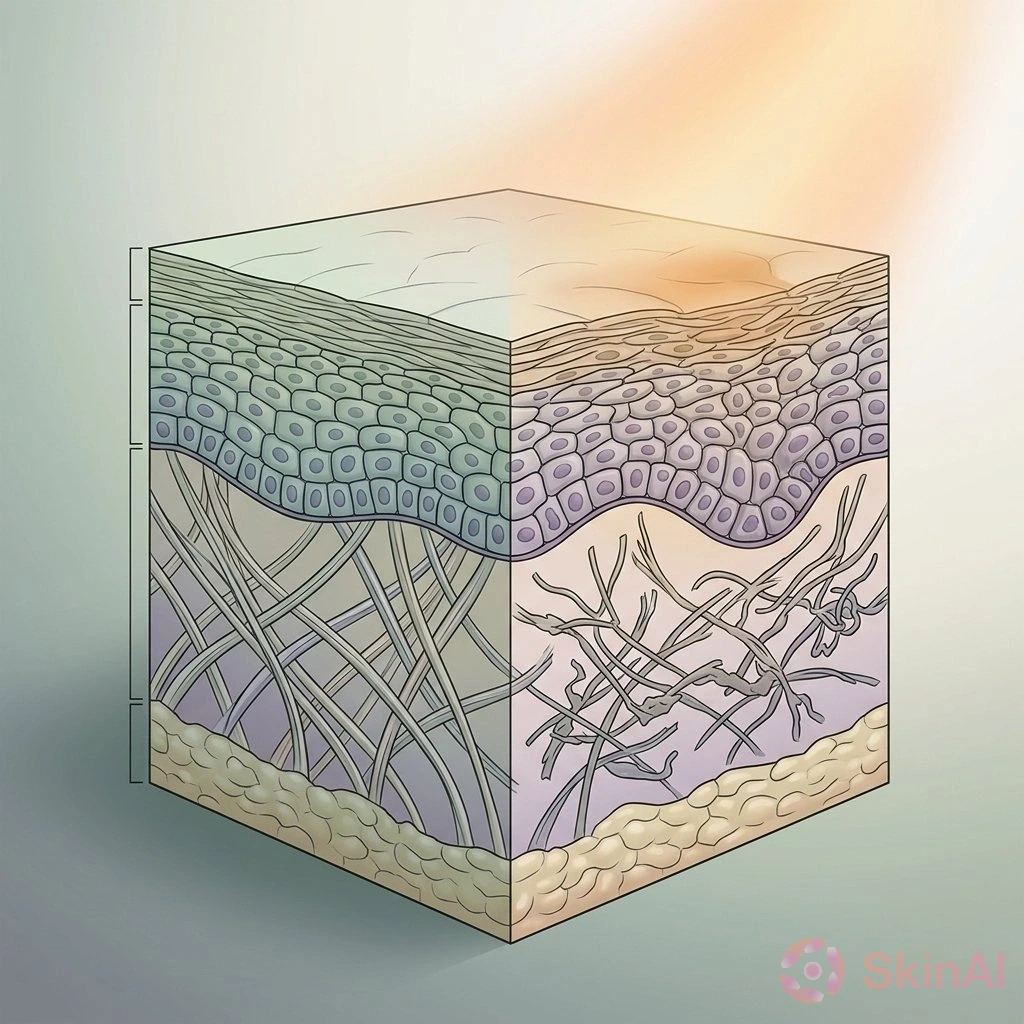
Other signs of sun-related aging include uneven brown spots (often called lentigines), blotchy pigmentation, loss of skin elasticity, and a bumpy or cobblestone texture caused by damage to deeper skin layers (sometimes called solar elastosis). These changes don’t all turn into cancer, but they do reflect long-term sun exposure and affect your overall risk profile.
Ways doctors treat and reduce sun-related damage
There are strategies both to treat existing early changes and to try to lower future risk.
Treating broad areas: Because sun damage is often widespread, dermatologists sometimes treat entire areas of skin rather than single lesions. This is called field therapy. Traditional options include creams such as fluorouracil (often known by brand names like Efudex) and newer combinations that can shorten treatment time when a vitamin D-related medication called calcipotriene is added.
Photodynamic therapy is another field treatment. It uses a topical medicine that makes damaged cells sensitive to light, then a controlled light source targets those cells while leaving healthier skin relatively unaffected.
Resurfacing lasers go deeper than topical treatments. By stimulating changes in the dermis, the deeper skin layer that supports collagen and blood vessels, some lasers may help create a healthier environment in the skin. Early evidence suggests this approach might not only improve appearance but could also lower the risk of certain non-melanoma skin cancers over time.
There is growing interest in how the immune system, the dermis, and the outer skin layer all interact. As we age, immune response and DNA repair can slow down, so some treatments aim to “boost” or mimic those functions to keep precancerous changes under control.
Common sunscreen concerns, explained
Many people have questions or worries about sunscreen. Here are a few common ones and what doctors say:
- Do sunscreen ingredients get into the bloodstream and cause harm? Some chemical sunscreen ingredients can be detected in the blood, but these ingredients have been used for decades and there is no clear evidence that the tiny amounts found cause harm to people. Researchers continue to study this, and regulators monitor safety.
- Are spray sunscreens risky because of chemicals like benzene? Headlines have raised concerns about contaminants. The simplest option is to avoid aerosol sprays and choose cream or lotion sunscreens if you worry about inhalation or contamination.
- Is it too late to protect my skin? No. While past sunburns and damage can’t be erased completely, starting regular protection now can reduce future damage and lower your risk of additional skin cancers moving forward.
- What SPF should I use? SPF 30 or higher is a reasonable recommendation. SPF 15 blocks most UVB, but SPF 30 provides more protection. Very high SPFs add only incremental benefit and sometimes feel heavier on the skin, which can make them less comfortable and harder to wear consistently.
Most importantly, the best sunscreen is the one you’ll actually use. If a product feels greasy, irritating, or causes breakouts, you’re less likely to keep applying it. Try different formulas until you find one that fits your skin and your routine.
Practical sun-protection habits
Think beyond sunscreen alone. Combining several strategies works best:
- Wear sun-protective clothing with a UPF rating, and consider a wide-brimmed hat for better coverage than a baseball cap.
- Use sunscreen daily on exposed areas, including on days you drive or run quick errands, and in winter because UV exposure can still occur.
- Reapply sunscreen every two hours when outdoors, and more often if you’re swimming or sweating.
- Avoid relying on sprays if you are worried about inhalation; lotions are a safer bet for general use.
New sunscreen options to watch for
Recently the U.S. Food and Drug Administration approved a sunscreen ingredient called bemotrizinol. This ingredient has been used safely in Europe and Asia for years. It offers broad UVA and UVB coverage in a single molecule, is photostable (meaning it stays effective in the sun), and tends to be lightweight and less irritating. Because it is a larger molecule, it is less likely to be absorbed into the bloodstream. Expect products containing bemotrizinol to appear in the U.S. market in the coming months.
How skin cancer treatment is changing
Surgery remains a mainstay; many skin cancers are still removed surgically. However, other medical options are improving. Immunotherapy drugs, such as PD-1 inhibitors, help the immune system recognize and fight cancer and are already changing how some advanced skin cancers are treated. Researchers are also studying these medicines as pre-surgery (neoadjuvant) treatments, with the goal of reducing the size or spread of tumors and possibly reducing the need for extensive surgery in some cases.
Keep an eye on your skin
It can help to take photos and notes of any moles, spots, or areas that look different or are changing. Regular photos over weeks to months can make subtle changes easier to spot and are useful to bring to a dermatologist visit.
When to see a doctor
If you notice a spot that changes in size, shape, color, bleeds, becomes painful, or looks very different from your other moles, see a dermatologist. Also consult a doctor if you have many actinic keratoses, or if you’re unsure about a rough, scaly patch. If you have questions about which prevention or treatment options fit your skin, discuss them with your dermatologist.
Disclaimer
This article is for information only and does not replace medical advice. Treatment choices depend on your individual situation, and you should talk with a doctor or dermatologist about the best options for you.
Sources
- Interview with Kathleen Suozzi, MD, associate professor of dermatology, Yale School of Medicine (transcript edited).
- U.S. Food and Drug Administration: recent approval of bemotrizinol (mentioned in interview).