
IL-23 Inhibitor Tildrakizumab Enhances Care Continuity for Medicare Psoriasis Patients
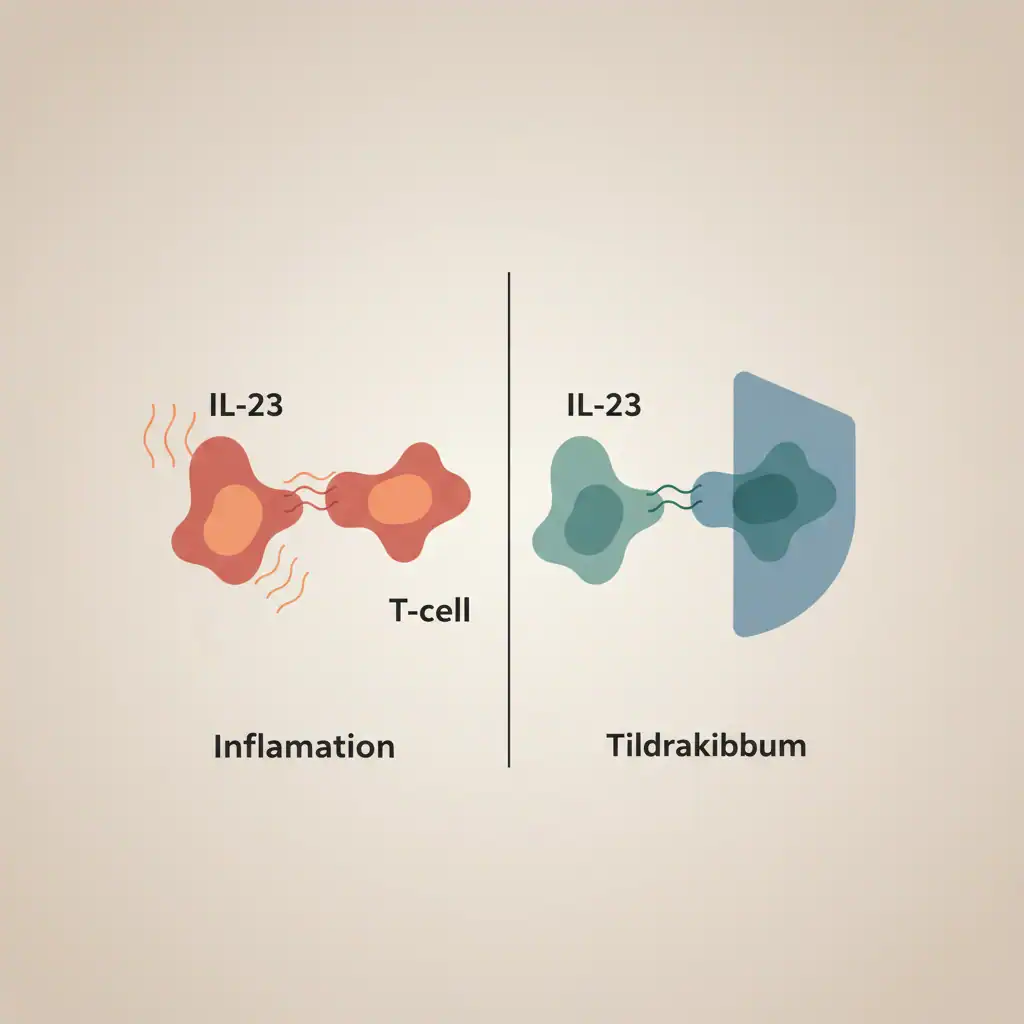
Real-World Insights on Treatment Persistence for Medicare Patients with Plaque Psoriasis
During the Winter Clinical Miami 2026 meeting held in Aventura, Florida, a significant retrospective cohort study was presented, focusing on the treatment persistence and continuity of care among Medicare beneficiaries diagnosed with plaque psoriasis who are receiving systemic therapies (Source: Armstrong A, et al., Winter Clinical Miami 2026). This investigation, led by Armstrong et al., analyzed real-world data to uncover patterns of treatment discontinuation and persistence among various therapeutic agents, with a special emphasis on tildrakizumab.
Background on Psoriasis and Treatment Evolution
Psoriasis is a chronic autoimmune condition that affects roughly 3% of adults in the United States, with prevalence rates climbing to nearly 4% among individuals aged 70 and older (Source: Iskandar IYK, et al., Global Psoriasis Atlas). Over the last two decades, management strategies for this condition have witnessed a tremendous transformation, largely due to the introduction of targeted biologic therapies.
Tildrakizumab, an interleukin-23 (IL-23) p19 inhibitor, received its approval in 2018 for the treatment of moderate-to-severe plaque psoriasis. Clinical trials have shown that it offers both substantial efficacy and a favorable safety profile. However, there has been a noticeable scarcity of comparative real-world evidence, particularly involving older patients enrolled in Medicare.
Study Methodology and Patient Demographics
To bridge this gap in knowledge, researchers executed a longitudinal analysis utilizing claims-based data from the nationally representative Komodo Research Database spanning from April 1, 2018, to June 30, 2025. Eligible participants included adults aged 18 years and older who were enrolled in Medicare, had at least two diagnoses of psoriasis, and had filed at least two claims for systemic psoriasis therapy.
The study required patients to maintain continuous enrollment for at least six months prior to and three months following the initiation of treatment. In total, the analysis identified 16,968 Medicare patients who began treatment with one of the following classes:
- Tildrakizumab (n = 1,162)
- Other IL-23 inhibitors, such as isankizumab and guselkumab (n = 3,388)
- IL-12/23 inhibitors, including ustekinumab and biosimilars (n = 979)
- IL-17 inhibitors (n = 1,876)
- Tumor necrosis factor (TNF) inhibitors (n = 4,415)
- Apremilast (n = 5,148)
Notably, patients initiating treatment with tildrakizumab were older, with a mean age of 71.6 years, compared to 64.9 to 66.9 years in the other treatment cohorts. Approximately half of the patients across all groups were female, and most were enrolled in Medicare Advantage plans. The baseline comorbidity burden, measured using the Charlson Comorbidity Index (CCI), was consistent across groups, averaging around 1.2 to 1.3.
Furthermore, over 85% of patients had prior exposure to topical corticosteroids, highlighting their treatment history. The primary focus of the study was to assess treatment persistence and the time to treatment discontinuation (TTD), employing Kaplan-Meier analyses for evaluation.
Key Durability Findings
The results indicated that tildrakizumab exhibited the highest rates of treatment persistence at all observed time points. At the 12-month mark, 68.6% of patients remained on tildrakizumab, while persistence rates for other therapies were as follows:
- Other IL-23 inhibitors: 59.7%
- IL-12/23 inhibitors: 57.5%
- IL-17 inhibitors: 42.3%
- TNF inhibitors: 41.5%
- Apremilast: 35.6%
Persistence rates at 24 months showed a reduction but remained at 53.4% for tildrakizumab, in contrast to other therapies, which ranged from 21.5% for apremilast to 44.9% for other IL-23 inhibitors. The median TTD further illustrated the differences in treatment durability, with tildrakizumab patients experiencing a median TTD of 29.0 months (95% CI, 24.0–35.2). This duration was significantly longer than that of other IL-23 inhibitors, which had a median TTD of 18.5 months (95% CI, 17.2–20.3), and IL-12/23 inhibitors at 16.8 months (95% CI, 14.4–18.6).
Shorter median TTDs were recorded for IL-17 inhibitors (9.2 months), TNF inhibitors (8.9 months), and apremilast (7.2 months). Overall, discontinuation rates varied, ranging from 39.2% in the tildrakizumab cohort to over 70% in both IL-17 and TNF inhibitor groups during the follow-up period.
Conclusion
While the authors acknowledged certain limitations, such as potential misclassification of diagnoses, challenges in confirming medication adherence, and dependence on administrative definitions of treatment discontinuation, the findings from this extensive, nationally representative Medicare population provide valuable insights into real-world treatment practices among older adults. In a demographic often marked by increased clinical complexity and comorbid conditions, these results highlight the durable continuity of care associated with IL-23 inhibition in routine clinical settings.
Sources
- Armstrong A, Behl A, Huynh L, et al. Real World Continuity of Care for Medicare Patients with Plaque Psoriasis Treated with Tildrakizumab and Other Treatment Classes. Poster presented at: 2026 Winter Clinical Miami Dermatology Conference; February 27-March 1, 2026; Aventura, FL.
- Iskandar IYK, Parisi R, Griffiths CEM, Ashcroft DM; Global Psoriasis Atlas. Systematic review examining changes over time and variation in the incidence and prevalence of psoriasis by age and gender. Br J Dermatol. doi:10.1111/bjd.19169.