
Skin rash: types, pictures and when to see a doctor
This tool is for informational purposes only and does not constitute medical advice. Always consult a qualified dermatologist.
What is a skin rash, and how urgent is it?
A rash is an area of skin that has changed in texture or colour and may look inflamed or irritated: red, bumpy, scaly, itchy, swollen or blistered. Allergies, infections, heat, medicines and long-term skin conditions such as eczema and psoriasis can all cause one. On brown and black skin a rash can be harder to see and may look dark brown, purple or grey rather than red. Most rashes are not life-threatening, but some can be a sign of a more serious condition. Pictures can help you describe a rash, but they cannot tell you which one you have. First, should you see a doctor?
- Call emergency services now for a rash that does not fade when you press the side of a clear glass firmly against it, a rash with a stiff neck, confusion, slurred speech or being very sleepy or hard to wake, sudden swelling of the lips, mouth, throat or tongue, struggling to breathe, or skin, lips or tongue that turn blue, grey, pale or blotchy. Call emergency services too if, after a new medicine or an infection, a rash spreads across the body, blisters or peels, or comes with a sore mouth, lips or eyes. Call emergency services for a baby under 3 months with a temperature of 38°C or more, a baby aged 3 to 6 months with a temperature of 39°C or more, a child under 5 who feels cold to the touch or is shivery, anyone with a temperature below 36°C, or anyone aged 5 or older who has a very high temperature, feels hot or cold to the touch or is shivery, and also seems unwell (all temperature signs). All warning signs
- See a doctor the same day if a rash comes with a fever (first check the emergency temperature signs above) or you feel unwell, or it looks infected, for example with pus, golden crusts, warmth or swelling; and promptly if it covers most of your body or spreads quickly, is painful, blisters or turns into open sores or raw skin, or affects your eyes, lips, mouth or genitals.
- Often mild: many rashes, such as heat rash and hives, get better within a few days, and a pharmacist can advise on them. A rash can take days or even weeks to heal. If hives have not improved after 2 days or are spreading, ask for an urgent GP appointment or call NHS 111; if any other rash is not getting better, or you are worried about it, see a doctor.
Sources: NCI Dictionary of Cancer Terms · NHS — Contact dermatitis · NHS — Atopic eczema · NHS — Psoriasis · AAD — Rash 101 in adults: when to seek medical treatment · MedlinePlus — Rashes · NHS — Meningitis · NHS — Sepsis · NHS — Rashes in babies and children · NHS — Anaphylaxis · NHS — Stevens-Johnson syndrome · NHS — Heat rash (prickly heat) · NHS — Hives
Call emergency services now — don’t wait for a photo check — for:
- A rash that does not fade when you press the side of a clear glass firmly against it, in an adult or a child
- Sudden swelling of the lips, mouth, throat or tongue, a tight throat or trouble swallowing, or suddenly becoming very confused, drowsy, dizzy or faint, sometimes with a raised, itchy or swollen rash
- Struggling to breathe, or breathing very fast
- Skin, lips or tongue that turn blue, grey, pale or blotchy — on brown or black skin this may be easier to see on the palms of the hands or the soles of the feet
- After an infection or a new medicine: a rash spreading across the body, round patches that are darker in the middle and lighter around the outside, skin that is blistered or peeling, a sore or swollen mouth, lips or eyes, wheezing, or a tight chest or throat
- A rash with a stiff neck, discomfort in bright light, a very painful headache, a fit (seizure), confusion or slurred speech, or being very sleepy or hard to wake
- Someone who faints and cannot be woken, or a child who is limp, floppy or not responding as usual
- A baby or child under 5 who has a weak, high-pitched or continuous cry, is not feeding or has not had a pee for 12 hours
- A temperature sign: a baby under 3 months with a temperature of 38°C or more, a baby aged 3 to 6 months with a temperature of 39°C or more, a child under 5 who feels cold to the touch or is shivery, anyone with a temperature below 36°C, or anyone aged 5 or older who has a very high temperature, feels hot or cold to the touch or is shivery, and also seems unwell (temperature guide)
- In someone with psoriasis: skin that quickly turns red (redness may be harder to see on brown or black skin), with white, pus-filled bumps that join together
Skin that quickly turns red, with white, pus-filled bumps that join together, can be a sign of generalized pustular psoriasis or an infection. Redness may be harder to see on brown or black skin. Our atlas says generalized pustular psoriasis “is an acute, potentially life-threatening illness with widespread sterile pustules on inflamed skin, usually accompanied by fever and systemic upset, and it requires urgent assessment”. Call emergency services or go to an emergency department now.
Meningitis does not always cause a rash. Get help at once if someone is unwell and you think something is seriously wrong — do not wait for a rash, a glass test or an online check. The meningitis rash usually starts as small red pinpricks and quickly turns into red or purple blotches. On brown or black skin it can be harder to see, so check paler areas such as the palms, the soles of the feet, the roof of the mouth and inside the eyelids.
Same day — urgent medical advice
Get urgent medical advice the same day — an urgent GP appointment or NHS 111 in the UK — if a rash comes with a high temperature (see when a temperature needs emergency help) or you feel unwell; if the skin is painful, hot and swollen, which can be cellulitis, a skin infection; if a shingles rash is on your eye or nose, or your sight changes, or the person with shingles is 17 or younger or has a severely weakened immune system; if eczema is blistered, crusty, leaking fluid or has spots filled with pus, is painful, swollen or warm, or suddenly gets worse or bigger. If you think a newborn baby has chickenpox or has been near someone with it, get help from NHS 111 straight away. If you are pregnant and get a new rash, call your midwife, maternity unit, GP or NHS 111 straight away. If you are pregnant or have a weakened immune system and have been near someone with chickenpox or in close contact with someone with measles, get help from NHS 111 or your GP straight away too.
Signs a rash may be infected: pus, yellow or golden crusts, pain, swelling, warmth or an unpleasant smell. The skin around it may look red, purple or brown, and you may have swollen glands or a fever. Scratching makes infection more likely. See a doctor the same day. Call emergency services or go to an emergency department if you also have a very high temperature or feel hot, cold or shivery, have a fast heartbeat or fast breathing, feel dizzy or faint, or confused, have cold, clammy, pale or blotchy skin or purple patches, or are not responding — or if the pain is severe and out of proportion to what you can see, the redness spreads quickly over hours, or the skin turns dusky or grey, blisters with dark fluid or goes numb.
Sources: NHS — Meningitis · NHS — Sepsis · NHS — Anaphylaxis · NHS — Angioedema · NHS — Stevens-Johnson syndrome · NHS — Psoriasis · Atlas — Pustular psoriasis · NHS — Rashes in babies and children · NHS — Cellulitis · NHS — Shingles · NHS — Atopic eczema · NHS — Pityriasis rosea · NHS — Chickenpox · NHS — Measles · NHS — Roseola · AAD — Rash 101 in adults: when to seek medical treatment · Cleveland Clinic — Skin rash · Atlas — Erysipelas
Spots, rings or patches? Pages for what you see
This page covers rashes: areas of skin that have changed in colour or texture and may look inflamed or irritated. If what you see is closer to one of these, the page for it has more pictures and causes.
-
Tiny red dots or red spots
Pinpoint dots that do not fade when pressed (a new rash that does not fade under a glass needs emergency services now: see the warning signs), cherry angiomas, and red patches that can be skin cancer: Red spots and dots on skin.
-
A ring with a scaly edge
Ringworm, jock itch, athlete’s foot and the rashes that look like them, such as nummular eczema: Fungal infection on skin.
-
Pale or white patches
Skin that has lost colour, such as vitiligo or tinea versicolor: White spots and patches on skin.
-
Dark marks after a rash
Marks left after inflammation, and other brown or dark patches: Brown and dark spots on skin.
-
A sore or patch that does not heal
A growth or area of skin that hurts, itches, bleeds, crusts or scabs for more than 4 weeks needs a GP: What does skin cancer look like?.
-
All symptom pages
Every page, sorted by what you see: Skin symptoms in pictures.
Sources: NCI Dictionary of Cancer Terms · NHS — Meningitis · NHS — Non-melanoma skin cancer: symptoms
Types of skin rash: pictures by look and feel
Photos from our dermatology atlas, grouped by what the rash looks or feels like. A rash can fit more than one group, and the groups cannot identify or rule out a condition, so look through all of them. Each description is quoted word for word from the atlas article; open a card for the full article and all its photos.
Raised, itchy welts that come and go
Hives can be set off by foods, plants, animals, latex, cold, heat and sweat, stress, a medicine, an insect bite or sting, or an infection (NHS). Our atlas adds that a weal that lasts beyond a day, or leaves bruising, “suggests something other than ordinary urticaria”. Swelling of the lips, mouth, throat or tongue, trouble breathing, or suddenly feeling very confused, drowsy, dizzy or faint, needs emergency help.
 24 photos
Hives (allergic urticaria)
“These weals may merge and move around, and an individual weal usually resolves within 24 hours, leaving no mark behind.”
Read the articleRed, itchy, dry or weeping patches: eczema and dermatitis
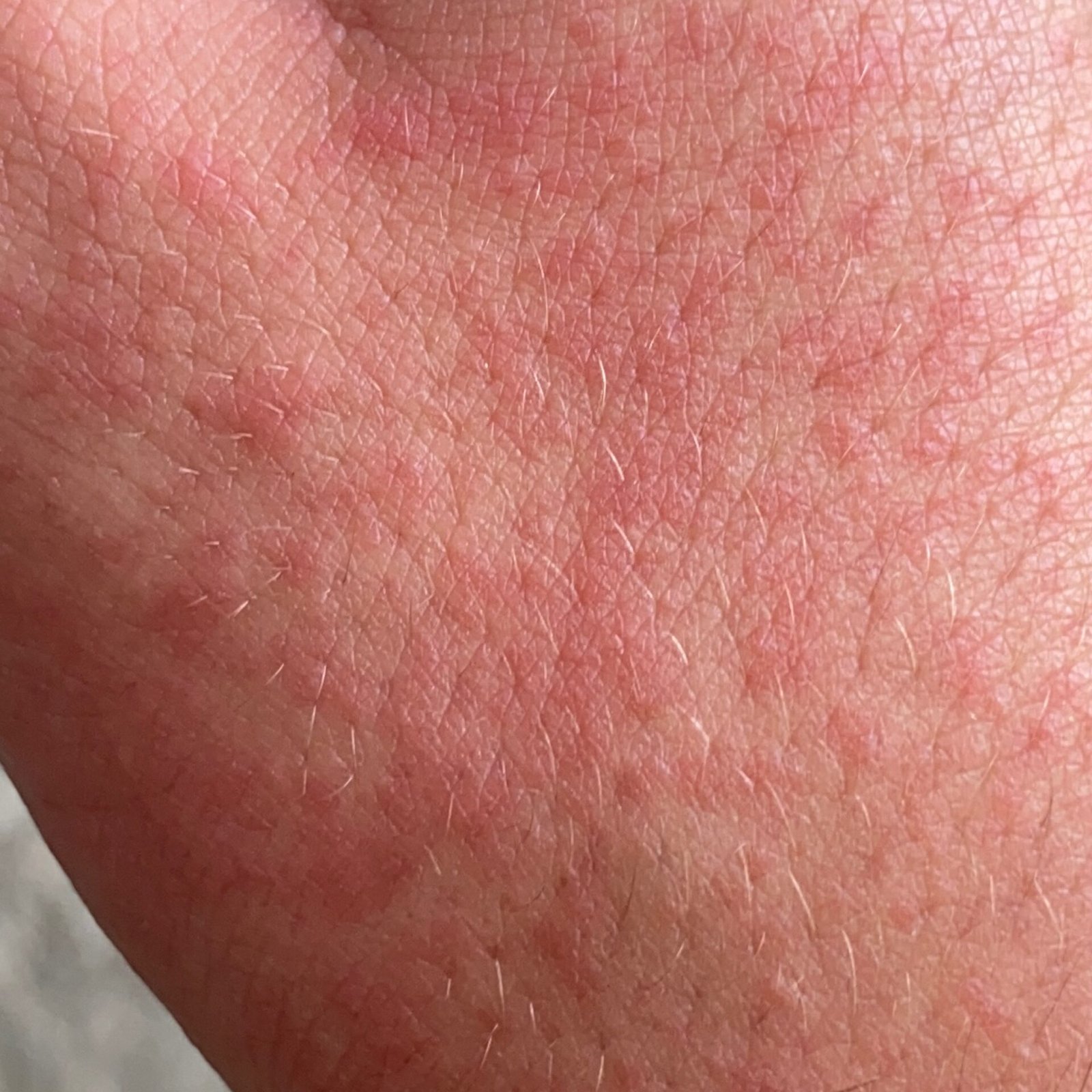
Contact dermatitis usually appears within a few hours or days of contact with an irritant or an allergen, most often on the hands and face (NHS). Among common allergens our atlas lists “Plant allergens (e.g., poison ivy)”. Round eczema patches with sharp edges (nummular eczema) are pictured on our fungal infection page, next to ringworm.
 25 photos
Contact dermatitis
“Contact dermatitis is a term used to describe acute or chronic inflammation of the skin that arises at the site of direct interaction with physical, chemical, or biological agents.”
“Inflammation in sensitized individuals develops 12–48 hours after re-exposure (range: 8–120 hours)”
Read the article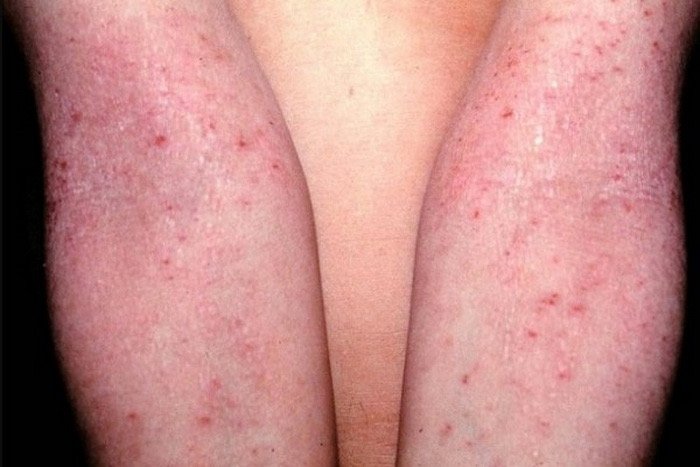 24 photos
Atopic dermatitis (atopic eczema)
“AD is marked by intense itching, xerosis (dry skin), eczematous eruptions, and lichenification.”
“Most commonly affects the flexural surfaces of elbows and knees, as well as the neck and wrists.”
Read the article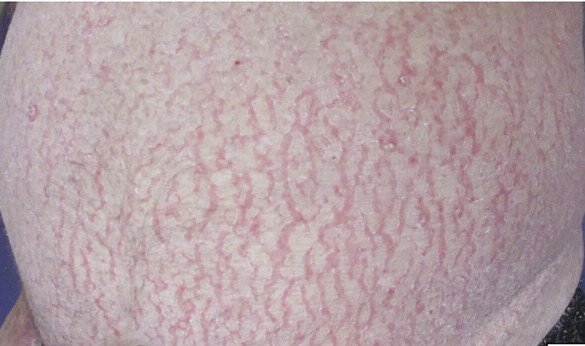
Asteatotic eczema (eczema craquelé)
“A network of fine fissures dividing the skin into irregular plates, most obvious on the shins.”
“Itch, often worse on undressing or getting into bed.”
Read the articleScaly patches and plaques
A ring-shaped patch with a scaly edge can also be ringworm, pictured on our fungal infection page with the rashes it is mistaken for. Our atlas says lichen planus may be “misdiagnosed due to its resemblance to eczema, psoriasis, or fungal infections”.
 30 photos
Psoriasis (plaque psoriasis)
“The lesions are sharply demarcated, elevated, and may vary in size and distribution.”
“Extensor surfaces of the elbows and knees”
Read the article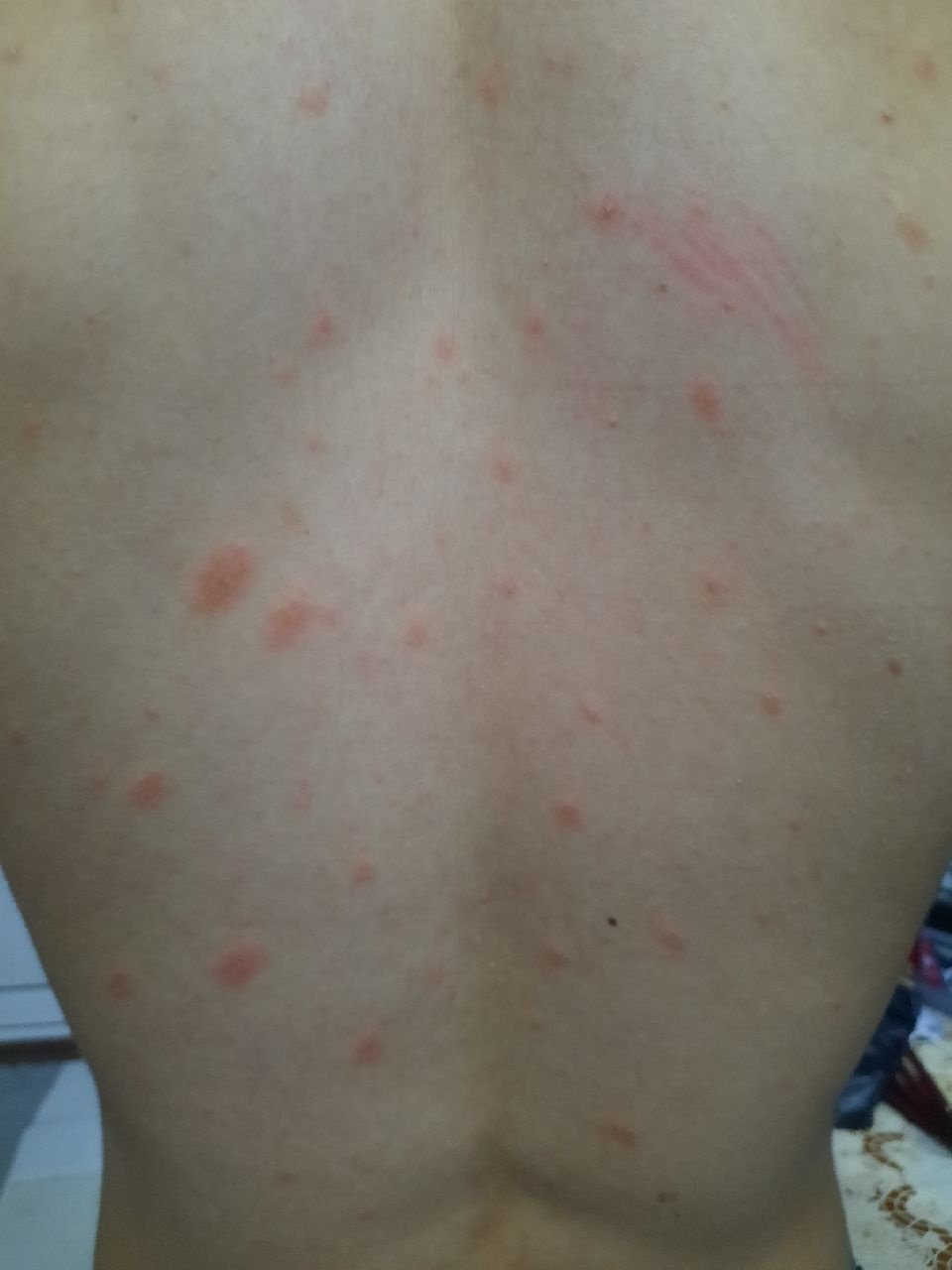 24 photos
Pityriasis rosea
“On the back, the rash often aligns along skin cleavage lines in a “Christmas tree” or “fir tree” pattern”
“The condition usually resolves spontaneously within 6 to 12 weeks, with no scarring.”
Read the article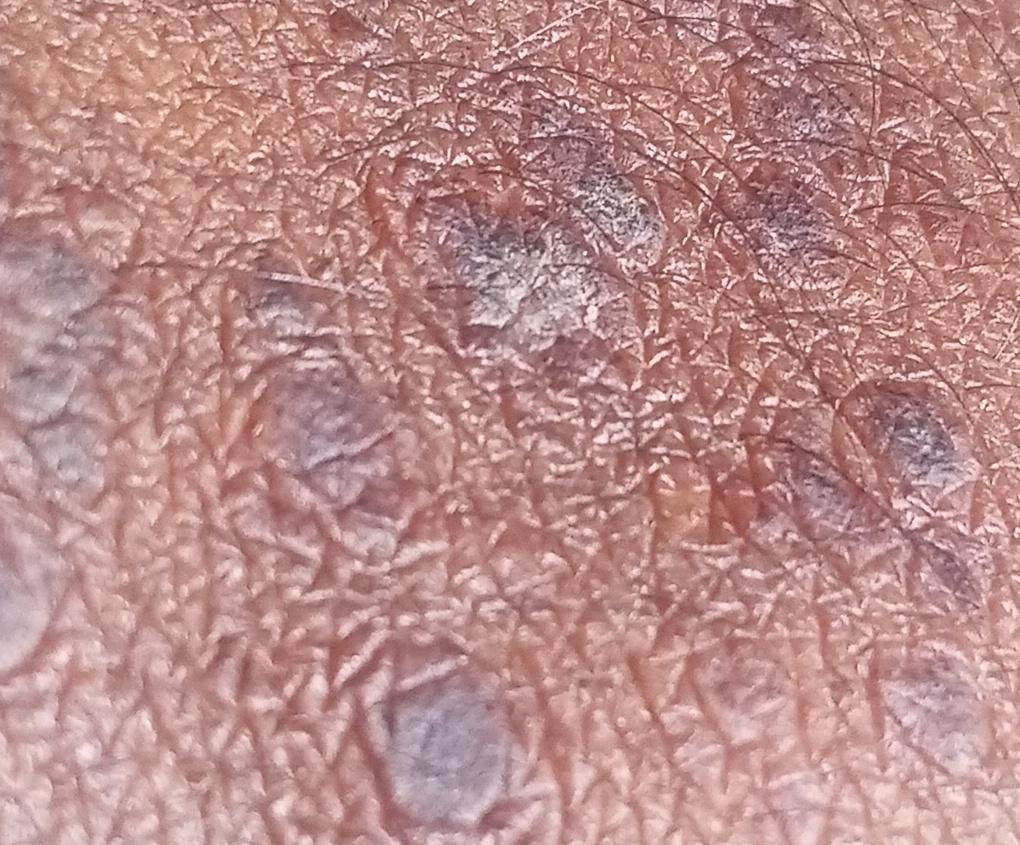 25 photos
Lichen planus
“Multiple polygonal, flat-topped papules 3–5 mm in size, often grouped symmetrically”
“Distribution: Common sites include wrists, forearms, lumbar area, ankles, and shins.”
Read the articleBlisters, crusts and sores
A shingles rash is usually on one side of the body only; if it is on the eye or nose, ask for an urgent appointment (NHS). Impetigo crusts can look like cornflakes stuck to the skin and spread easily (NHS). Blistered or peeling skin, or a sore mouth, lips or eyes, after a new medicine or an infection needs emergency help.
 32 photos
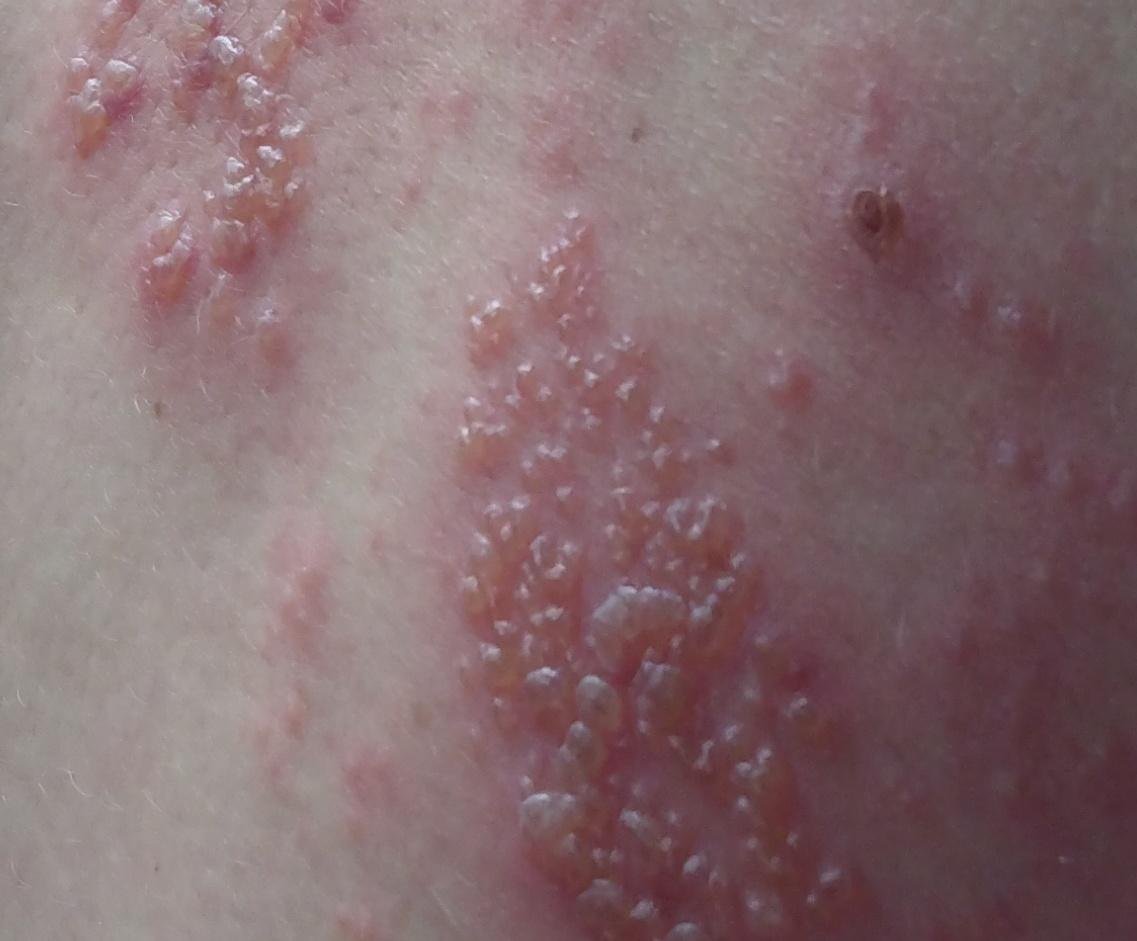
Shingles (herpes zoster)
“Acute eruption: Red patches evolve into clusters of small, tense clear vesicles (0.3–0.5 cm in diameter) on an erythematous base.”
“Pain often precedes the rash and can continue after lesion resolution, evolving into postherpetic neuralgia.”
Read the article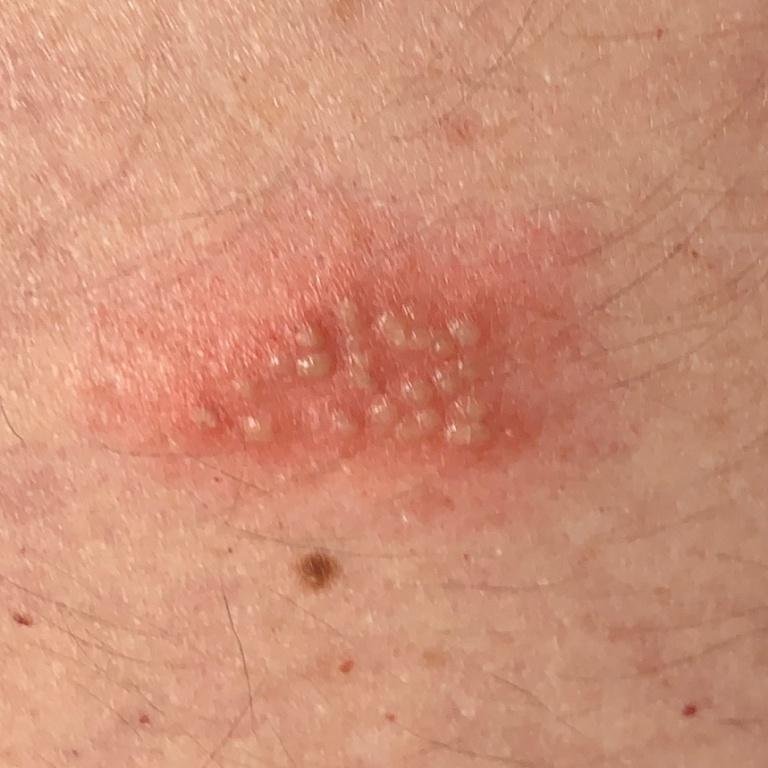 20 photos
Cold sores and herpes simplex
“Herpes simplex infection typically presents as clusters of small, fluid-filled blisters (vesicles) on a red, swollen base.”
Read the article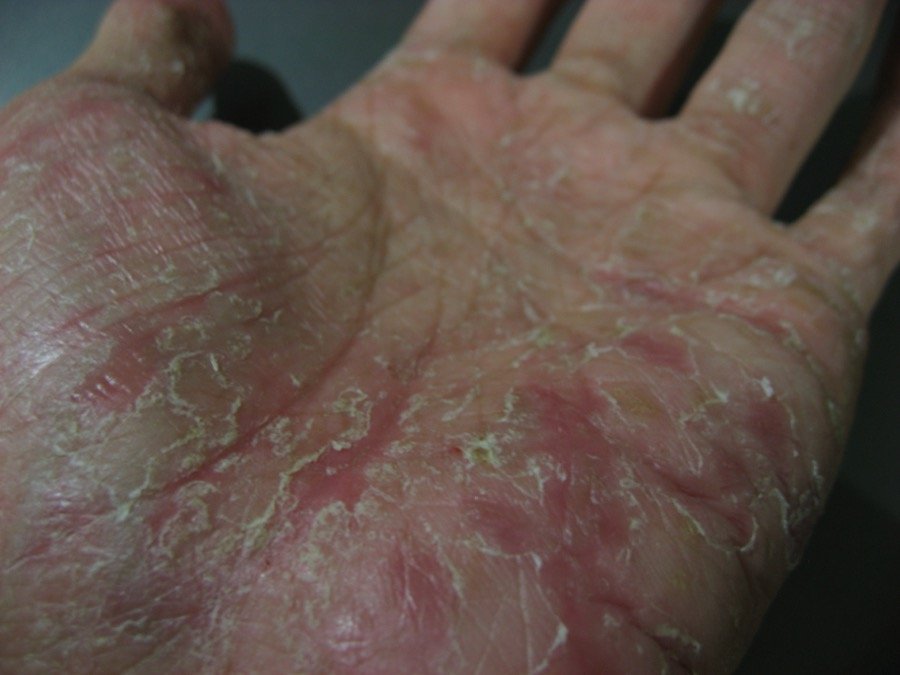
Dyshidrotic eczema (pompholyx)
“Intense itch, frequently preceding the blisters: Many people describe a burning or prickling sensation a day or two before anything is visible.”
Read the article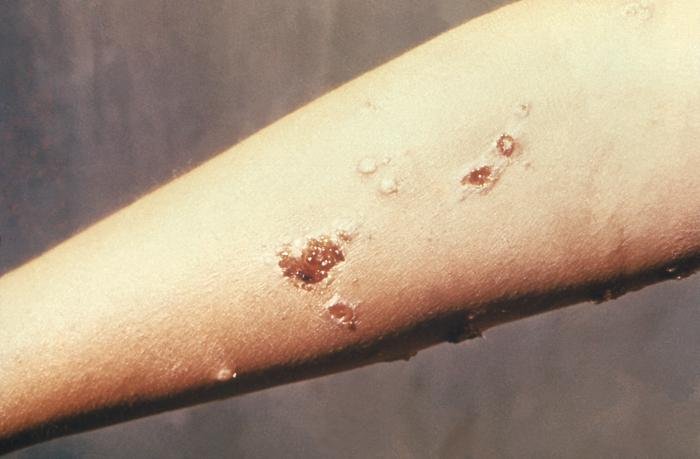
Impetigo
“Golden or honey-coloured crusts on a red, moist base.”
“Mild itch, little pain, and a child who is generally well.”
Read the articleTiny bumps and spots
Heat rash also causes small raised spots, with an itchy, prickly feeling, after heat or sweating (NHS); it is described further down with the causes that have no atlas article. Scabies spreads through close skin contact, so everyone in the home needs treating at the same time, even without symptoms (NHS).
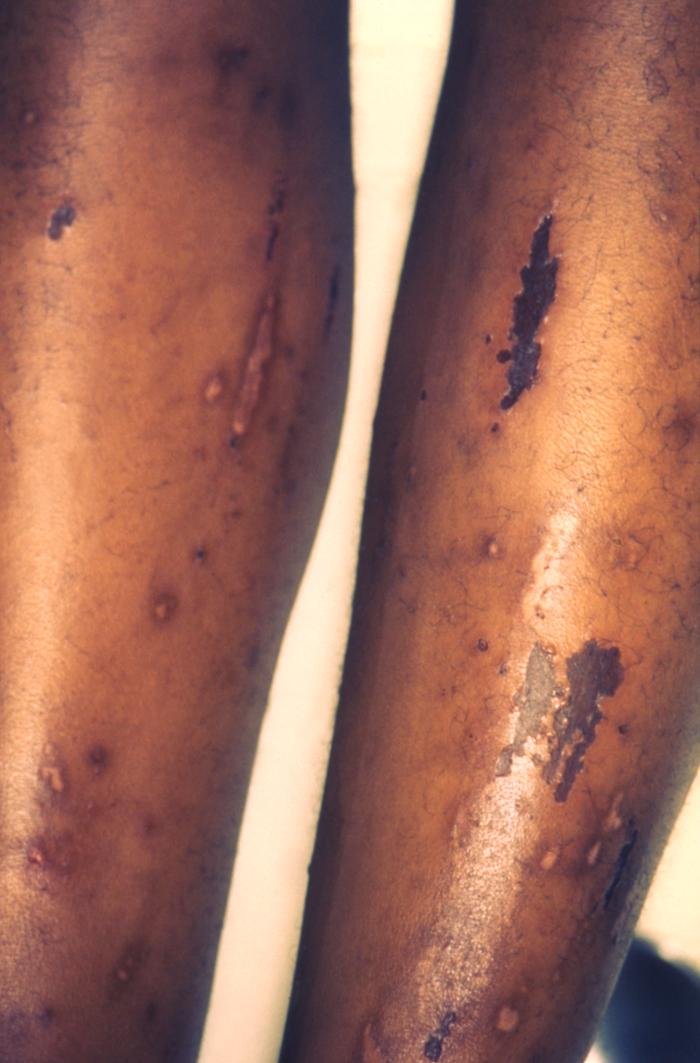
Scabies
“Burrows: Fine, slightly raised, grey or skin-coloured wavy lines a few millimetres long, best seen in the finger webs, the sides of the fingers and the wrists.”
“In adults the head and neck are usually spared.”
Read the article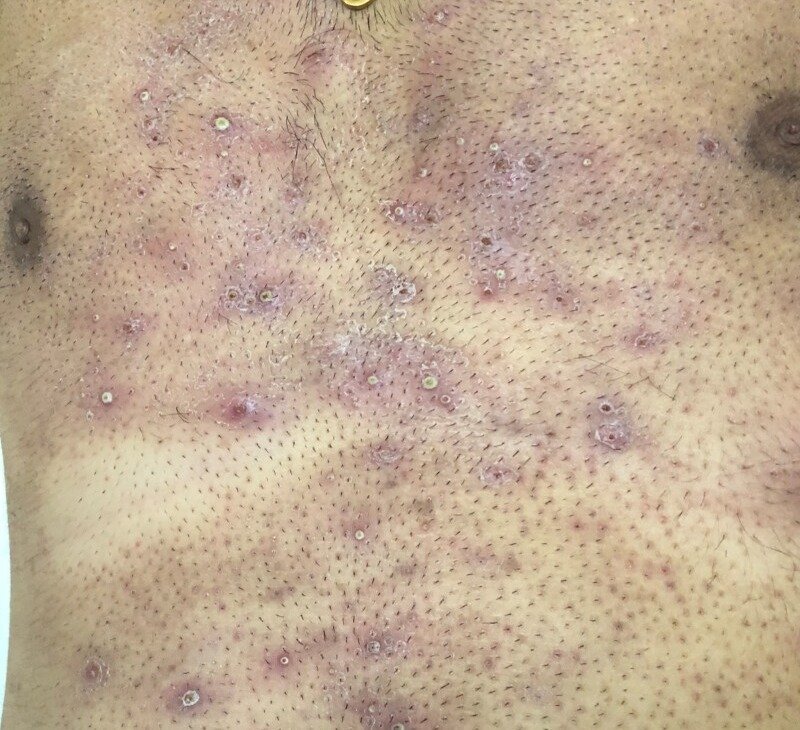
Folliculitis
“Follicular papules and pustules: Small bumps, some topped with pus, each with a hair emerging from or trapped within it.”
Read the article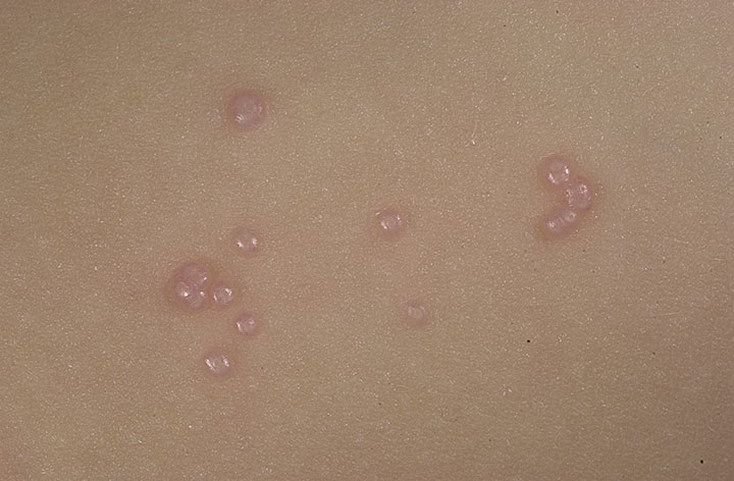 24 photos
Molluscum contagiosum
“Molluscum contagiosum appears as one or more round, dome-shaped papules measuring 2–5 mm in diameter.”
Read the articleHot, swollen, painful or oozing skin
Cellulitis, a skin infection, makes the skin painful, hot and swollen, sometimes blistered, and you may feel unwell; ask for an urgent appointment, and call emergency services if you also have a very high temperature or feel hot, cold or shivery, dizzy, faint or confused (NHS; all the signs are in the warning box at the top of this page). Our atlas says: “Erysipelas needs medical assessment, not self-treatment.”
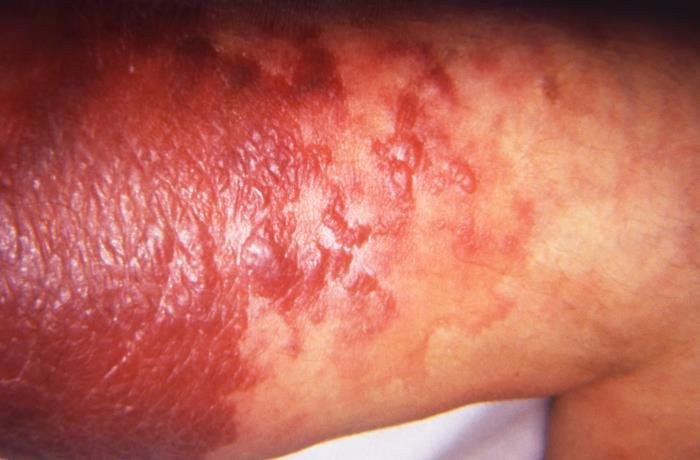
Erysipelas
“A sharply demarcated, raised red plaque whose border can be felt as a step.”
“Fever, chills, shivering and malaise, frequently preceding the skin signs.”
Read the article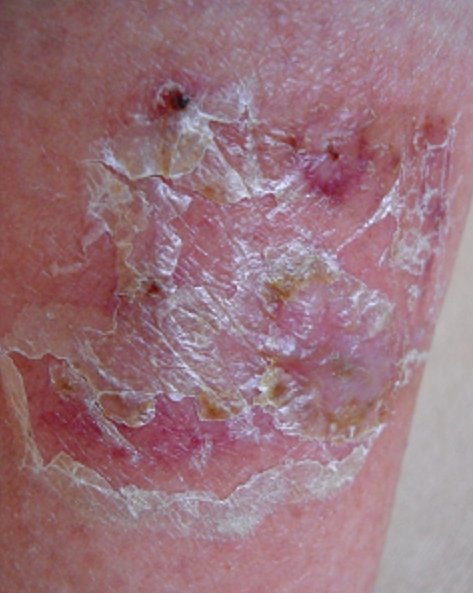
Infective eczematoid dermatitis (eczema around a wound or other infection)
“Proximity to a focus: A wound, ulcer, ear canal, stoma, fistula or fissure sitting at or near the centre of the affected area.”
“Yellow or honey-coloured crust over a moist surface.”
Read the article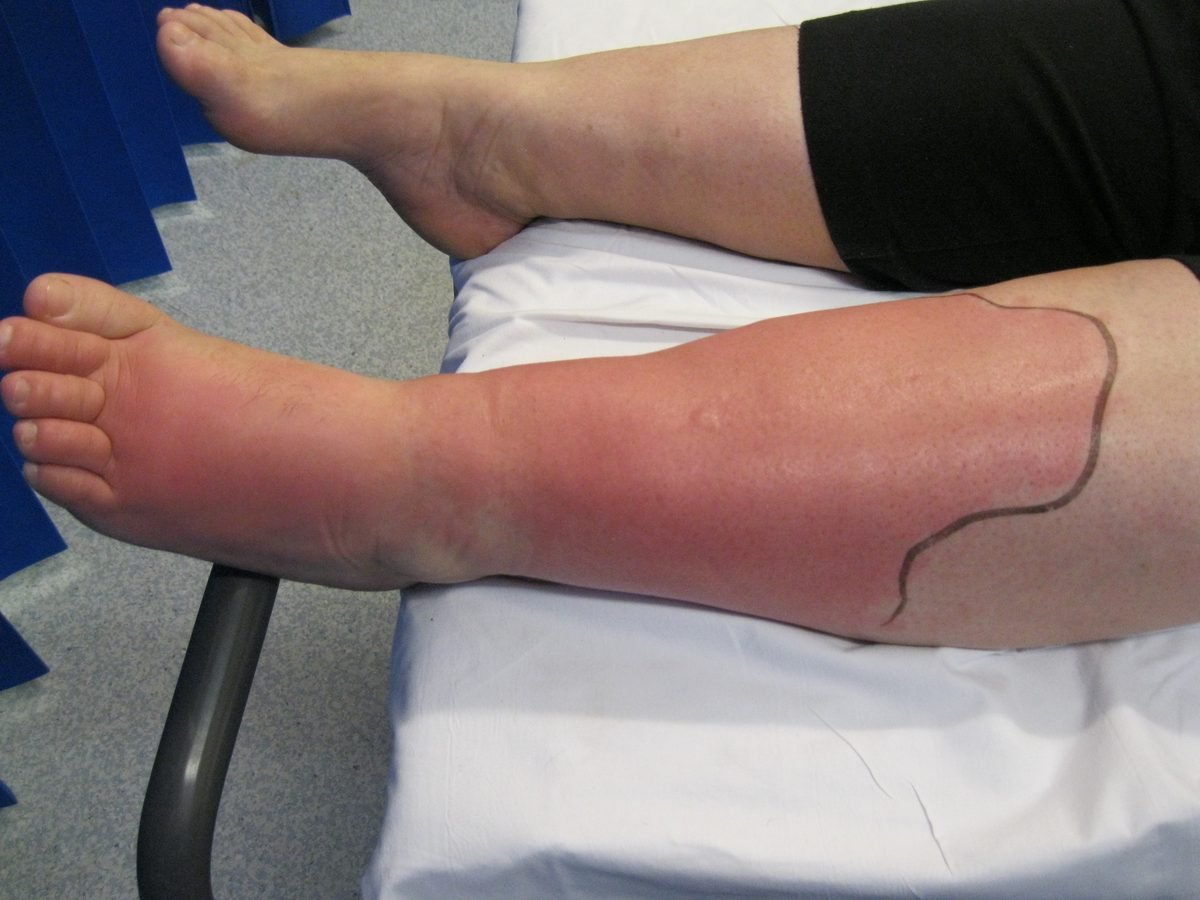
Cellulitis
A red, swollen lower leg; the edge of the redness has been marked with a pen.Photo: John Campbell, CC0 1.0, via Wikimedia CommonsNHS — CellulitisRash with a fever or feeling unwell
Measles, scarlet fever, hand, foot and mouth disease, slapped cheek syndrome, roseola and Kawasaki disease have no atlas article; they are described further down. Any rash that does not fade under a glass needs emergency services, with or without a fever; so does a rash with any emergency sign in the warning box. For syphilis, our atlas advises seeking testing if a widespread rash appears that does not itch, particularly on the palms and soles, and says “Sexual health services test for syphilis routinely and treat the results confidentially”.
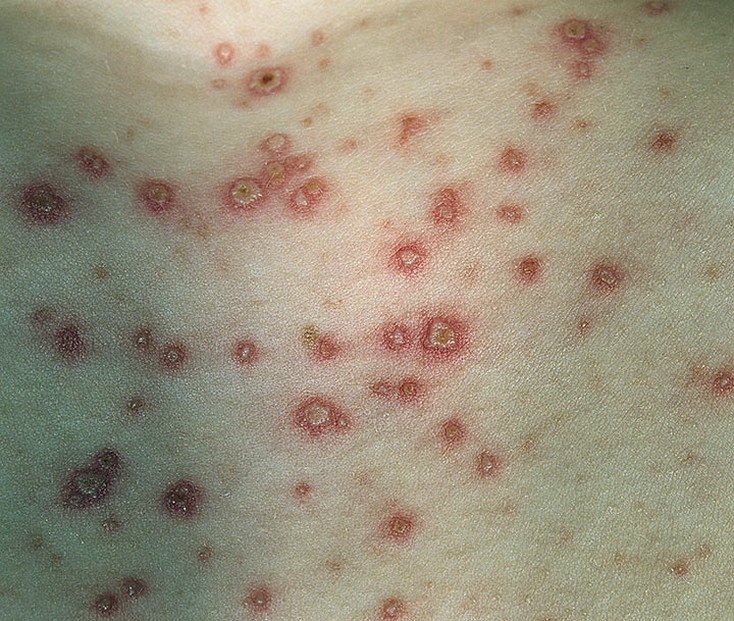 28 photos
Chickenpox
“Vesicles: Fluid-filled blisters with clear or yellowish contents, often described as “dew drops on a rose petal.”
“The rash usually starts on the chest and back, then spreads rapidly to the face, scalp, arms, legs, and sometimes to mucous membranes (oral cavity, conjunctiva, and genitals).”
Read the article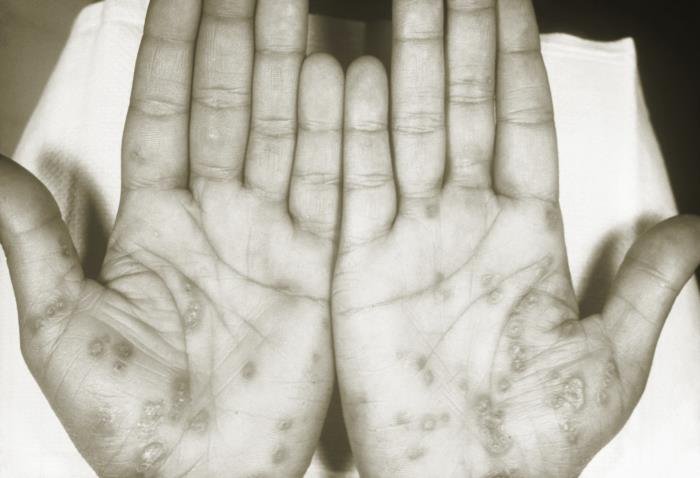
Secondary syphilis
“A widespread rash that does not itch, coppery-red or brown, flat or slightly raised.”
“Involvement of the palms and soles, a site most everyday rashes leave alone — useful as a clue rather than as proof.”
Read the articleBabies
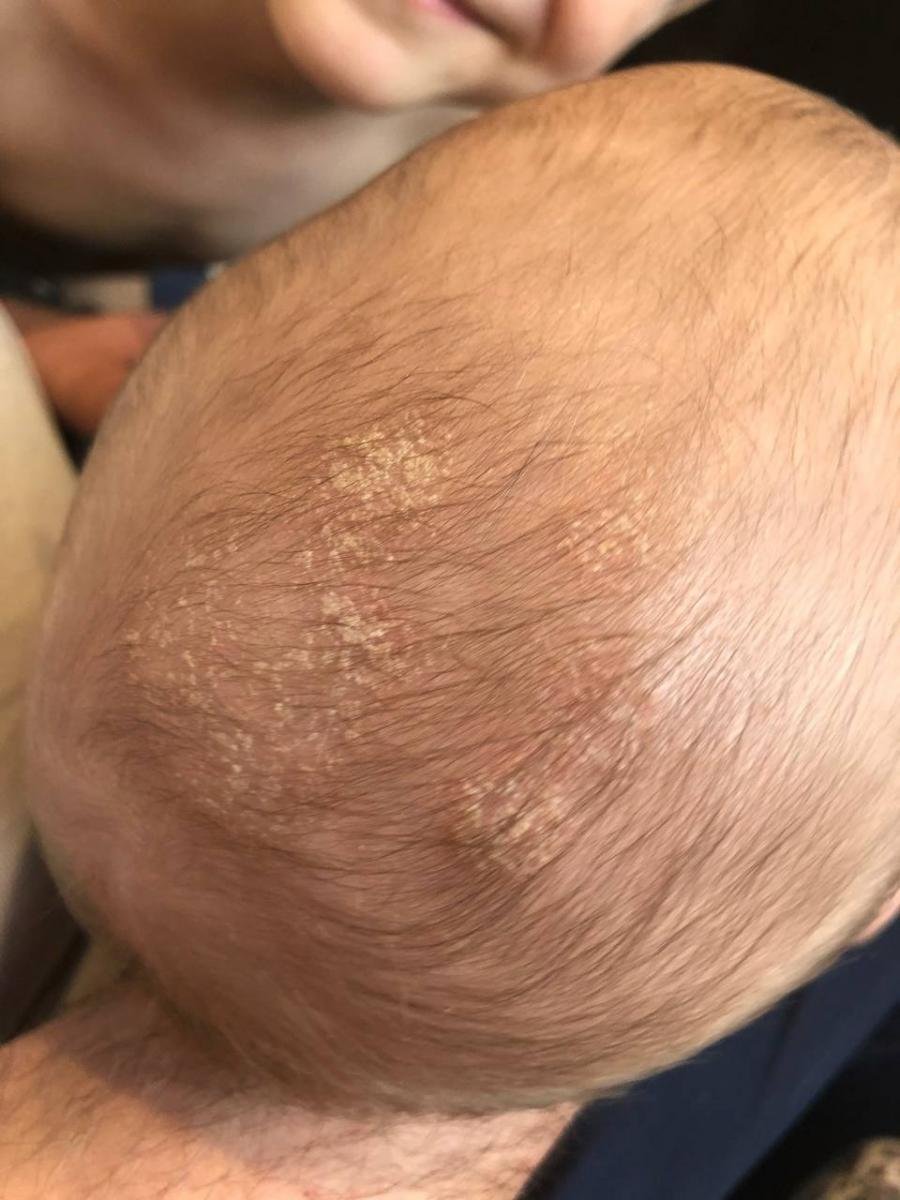
Cradle cap is harmless and usually goes away on its own within a few months (NHS). Nappy rash, heat rash and the tiny spots common on newborns are described further down, in the section on babies and children.
 24 photos
Cradle cap (seborrheic dermatitis in babies)
“In infants: thick crusts on the scalp (“cradle cap”), erythema, and flaking in the diaper area.”
Read the article
Medical review of the atlas articles above
Board-Certified Dermatologist · Fellow of the American Academy of Dermatology (FAAD)
Sources for the group notes: NHS — Hives · Atlas — Allergic urticaria · NHS — Contact dermatitis · Atlas — Contact dermatitis · Atlas — Lichen planus · NHS — Shingles · NHS — Impetigo · NHS — Stevens-Johnson syndrome · NHS — Heat rash (prickly heat) · NHS — Scabies · NHS — Cellulitis · Atlas — Erysipelas · Atlas — Cutaneous syphilis · NHS — Meningitis · NHS — Cradle cap
Rash with a fever: causes with no atlas article
Rashes that usually come with a high temperature or feeling unwell, most of them common in children. Each one is described using the linked sources. Any rash that does not fade under a glass needs emergency services, with or without a fever; so does a rash with any emergency sign in the warning box. For a high temperature, see when a temperature needs emergency help.
Sources for this introduction: NHS — Meningitis · NHS — Sepsis
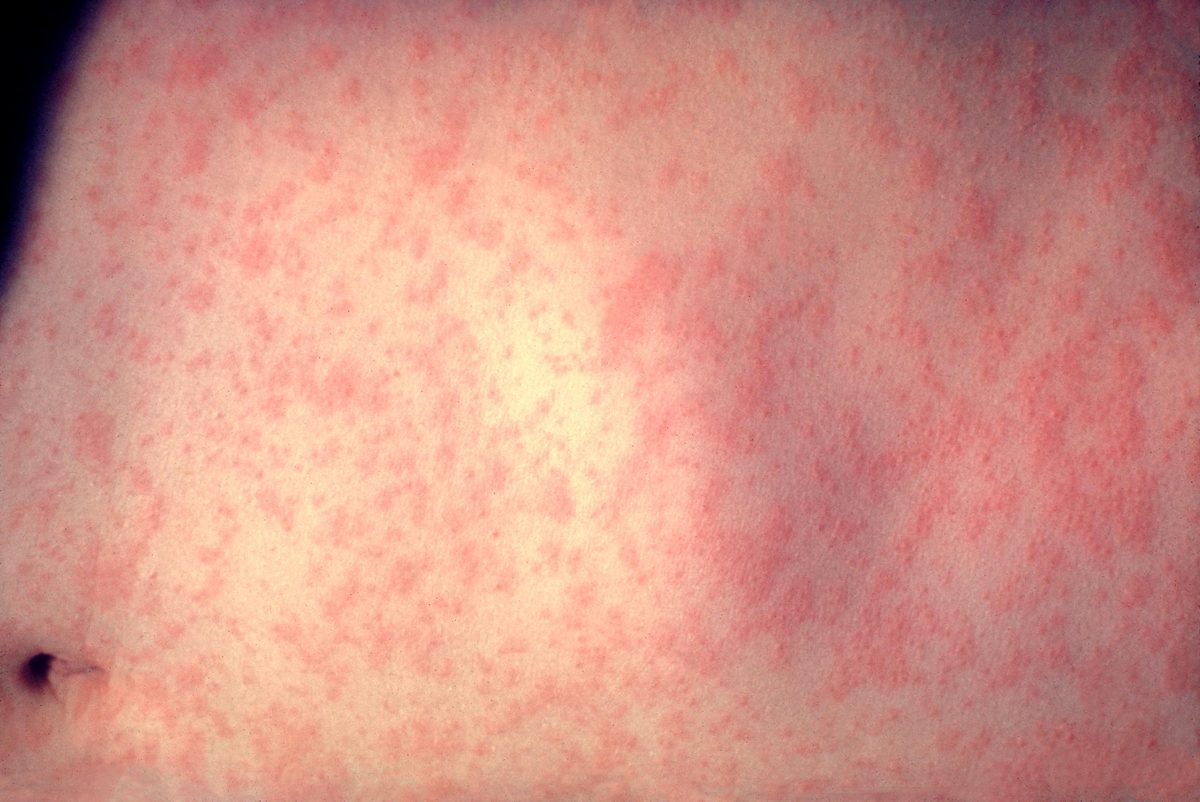
Measles
Face first, then the body
Starts like a cold: a high temperature, a runny or blocked nose, sneezing, a cough and red, sore, watery eyes. Small white spots may appear inside the cheeks. A few days later a rash starts on the face and behind the ears and spreads to the rest of the body. The spots are sometimes raised and can join into blotchy patches, and they are not usually itchy. The rash looks brown or red on white skin and may be harder to see on brown and black skin.
Ask for an urgent GP appointment or call NHS 111 if you think it is measles, and phone before you go in: it spreads very easily. It is unlikely if you have had both doses of the MMRV or MMR vaccine, or measles before.
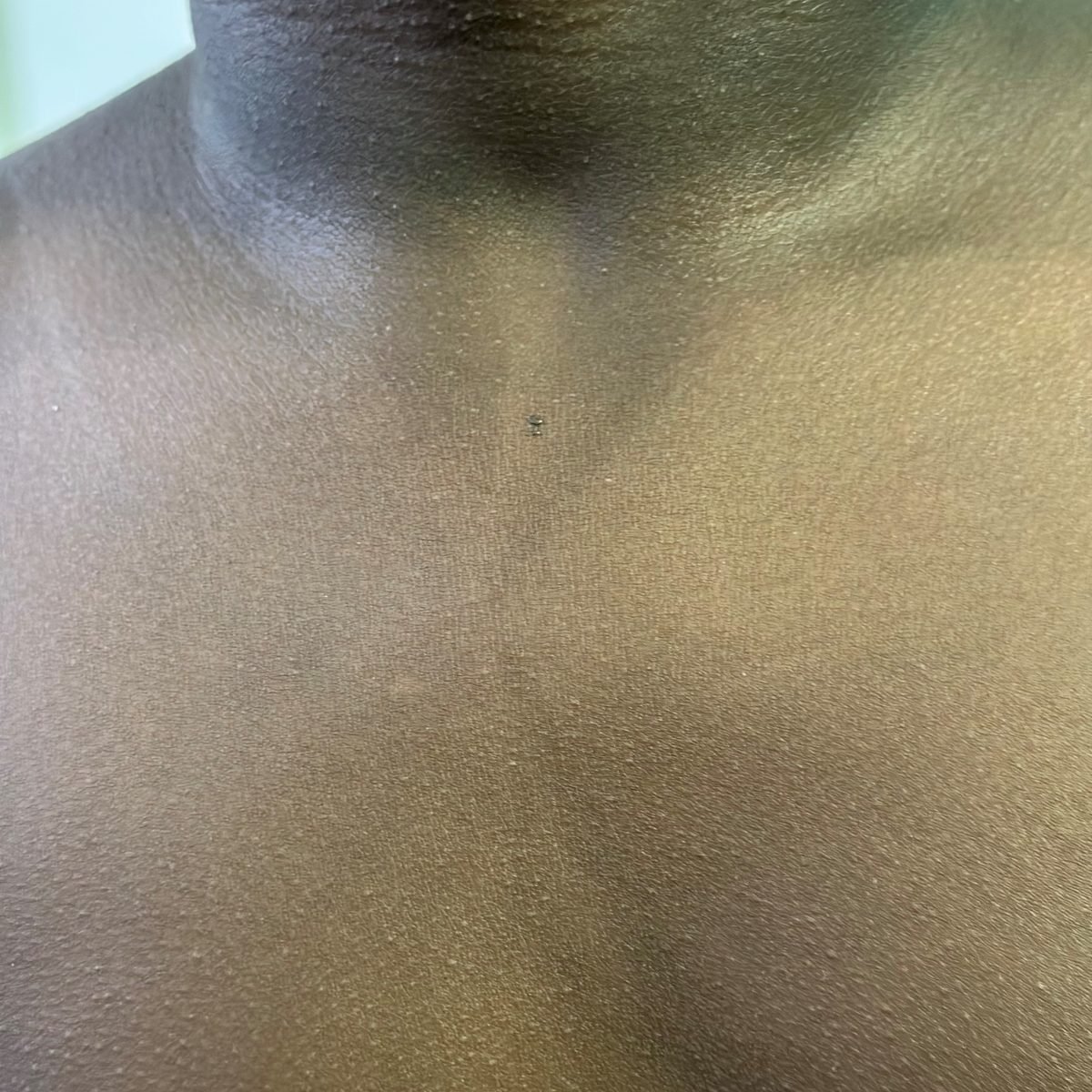
Scarlet fever
Chest and tummy, then spreading
Flu-like symptoms come first: a high temperature, a sore throat and swollen neck glands. 12 to 48 hours later a rash of small, raised bumps starts on the chest and tummy and spreads. It makes the skin feel rough, like sandpaper. On brown and black skin the change in colour can be hard to see, but you can still feel the rash. The tongue may turn red and bumpy (“strawberry tongue”).
See a GP the same day: scarlet fever is treated with antibiotics. It spreads easily, so phone first.
NHS — Scarlet fever · NHS — Rashes in babies and children · NHS — Hives · AAD — Rash 101 in adults: when to seek medical treatment
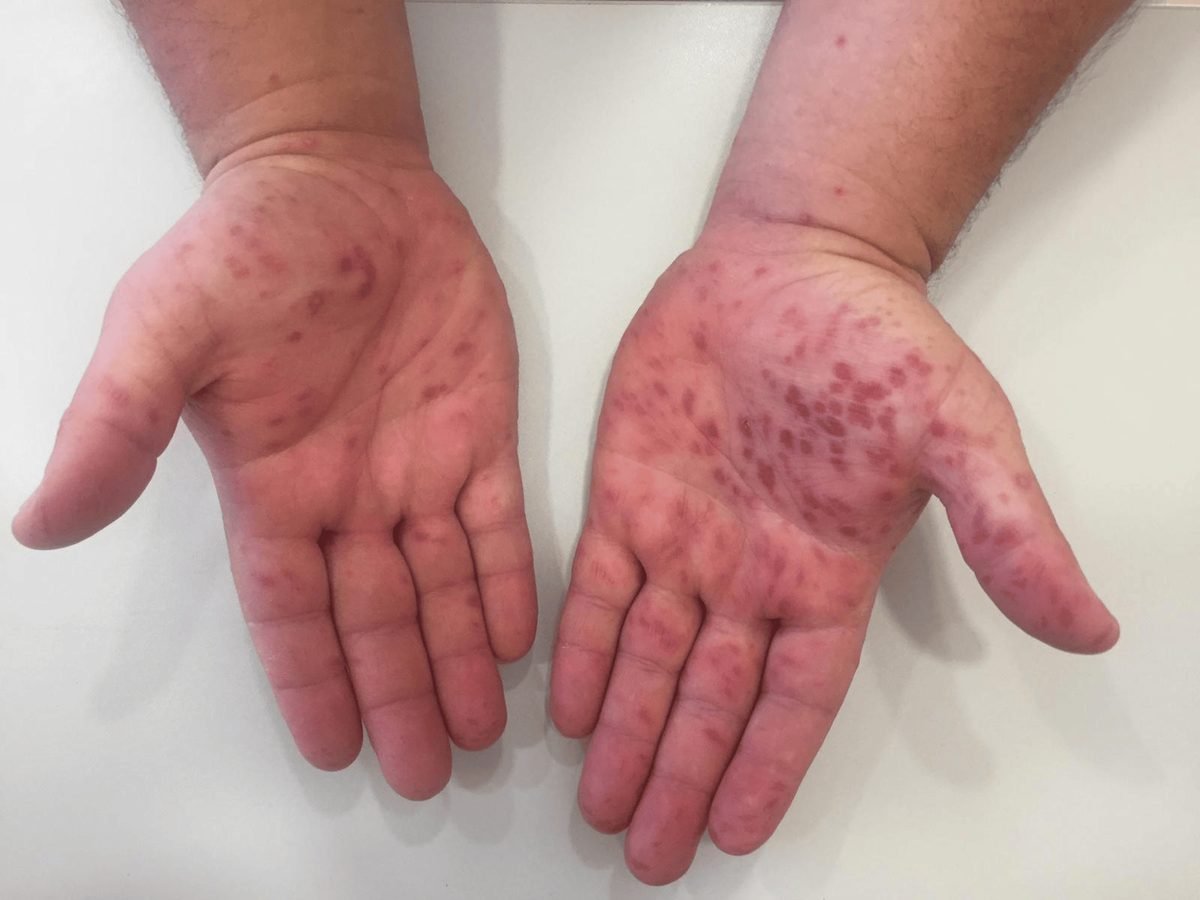
Hand, foot and mouth disease
Hands, feet and mouth
A sore throat, a high temperature and not wanting to eat, then mouth ulcers, which can be painful, and a raised rash of spots on the hands and feet, sometimes also the groin and bottom. The spots can look pink, red or darker than the skin around them and can turn into blisters. It is common in children, can affect adults, and usually gets better on its own in 7 to 10 days.
Get urgent advice if a child is peeing less than usual. For a high temperature, see when a temperature needs emergency help. See a GP if you are pregnant and get it.
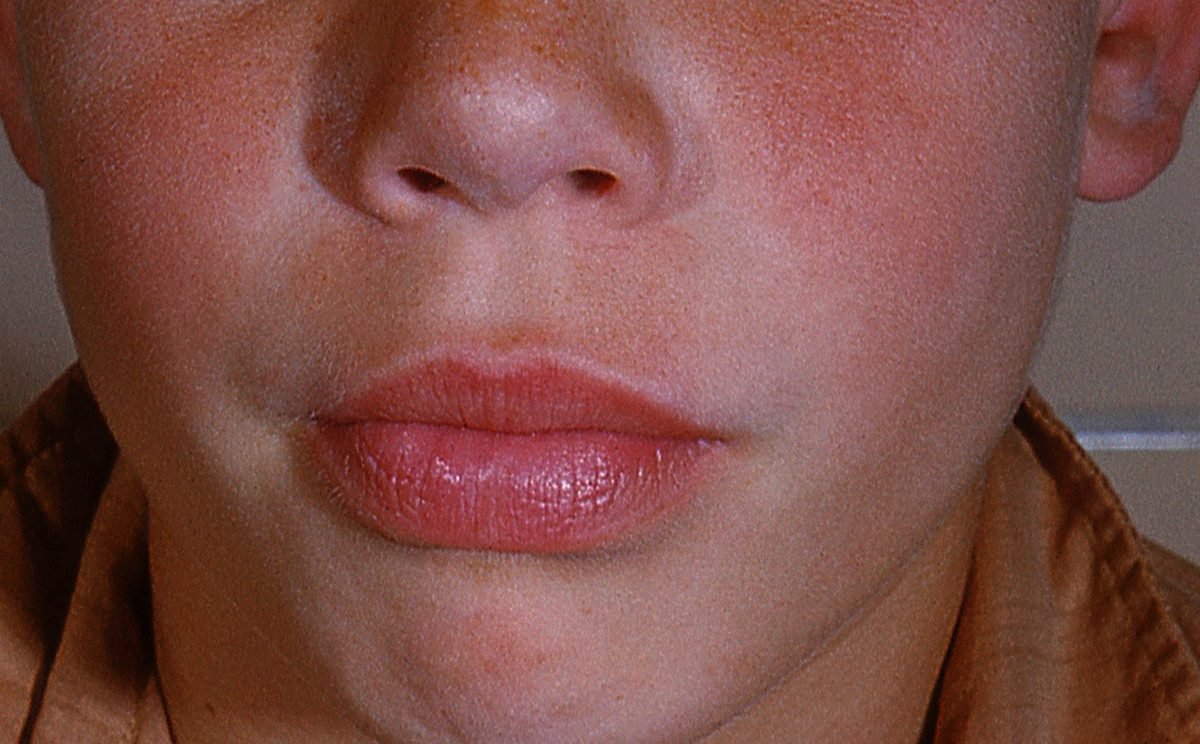
Slapped cheek syndrome
Cheeks, then the body
A few days of feeling unwell, with a high temperature, a runny nose, a sore throat or a headache. Then a red rash may appear on one or both cheeks, less obvious on brown and black skin, and a few days later a spotty, sometimes raised rash on the chest, back, arms and legs. Adults do not usually get the rash on the face but may have joint pain. Also called fifth disease.
Tell your midwife or GP if you are pregnant, have a blood disorder or a weakened immune system and have been near someone with it. Ask for an urgent GP appointment or call NHS 111 if you have very pale skin, shortness of breath or extreme tiredness, or have fainted.
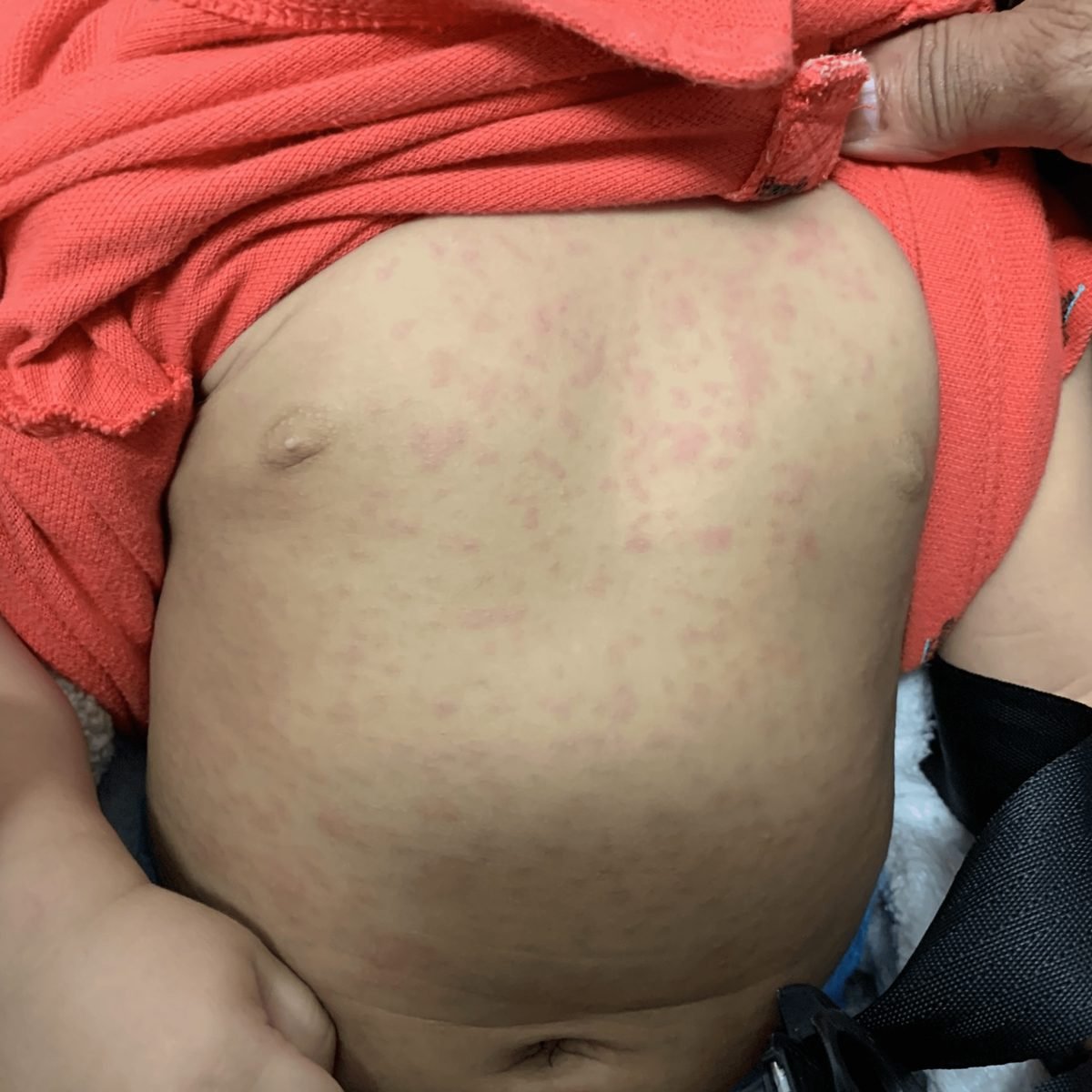
Roseola
Babies and toddlers
A sudden high temperature with cold-like symptoms for 3 to 7 days, then a rash of pinkish-red spots, bumps and small flat patches that starts on the chest, tummy and back and spreads to the neck and arms. The rash is not usually itchy and normally fades within 2 days. It may be harder to see on brown or black skin.
For a high temperature, see when a temperature needs emergency help. Get urgent advice for a high temperature that has lasted 5 days or longer, or if your child is refusing fluids or feeds or has fewer wet nappies. A child who has a fit (febrile seizure) for the first time needs emergency services or an emergency department.
Kawasaki disease
Mostly children under 5
A rare illness whose main sign is a high temperature that lasts 5 days or more. Other signs can include a rash, swollen neck glands, red eyes, dry and cracked lips, a red “strawberry” tongue, and palms and soles that turn bright red (this may be harder to see on brown or black skin). It is not usually serious, but it can lead to heart problems if it is not treated early.
Ask for an urgent GP appointment or call NHS 111 about these symptoms.
Viral rash (exanthem)
Often the face or trunk first
Many viral infections cause a widespread rash of spots, bumps or blotches. It may or may not itch, often starts on the face or trunk and spreads, and can come with a fever, tiredness and aches. Bacterial infections and medicines can cause similar rashes.
See a doctor the same day about a rash with a fever (see when a temperature needs emergency help), and call emergency services if it does not fade under a glass or comes with any warning sign.
Cleveland Clinic — Viral exanthem rash · AAD — Rash 101 in adults: when to seek medical treatment · NHS — Hives · NHS — Meningitis
Rash after a new medicine, plant, the sun, heat or a tick bite
Allergic rashes can start within minutes, like hives, or a day or two after contact: our atlas says allergic contact dermatitis “develops 12–48 hours after re-exposure”. Insect bites and stings can cause a rash too, and they are one of the things that can set off hives. Each cause below is described using the linked sources.
Sources for this introduction: NHS — Anaphylaxis · Cleveland Clinic — Drug allergy · Atlas — Contact dermatitis · MedlinePlus — Rashes · NHS — Hives
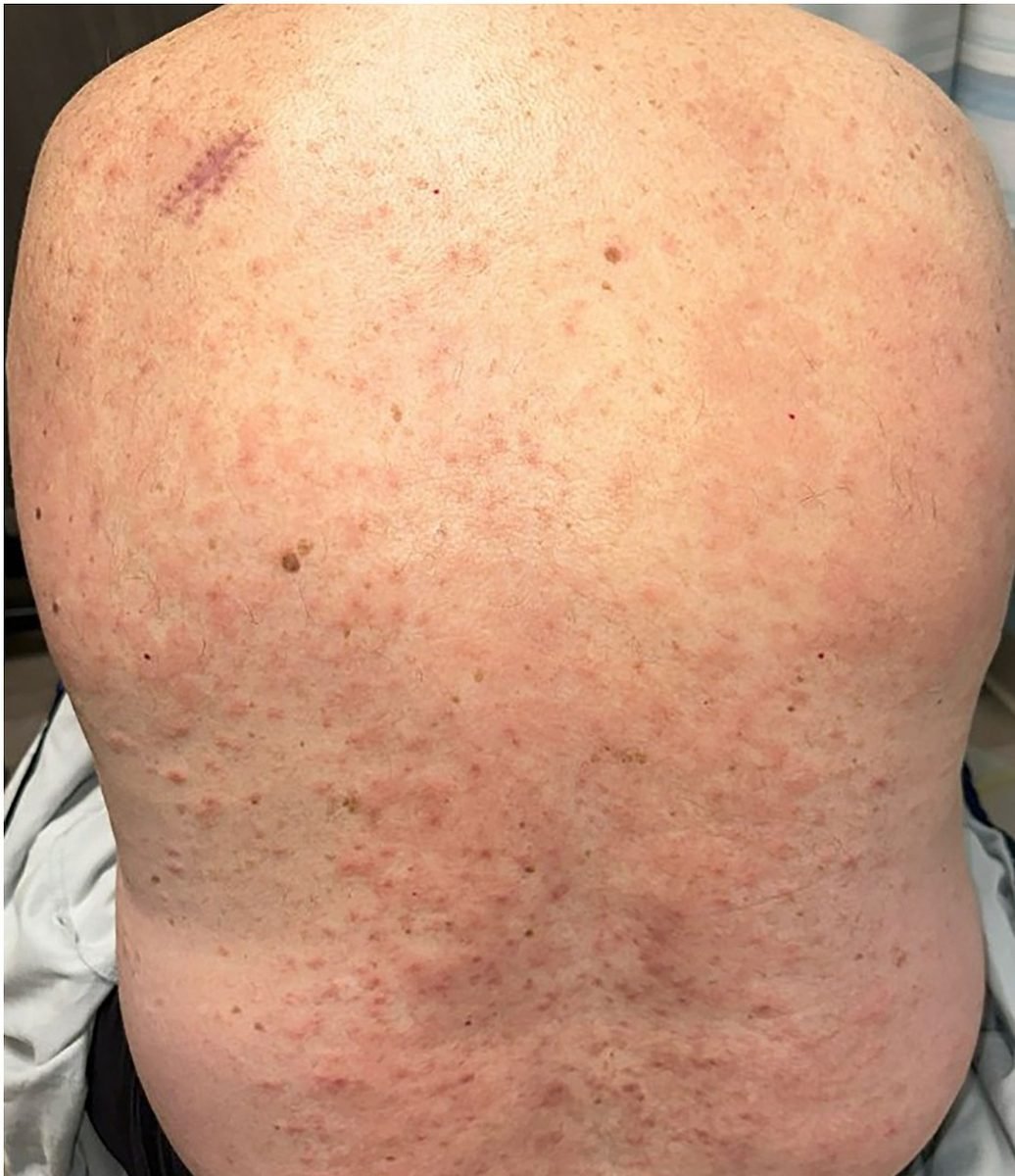
Rash from a medicine
Anywhere on the body
Most allergic reactions to medicines cause a mild skin rash or hives, which can appear right away or hours after a dose. Rarely, a reaction develops slowly, days or even weeks after starting a medicine, sometimes with a fever, joint pain or swollen glands. Antibiotics such as penicillin, sulfa drugs, anti-inflammatory painkillers and medicines for seizures are among the common causes, and any medicine can cause one.
Call emergency services for swelling of the lips, tongue or throat, or trouble breathing, and for a rash that spreads across the body, blisters or peels, or comes with a sore mouth, lips or eyes (signs of Stevens-Johnson syndrome). Otherwise, contact your doctor about any new rash while you take a medicine, and do not stop or change a medicine without their advice.
MedlinePlus — Drug allergies · Cleveland Clinic — Drug allergy · NHS — Stevens-Johnson syndrome · MedlinePlus — Rashes
Poison ivy and other plants
Where the plant touched the skin
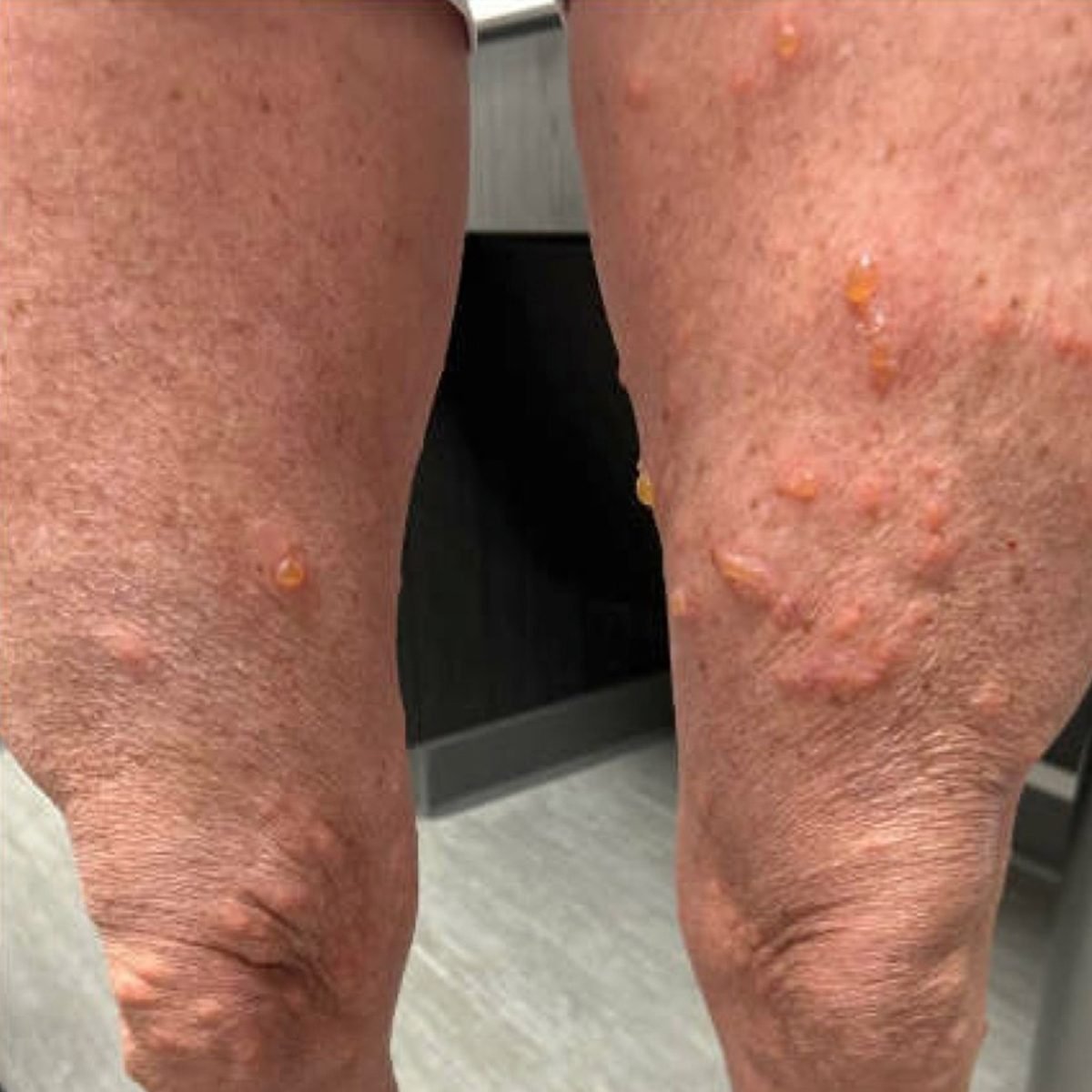
Poison ivy, oak and sumac can cause contact dermatitis. The skin becomes itchy, blistered, dry and cracked: red on lighter skin, and dark brown, purple or grey on darker skin. It usually appears within a few hours or days of contact. Our atlas lists “Plant allergens (e.g., poison ivy)” among the common allergens.
See a GP if it is severe or keeps coming back, and promptly if it affects your eyes, lips, mouth or genitals.
MedlinePlus — Rashes · NHS — Contact dermatitis · Atlas — Contact dermatitis · AAD — Rash 101 in adults: when to seek medical treatment
Heat rash (prickly heat)
Covered skin and skin folds
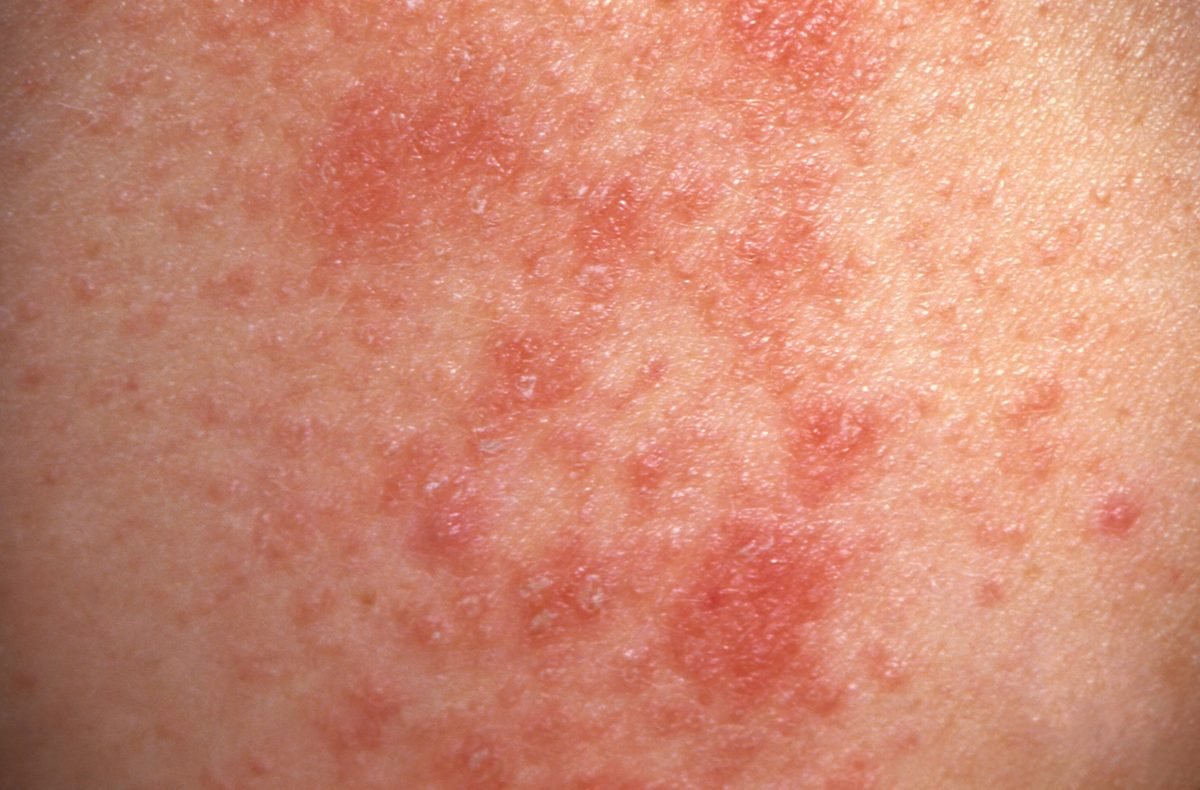
Small, raised spots 2 to 4 mm across, with an itchy, prickly feeling and mild swelling; some spots are filled with fluid. It is usually caused by sweating a lot, when sweat glands get blocked. It looks red on white skin and may look grey or white on brown or black skin. It often forms where clothing covers the skin and in skin folds, babies get it often, and it cannot be passed on to other people.
It usually gets better on its own after a few days if the skin is kept cool. See a GP if it has not improved after a few days, or if your baby has a rash and you are worried.
NHS — Heat rash (prickly heat) · Cleveland Clinic — Heat rash
Sun rash (polymorphic light eruption)
Arms, legs, chest
A rash of small raised spots or blisters, or larger blotchy areas, that appears within a few hours or days of being in the sun, more often in spring and summer. It can itch or burn, and it often appears on skin that is not usually exposed, such as the arms, legs or chest. It can look like heat rash, and it usually goes in about a week if you stay out of the sun.
See a GP if it is getting worse or has not got better after a week, if it is swollen, or if you also have joint and muscle pain or extreme tiredness.
Lyme disease
Around a tick bite
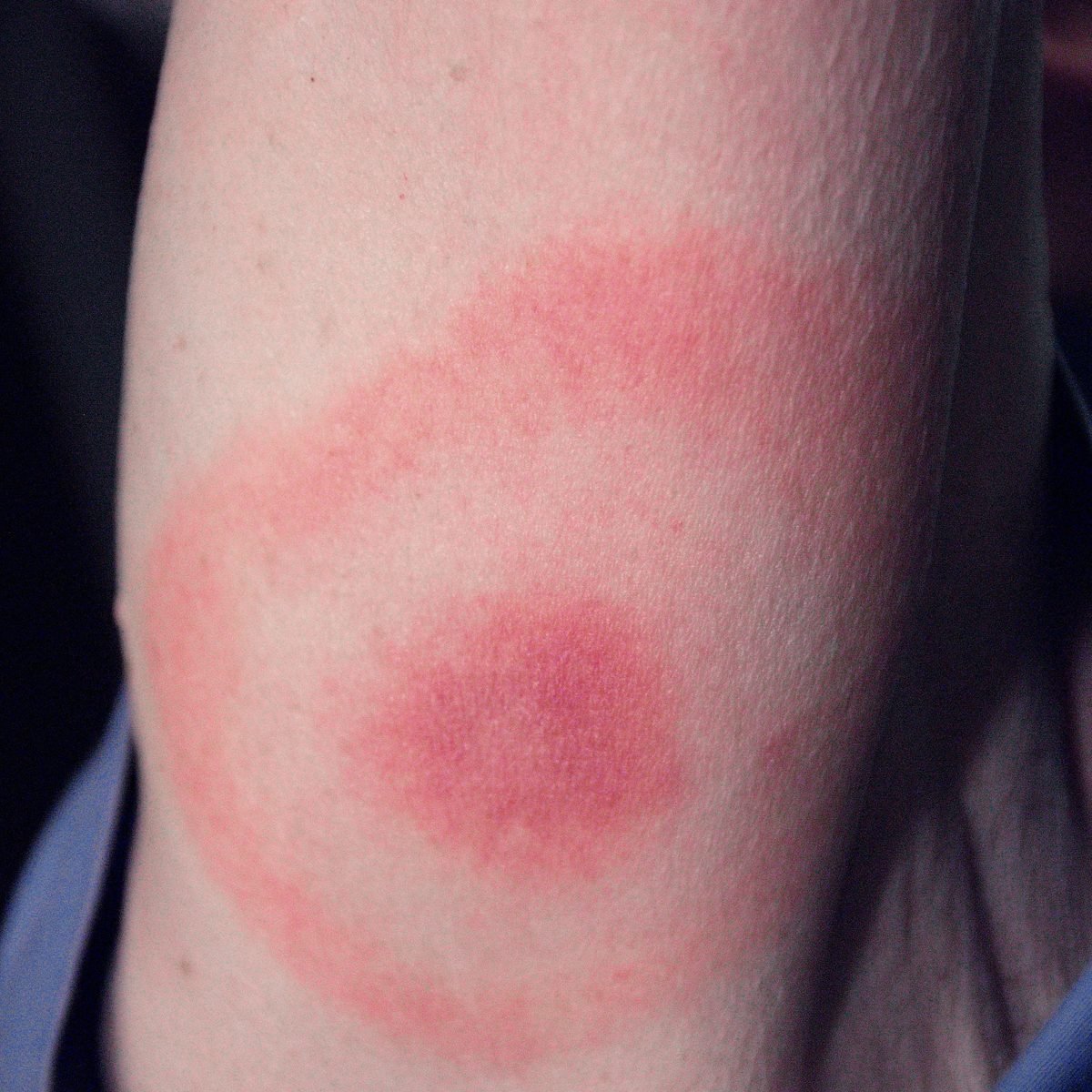
A circular or oval rash around a tick bite, usually within 1 to 4 weeks of the bite, sometimes up to 3 months later. It can have a darker or lighter centre, may look like a bullseye, can slowly spread, and is not usually hot or itchy. On brown and black skin it can be harder to see and may look like a bruise. Some people get flu-like symptoms.
Ask for an urgent GP appointment or call NHS 111 if you have been bitten by a tick, or have been where infected ticks live in the past 3 months, and you get a round or oval rash or flu-like symptoms.
Rashes in babies and children
A short guide. Rashes in babies and children are often nothing to worry about, but trust your judgement if your child seems seriously unwell.
-
Rash with a high temperature
Measles, scarlet fever, hand, foot and mouth disease, slapped cheek syndrome and roseola are common causes (described above). Whether a high temperature needs emergency services or an urgent GP appointment depends on the child’s age: see the temperature guide below.
-
Itchy rashes
Eczema, hives, heat rash, ringworm, chickenpox, impetigo and scabies are common itchy rashes in children. Most are pictured in the groups above (ringworm is on our fungal infection page).
-
Nappy rash
Red or raw patches on the bottom or the whole nappy area, sometimes with spots, pimples or blisters, dry scaly skin and a sore or itchy bottom. See a health visitor or GP if it does not go away, gets worse or spreads, or if your baby seems very uncomfortable. If your baby also has a high temperature, see when a temperature needs emergency help or an urgent GP appointment.
-
Spots on newborns
Very small white or yellow spots (milia) often appear on a baby’s nose and face in the first days, and raised red, yellow and white spots (erythema toxicum) are common in the first weeks; both usually go away on their own within a few weeks. Spots on the upper body, scalp, cheeks, forehead and chin up to 6 weeks after birth could be baby acne, which does not need treatment and usually gets better after a few weeks or months.
-
Cradle cap
Greasy, scaly patches on the scalp and face, sometimes in the nappy area (pictured above). See a GP if it does not get better after a few weeks of treatment, if it covers the whole body, if the crusts bleed or leak fluid, or if the skin looks swollen.
Temperature with a rash: when to get help
Call emergency services or go to an emergency department for:
- a baby under 3 months with a temperature of 38°C or more
- a baby aged 3 to 6 months with a temperature of 39°C or more
- a child under 5 who feels cold to the touch or is shivery
- anyone with a temperature below 36°C
- anyone aged 5 or older who has a very high temperature, feels hot or cold to the touch or is shivery, and also seems unwell
Get urgent advice the same day (an urgent GP appointment or NHS 111) for:
- a child older than 6 months with a temperature of 39°C or more
- a child who feels hotter than usual when you touch their back or chest, or feels sweaty (for a baby under 6 months, check with a thermometer if you can and compare with the emergency temperatures above)
- anyone aged 5 or older who feels hot or cold to the touch or is shivery but otherwise seems well
- an adult with a high temperature
A high temperature is less common in older adults, so an older adult can be seriously unwell without one. Any rash that does not fade under a glass needs emergency services, whatever the temperature.
Sources: NHS — Meningitis · NHS — Sepsis · NHS — Rashes in babies and children · NHS — Roseola · NHS — Hives
Call emergency services or go to an emergency department if a child with a rash is unwell and has a stiff neck, is bothered by light, seems confused, is limp or floppy, is not responding as usual, has a fit (seizure) or is very sleepy or hard to wake, has difficulty breathing or is breathing very fast, has pale, blue, grey or blotchy skin, lips or tongue, has sudden swelling of the lips, mouth, throat or tongue, has a tight throat or is struggling to swallow, or is a baby with a stiff body or a bulging soft spot on the top of the head. Call emergency services too for any rash that does not fade when you press a glass against it — it may start as small red pinpricks or look like small bruises — and for a child under 5 who has a weak, high-pitched or continuous cry, is not feeding or has not had a pee for 12 hours. For a high or low temperature, see the temperature guide above.
Sources: NHS — Rashes in babies and children · NHS — Meningitis · NHS — Sepsis · NHS — Roseola · NHS — Nappy rash · NHS — Cradle cap · NHS — Heat rash (prickly heat)
Rashes on brown and black skin
A rash can be harder to see on brown and black skin. Several photos on this page show darker skin: hives, lichen planus and scabies.
-
Colour
Instead of red, inflamed skin may turn dark brown, purple or grey, and heat rash may look grey or white. Our atlas says that in erysipelas the colour change “may read as violet, dusky brown or simply darker, and the warmth, swelling and tenderness carry more weight than the colour”, and that in folliculitis “the surrounding inflammation may appear darker brown or violet rather than red”.
-
Feel as well as look
Some rashes are easier to feel than to see: the scarlet fever rash feels rough, like sandpaper, and scabies spots can be felt even when they are hard to see.
-
Glass test and colour changes
To check for a rash that does not fade under a glass, or for blue or grey colour, look at paler areas: the palms, the soles of the feet, the roof of the mouth and inside the eyelids.
-
Marks after a rash
A rash can leave darker or lighter marks after it settles. Our atlas article on nummular eczema says its patches commonly leave such marks, “particularly in deeper skin tones”, and that they “fade slowly and are not scars”. Marks like these are pictured on our pages on brown and dark spots and white spots and patches.
Sources: NHS — Contact dermatitis · NHS — Atopic eczema · NHS — Heat rash (prickly heat) · Atlas — Erysipelas · Atlas — Folliculitis · NHS — Scarlet fever · NHS — Scabies · NHS — Meningitis · NHS — Sepsis · NHS — Rashes in babies and children · Atlas — Nummular eczema · NHS — Pityriasis rosea
How common rashes differ
A summary of features from our atlas articles and the sources on this page. Many rashes overlap, so this table cannot tell you which one you have. Tap a name to see its picture or description.
| Rash | What it often looks like | Clues | Where it often appears |
|---|---|---|---|
| Hives | Raised, itchy welts that can join up and move around | Each welt usually fades within 24 hours without a mark; foods, medicines, stings, heat or stress can set it off | Anywhere; often the trunk, arms, legs and face |
| Contact dermatitis | Itchy skin, sometimes with blisters, dryness and cracks; red, or darker on brown and black skin | Appears hours to days after contact with something that irritates the skin or causes an allergy | Hands and face most often; wherever the substance touched |
| Atopic dermatitis | Dry, itchy, inflamed patches; thickened skin where scratched | Often starts in infancy or childhood; comes and goes; not contagious | In children, the inside of the elbows and backs of the knees, the neck and wrists |
| Asteatotic eczema | Dry skin with a network of fine red cracks | Itch often worse when undressing or getting into bed; usually both shins | Shins |
| Psoriasis | Raised, sharply edged patches with thick white or silvery scale | Can itch; can change the nails; not contagious | Elbows, knees, scalp, lower back |
| Pityriasis rosea | One larger oval patch first, then many smaller scaly spots | Can follow skin lines on the back in a “Christmas tree” shape; usually clears in 6 to 12 weeks | Chest, back, tummy, upper arms |
| Lichen planus | Flat-topped, shiny bumps, pink, red or purple | Itch from mild to intense; can also affect the mouth, nails and genitals | Wrists, forearms, lower back, ankles, shins |
| Shingles | Clusters of blisters on red skin, in a band | One side of the body only; pain or tingling often comes before the rash | The trunk most often; also the face and eye |
| Cold sores (herpes simplex) | A cluster of small, painful blisters that crust over | Tingling or burning before it appears; heals in 7 to 14 days; can come back | Lips and around the mouth; genitals |
| Dyshidrotic eczema | Small, deep blisters, then peeling | Itching or burning a day or two before the blisters; usually both hands or both feet | Palms, sides of the fingers, soles |
| Impetigo | Sores or blisters that burst and leave golden-brown crusts | Spreads easily; common in children | Around the nose and mouth; hands |
| Scabies | Small raised spots, scratch marks and fine wavy lines (burrows) | Intense itch, worse at night; spreads through close skin contact | Between the fingers, wrists, elbows, armpits, waist |
| Folliculitis | Small bumps or pus spots, each around a hair | Itchy or slightly sore | Scalp, beard area, chest, back, buttocks, thighs |
| Molluscum contagiosum | Small, smooth, dome-shaped bumps with a dimple in the middle | Usually not itchy or painful; common in children; spreads by skin contact | Children: body, skin folds; adults: lower tummy, groin, thighs |
| Erysipelas and cellulitis | Red or darker skin that is hot, swollen and painful; erysipelas usually has a sharp, raised edge | Fever, chills or feeling unwell (in erysipelas often before the skin changes); usually one side | Lower legs most often; any part of the body |
| Chickenpox | Red spots that become itchy blisters, then scabs | May come with a fever and feeling unwell; very itchy | Starts on the chest and back, then spreads |
| Measles | Spots that can join into blotchy patches | Cold-like symptoms and red, watery eyes first; not usually itchy | Face and behind the ears first, then the body |
| Heat rash | Small raised spots, red, or grey or white on darker skin | Prickly feeling after heat or sweating; usually clears in a few days | Covered skin and skin folds |
| Lyme disease | A round or oval rash, sometimes like a bullseye, that may slowly spread | Around a tick bite, usually 1 to 4 weeks later; not usually hot or itchy | Where the tick bit |
Sources: the atlas articles linked in the cards · NHS — Hives · NHS — Contact dermatitis · NHS — Atopic eczema · Cleveland Clinic — Skin rash · NHS — Psoriasis · NHS — Pityriasis rosea · NHS — Shingles · NHS — Impetigo · NHS — Scabies · NHS — Rashes in babies and children · NHS — Cellulitis · NHS — Chickenpox · NHS — Measles · NHS — Heat rash (prickly heat) · Cleveland Clinic — Heat rash · NHS — Lyme disease
Terms used on this page
- Rash
- An area of the skin that has changes in texture or colour and may look inflamed or irritated. (NCI)
- Wheal (weal)
- A raised, itchy patch of hives. Our atlas describes the allergic form of hives as “itchy, red or pink wheals (hives) with clear edges and no peeling”.
- Erythema, erythematous
- Redness of the skin; red. (NCI)
- Macule
- A small, flat spot. Our atlas describes the first spots of chickenpox as “Small, red, flat spots that mark the initial eruption”.
- Papule
- A small, solid, raised bump on the skin that has a border with edges that are easy to see. (NCI)
- Vesicle
- A small blister: a fluid-filled sac in the outer layer of skin. (NCI)
- Pustule
- A small bump with pus in it. Our atlas article on folliculitis describes papules and pustules together as “Small bumps, some topped with pus”.
- Plaque
- A raised patch of skin. The NCI dictionary defines a plaque as a small, abnormal patch of tissue; our atlas describes psoriasis plaques as “sharply demarcated, elevated”.
- Lichenification
- Thickened skin from scratching. Our atlas: “Thickening of the skin with enhanced skin lines from repeated scratching”.
- Xerosis
- Dry skin. (atlas)
- Fissure
- A crack in the skin. Our atlas describes fissures as “Cracks that form in thickened or peeling skin”.
- Dermatome
- The area of skin supplied by one nerve. Shingles follows one dermatome, which is why it appears on one side of the body; our atlas calls it “the area of skin supplied by one sensory nerve”.
- Burrow
- The track of a scabies mite in the skin: a fine, slightly raised wavy line a few millimetres long. (atlas)
- Exanthem
- A medical term for a widespread rash, often caused by a virus. (Cleveland Clinic)
- Sensitized
- Already allergic to a substance after an earlier contact with it. Our atlas says sensitization takes 14–21 days after the first contact.
- Non-blanching rash
- A rash that does not fade when you press the side of a clear glass firmly against it. It can be a sign of meningitis, or less often sepsis, and needs emergency help. (NHS)
Sources: NCI Dictionary of Cancer Terms · Atlas — Allergic urticaria · Atlas — Chickenpox · Atlas — Folliculitis · Atlas — Psoriasis vulgaris · Atlas — Atopic dermatitis · Atlas — Dyshidrotic eczema · Atlas — Herpes zoster · Atlas — Scabies · Cleveland Clinic — Viral exanthem rash · Atlas — Contact dermatitis · NHS — Meningitis · NHS — Sepsis.
Skin rashes: FAQ
How do I identify what rash I have?
Look at three things: what the rash looks like (raised welts, flat or scaly patches, blisters or tiny bumps), how it feels (itchy, sore, burning, or not at all), and what came with it or just before it (a fever, feeling unwell, a new medicine, food, plant or skin product, heat, sun, a tick bite, or someone ill nearby). Where it is on the body matters too. Doctors often work out the cause from how a rash looks, where it is and the other symptoms, and sometimes use a skin scraping, a culture or a small skin sample (biopsy). Pictures can help you describe a rash, but they cannot tell you which one you have. Sources: MedlinePlus — Rashes, NHS — Rashes in babies and children, AAD — Rash 101 in adults: when to seek medical treatment.
What are the most common types of skin rashes?
Common types include contact dermatitis, eczema (atopic dermatitis), hives, psoriasis and rashes caused by viruses, such as chickenpox. Heat rash, fungal rashes such as ringworm, impetigo, scabies, shingles and rashes from medicines are also common. All of them are pictured or described on this page or the pages it links to. Sources: Cleveland Clinic — Skin rash, NHS — Rashes in babies and children, MedlinePlus — Rashes.
What are the 5 types of rashes?
There is no official list of five. Rashes are often grouped by cause: allergies and irritation (hives, contact dermatitis); infections with viruses, bacteria, fungi or mites (chickenpox, impetigo, ringworm, scabies); long-term skin conditions (eczema, psoriasis); medicines; and illnesses that affect the whole body, such as lupus or Kawasaki disease. Heat and sun cause rashes too. This page groups rashes by how they look and feel instead, because that is what you can see. Sources: MedlinePlus — Rashes, Cleveland Clinic — Skin rash, NCI Dictionary of Cancer Terms, NHS — Polymorphic light eruption.
When should I worry about a rash in an adult?
Call emergency services for a rash that does not fade when you press a glass against it; a rash with a stiff neck, a very painful headache, a fit (seizure), confusion or slurred speech, or being very sleepy or hard to wake; skin, lips or tongue that turn blue, grey, pale or blotchy; sudden swelling of the lips, mouth, throat or tongue; trouble breathing; or a rash that, after a new medicine or an infection, spreads across the body, blisters or peels, or comes with a sore mouth, lips or eyes. All the warning signs are listed at the top of this page. See a doctor the same day if a rash comes with a fever (see when a temperature needs emergency help) or illness or looks infected — for example with pus, golden crusts, warmth, swelling or a bad smell — and promptly if it covers most of your body, spreads quickly, blisters or turns into open sores, is painful, or affects your eyes, lips, mouth or genitals. If you are pregnant, call your midwife, maternity unit, GP or NHS 111 straight away about any new rash. And see a doctor if a rash is not getting better. Sources: AAD — Rash 101 in adults: when to seek medical treatment, Cleveland Clinic — Skin rash, NHS — Hives, NHS — Meningitis, NHS — Sepsis, NHS — Anaphylaxis, NHS — Stevens-Johnson syndrome, NHS — Pityriasis rosea.
When should I worry about a rash on a child?
Call emergency services or go to an emergency department if a child has a rash and:
- is unwell and has a stiff neck, is bothered by light, seems confused, is limp or floppy, is not responding as usual, has a fit (seizure) or is very sleepy or hard to wake;
- has difficulty breathing or is breathing very fast, or has a tight throat or is struggling to swallow;
- has pale, blue, grey or blotchy skin, lips or tongue, or sudden swelling of the lips, mouth, throat or tongue;
- is a baby with a stiff body or a bulging soft spot on the top of the head;
- is under 5 and has a weak, high-pitched or continuous cry, is not feeding or has not had a pee for 12 hours.
Call emergency services too for any rash that does not fade when you press a glass against it — it may start as small red pinpricks or look like small bruises.
Get urgent advice the same day (an urgent GP appointment or NHS 111) if you are worried about a rash.
A high or low temperature can need either: see when a temperature needs emergency help or urgent advice. Trust your judgement if your child seems seriously unwell. Sources: NHS — Rashes in babies and children, NHS — Meningitis, NHS — Sepsis, NHS — Roseola.
What causes a rash to appear suddenly?
A rash that appears within minutes, such as hives, is often a reaction to something, such as a food, a medicine, an insect bite or sting, a plant, latex, heat, sweating or stress; with swelling of the lips or throat or trouble breathing, it is an emergency. A rash that appears with a fever can be caused by an infection, such as a virus; see a doctor the same day (see when a temperature needs emergency help), and call emergency services if it does not fade under a glass or comes with any warning sign at the top of this page. A rash can also start hours or days after something touched the skin, after heat or sun, or, rarely, days or weeks after starting a medicine. Sources: NHS — Hives, NHS — Anaphylaxis, Cleveland Clinic — Viral exanthem rash, AAD — Rash 101 in adults: when to seek medical treatment, NHS — Meningitis, Atlas — Contact dermatitis, Cleveland Clinic — Drug allergy, NHS — Heat rash (prickly heat), NHS — Polymorphic light eruption.
Is my rash an allergic reaction?
It may be, if it is hives — raised, itchy welts that come and go, although hives often have no allergic cause — or if it appeared soon after a new food, medicine, insect sting, plant or skin product. Allergic contact dermatitis usually appears hours to a few days after contact. But infections, heat and many skin conditions cause rashes too, and only a doctor can tell you the cause. Swelling of the lips, mouth, throat or tongue, or trouble breathing, is an emergency. Sources: NHS — Hives, Atlas — Allergic urticaria, NHS — Anaphylaxis, NHS — Contact dermatitis, Atlas — Contact dermatitis, Cleveland Clinic — Drug allergy.
What does heat rash look like, and how long does it last?
Small, raised spots 2 to 4 mm across, with an itchy, prickly feeling and mild swelling; some spots are filled with fluid. It looks red on white skin and may look grey or white on brown or black skin. It is usually caused by sweating a lot and often appears where clothing covers the skin or in skin folds. It usually gets better on its own after a few days if the skin is kept cool. See a GP if it has not improved after a few days, or if your baby has a rash and you are worried. Sources: NHS — Heat rash (prickly heat), Cleveland Clinic — Heat rash.
What does a rash from a medicine look like?
Most often a mild rash or hives, which can appear right away or hours after a dose. Rarely, a reaction develops days or weeks after starting a medicine, sometimes with a fever, joint pain or swollen glands. A rare, serious reaction called Stevens-Johnson syndrome can start with flu-like symptoms; then a rash appears, usually of round patches that are darker in the middle and lighter around the outside, and blisters and sores can follow, including in the mouth and eyes. Call emergency services for swelling of the lips, tongue or throat, or trouble breathing, and for a rash after a new medicine that spreads across the body, blisters or peels, or comes with a sore mouth, lips or eyes. Contact your doctor about any new rash while you take a medicine, and do not stop or change it without their advice. Sources: MedlinePlus — Drug allergies, Cleveland Clinic — Drug allergy, NHS — Stevens-Johnson syndrome, MedlinePlus — Rashes.
Which rashes are contagious?
Many rashes caused by infections can spread to other people, such as chickenpox, measles, scarlet fever, hand, foot and mouth disease, impetigo, scabies, ringworm, molluscum contagiosum and cold sores. Eczema, psoriasis and heat rash are not contagious, and you cannot catch cellulitis from another person. You cannot catch shingles either, but someone who has not had chickenpox or the chickenpox vaccine can catch chickenpox from a person with shingles. If you think a rash is infectious, phone your GP surgery before you go in. Sources: NHS — Chickenpox, NHS — Measles, NHS — Scarlet fever, NHS — Hand, foot and mouth disease, NHS — Impetigo, NHS — Scabies, Atlas — Skin mycoses, NHS — Rashes in babies and children, Atlas — Herpes simplex, NHS — Atopic eczema, NHS — Psoriasis, NHS — Heat rash (prickly heat), NHS — Cellulitis, NHS — Shingles.
What is the quickest way to get rid of a rash?
It depends on the cause, so there is no single quick fix. Many mild rashes improve with gentle skin care: avoid scrubbing, use gentle cleansers and warm rather than hot water, pat the skin dry, and stop any cosmetics or lotions you have recently started. A pharmacist can advise on mild rashes such as hives or heat rash. If you are not sure what a rash is, have it checked before you put a steroid cream on it: our atlas article on skin mycoses says “A steroid applied to a dermatophyte infection suppresses the appearance while the infection spreads”. See a doctor if a rash is not getting better, and get medical help straight away if you have any of the warning signs above. Sources: MedlinePlus — Rashes, NHS — Hives, NHS — Heat rash (prickly heat), Atlas — Skin mycoses, AAD — Rash 101 in adults: when to seek medical treatment.
Can lupus cause a rash?
Yes. Lupus is a long-term condition that can cause rashes that usually come on after being in the sun, often over the nose and cheeks, together with joint and muscle pain and extreme tiredness. See a GP if you often get these symptoms. Sources: NHS — Lupus.
How do rashes look on brown and black skin?
They can be harder to see. Inflamed skin may look dark brown, purple or grey rather than red, and heat rash may look grey or white. Some rashes are easier to feel than to see, such as scarlet fever, which feels like sandpaper. To check for a rash that does not fade under a glass, or for blue or grey colour, look at paler areas such as the palms, the soles and the roof of the mouth. Sources: NHS — Contact dermatitis, NHS — Heat rash (prickly heat), NHS — Scarlet fever, NHS — Meningitis, NHS — Sepsis, NHS — Rashes in babies and children.
Can a photo or an AI skin check tell me what my rash is?
No. Pictures show what rashes can look like, but many rashes look alike, and the output of an AI skin check is not a medical diagnosis. The photo check also does not cover every cause on this page — for example scabies, impetigo, heat rash, measles, scarlet fever or Lyme disease — so its result cannot rule a cause out. It cannot tell you whether a rash is an emergency: if you have any of the warning signs, get medical help instead. Sources: MedlinePlus — Rashes, AAD — Rash 101 in adults: when to seek medical treatment.
How the AI photo check works for rashes, and what it covers: Rash Identifier
For a clear photo: daylight, close and in focus, no filters. Upload a photo for an AI skin check. AI output is not a medical diagnosis. If you have any of the signs above, get medical help instead.
Check my skin ↑SkinAI Lab is a paid AI analysis; pricing is shown before you scan.


Prepared by the SkinAI Lab editorial team · Updated . Apart from the quoted atlas text, this page has not been reviewed by a doctor. It is general information, not medical advice.