
Rezpegaldesleukin Shows Promise in Treating Moderate to Severe Eczema
New trial shows promise for a drug that aims to calm the immune system in moderate-to-severe eczema
If you or someone you care for has moderate-to-severe atopic dermatitis (often called eczema), research that tests new treatment options is important. A recent phase 2b clinical trial looked at a medicine called rezpegaldesleukin and found it improved symptoms for many people over 16 weeks. The results were published in The Lancet and reported by the company that sponsors the drug, Nektar Therapeutics. (Source: The Lancet; Nektar Therapeutics press release)
What rezpegaldesleukin does
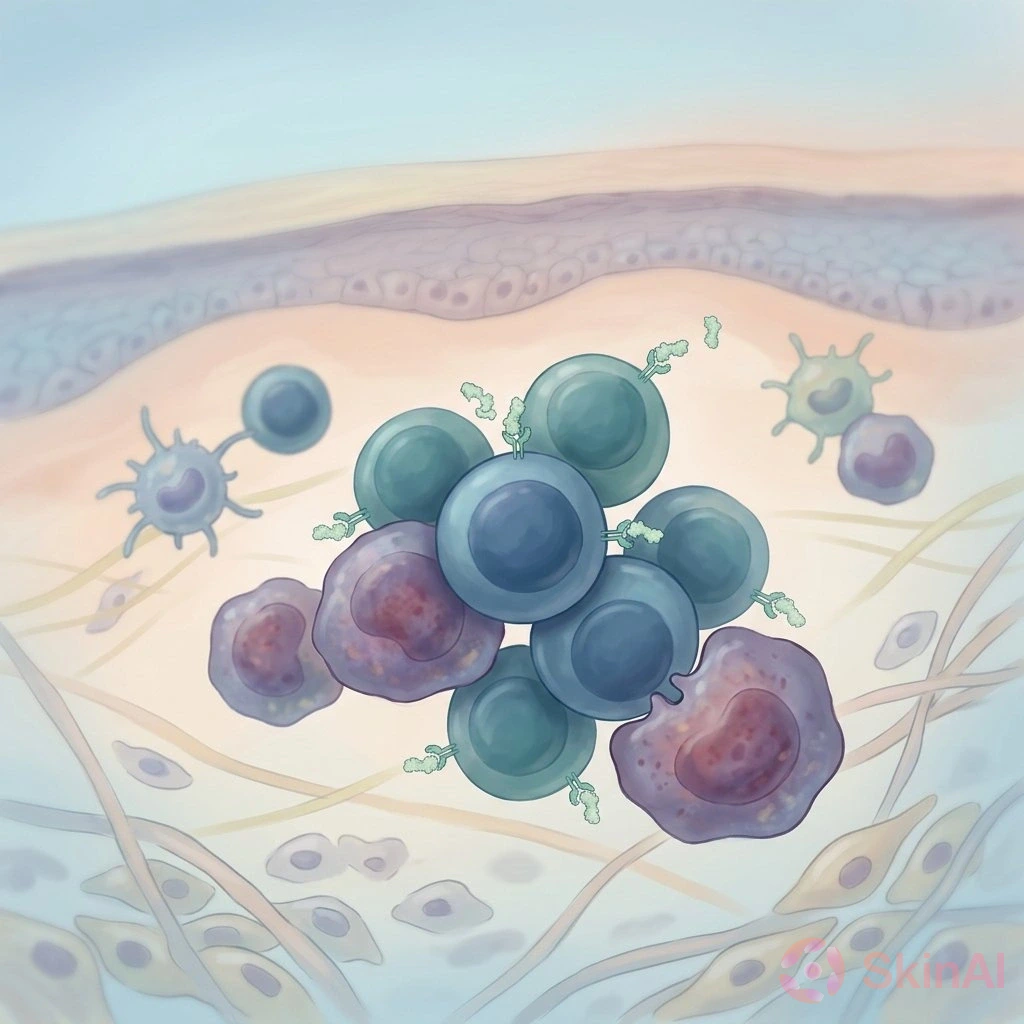
Rezpegaldesleukin is designed to affect the immune system in a specific way. It targets the interleukin-2 (IL-2) receptor to encourage growth of a type of immune cell called regulatory T cells (often called T-regs). T-regs help keep the immune system from overreacting. The idea is to restore a healthier immune balance instead of blocking individual inflammatory chemicals.
Quick summary of the study
The REZOLVE-AD trial enrolled 393 adults with moderate-to-severe atopic dermatitis who had not previously taken biologic therapies or JAK inhibitors. The study was randomized, double-blind, and placebo-controlled, and it ran across 107 sites in 10 countries. The first 16 weeks were an induction period to see how well the drug worked compared with placebo. (Source: Nektar Therapeutics press release; The Lancet)
How the study was set up
- Participants were randomly assigned to one of three dosing schedules of rezpegaldesleukin or to placebo for 16 weeks:
- 24 μg/kg every 2 weeks
- 18 μg/kg every 2 weeks
- 24 μg/kg every 4 weeks
- The main measure of success was change in the Eczema Area and Severity Index (EASI), a commonly used score that measures redness, thickness, scratching, and how much skin is affected.
What the trial found
All three active dose schedules met the main goal of the trial, with dose-dependent improvements in EASI scores compared with placebo.
At week 16, the average reductions in EASI were:
- 61% reduction for 24 μg/kg every 2 weeks (P < .0001)
- 58% reduction for 18 μg/kg every 2 weeks (P < .0001)
- 53% reduction for 24 μg/kg every 4 weeks (P = .0002)
- 31% reduction for placebo
Some patients improved quickly. The highest-dose every-2-weeks group showed meaningful EASI improvement as early as week 2, and all active groups showed improvement by week 4, with benefits increasing through week 16. Results were similar for people who started the trial with moderate disease and those with severe disease.
Other outcomes people care about
The 24 μg/kg every-2-weeks dose also produced better results than placebo on several important measures:
- EASI-75 (at least 75% improvement): 42% on active drug vs 17% on placebo.
- EASI-90 (at least 90% improvement): 25% vs 9%.
- Clear or almost clear skin (vIGA-AD 0/1): 20% vs 8%.
- Itch: 42% of people reached a 4-point improvement on the Itch Numerical Rating Scale versus 16% on placebo. In people who started with severe itch, response rates were 54% and 49% for the two every-2-weeks doses versus 24% for placebo.
- Body surface area (BSA) affected dropped 54% on the higher-dose every-2-weeks schedule versus 17% on placebo.
- Patient-reported measures of quality of life, control of eczema, pain, and sleep also favored the active drug over placebo.
The study also measured blood markers linked to inflammation and eczema. In people who had high levels of certain markers at the start, rezpegaldesleukin reduced these markers in a dose-dependent way. The company says this pattern fits with its goal of boosting T-reg activity to calm inflammation.
Safety and side effects
During the 16-week induction period, the safety findings were described as similar to previous studies of the drug. Serious adverse events happened in about 2% of participants. No deaths were reported. Importantly, the company reports there was no increased risk of infections or conjunctivitis, which are known side effects with some currently approved eczema treatments. (Source: Nektar Therapeutics press release)
What the company and investigators say
The results were published in The Lancet and announced by Nektar Therapeutics on August 25, 2026. According to the company and the study investigators, this is the first large randomized, placebo-controlled trial showing that selectively expanding regulatory T cells can lead to clinical improvement in a chronic inflammatory disease such as atopic dermatitis. Jonathan I. Silverberg, a principal investigator on the trial, said the rapid response and consistent benefit across disease severity, together with a favorable safety profile, point to the potential of this approach. These are company and investigator statements; the data are from the trial publication and press release. (Source: The Lancet; Nektar Therapeutics press release)
Where rezpegaldesleukin goes from here
The company is moving ahead with a phase 3 program called ZENITH AD. Two global phase 3 trials (ZENITH AD-1 and AD-2) began enrolling biologic- and JAK inhibitor-naive patients in July 2026, and a third trial (AD-3) to enroll people with prior biologic or JAK inhibitor experience was planned to start in September 2026. Rezpegaldesleukin is also being studied for other immune-related conditions, including alopecia areata and type 1 diabetes.
The U.S. Food and Drug Administration gave rezpegaldesleukin Fast Track designation for moderate-to-severe atopic dermatitis in February 2025 and for severe alopecia areata in July 2025. Fast Track status is meant to help speed development and review of drugs that treat serious conditions and fill an unmet need. (Source: Nektar Therapeutics press release)
What this means for people with eczema
These phase 2b results are encouraging because they suggest a new way of treating atopic dermatitis by supporting the immune system’s own regulatory cells rather than blocking specific inflammatory molecules. However, this is still early-stage evidence. Larger phase 3 trials and longer-term data are needed to better understand how well the treatment works and how safe it is over time.
When to see a doctor
If your eczema is affecting sleep, work, or daily life, or if you have worsening redness, pain, signs of infection (such as increasing warmth, pus, or fever), talk with your primary care clinician or a dermatologist. They can help you understand current treatment options and whether a clinical trial might be appropriate for you.
If you use a skin-tracking tool to watch visible changes, it can help you notice trends and prepare for a visit with your dermatologist. Such tools do not replace a medical evaluation.
Disclaimer
This article summarizes results reported in a company press release and a peer-reviewed publication. It does not provide medical advice. Treatment choices should be discussed with a licensed healthcare professional.
Sources
- Nektar Therapeutics. Nektar announces publication in The Lancet of positive phase 2b REZOLVE-AD 16-week induction results of rezpegaldesleukin in moderate-to-severe atopic dermatitis. Press release. Published August 25, 2026. https://ir.nektar.com/news-releases/news-release-details/nektar-announces-publication-lancet-positive-phase-2b-rezolve-ad
- REZOLVE-AD 16-week induction results of rezpegaldesleukin in moderate-to-severe atopic dermatitis. The Lancet. Published online August 25, 2026. https://www.thelancet.com/journals/lancet/article/PIIS0140-6736(26)01143-8/fulltext